
A retailer's fallback message tells a joke when the agent cannot answer, and brand reviewers rejected the joke. Questions that no topic and no knowledge source can answer still need a path. What should the architect change?
Select an answer to reveal the explanation.
Short Explanation
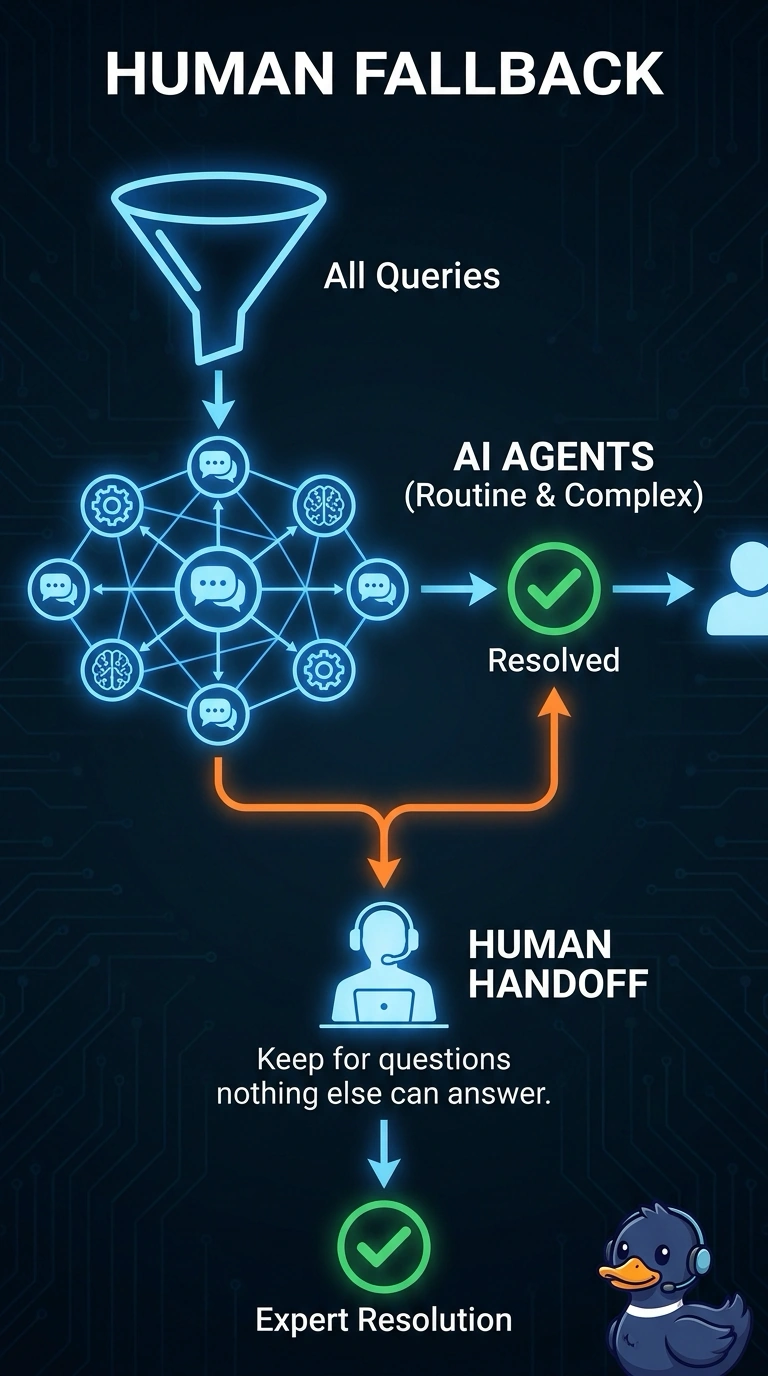
The line for a miss should hand the shopper to a person, not tell a joke. You rewrite the fallback as a handoff and keep it for questions nothing else can answer. Deleting that topic removes the only honest path for a true miss.
Full Explanation
The fallback topic is how the agent behaves when no topic and no knowledge source can answer. That path should stay, and its message should match the brand, so the joke is replaced with a handoff to a person. Deleting the fallback topic leaves a true miss with silence and no handoff, which removes the path the retailer still needs. Keeping the joke and adding the brand name makes the rejected line look official without changing what it does. Moving the joke into the product knowledge source spreads the same line into answers that should have come from the catalog, and it still leaves the fallback itself wrong. The handoff belongs in the rewritten fallback, not inside the product knowledge source. Exam caveat: a brand failure in the fallback text is not a reason to remove the topic. The topic is the safety path, and the message is what gets rewritten. Operational check: ask a question that no topic and no source can answer, confirm a person is offered a handoff, confirm the joke text is gone, and then ask a catalog question and confirm the handoff is not inserted into that successful reply.