
A hotel wants an agent that posts a wake-up request to the property system when a guest asks for one, and that does nothing else. Which design fits?
Select an answer to reveal the explanation.
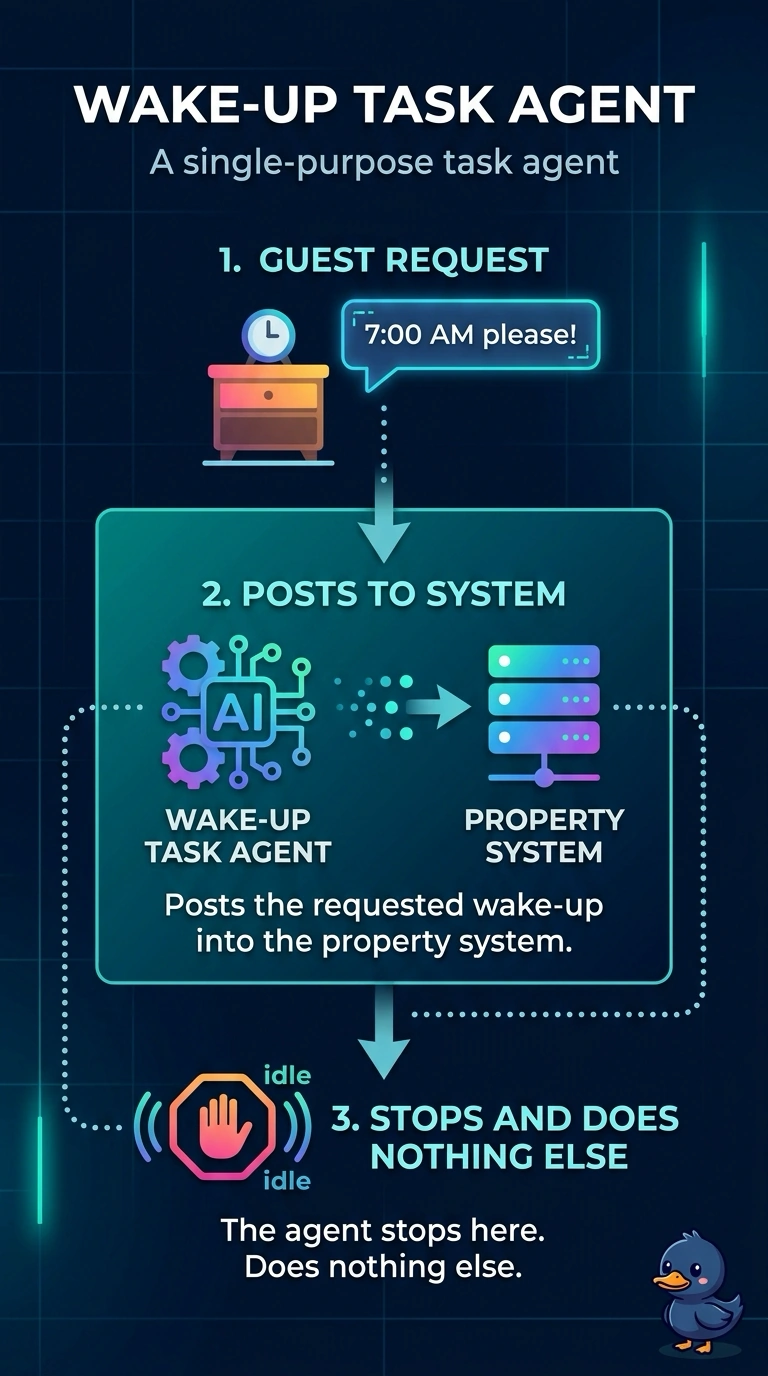
Short Explanation
When a guest asks for a wake-up, you need the agent to post that request to the property system and then stop. A task agent fits because it carries out just that requested action. A prompt-and-response agent only recites the policy and leaves the system unchanged.
Full Explanation
A task agent fits because the guest requests one defined action: post a wake-up request to the property system. The hotel also wants the agent to do nothing else, so the agent carries out that single action and stops. An autonomous agent that schedules a wake-up for every occupied room each night acts without a guest’s request and creates calls guests did not ask for. A prompt-and-response agent that recites the wake-up policy leaves the property system unchanged, so it does not post the request the front desk needs. An analytics job that reports last month’s wake-up volume describes past activity and does not post a request for tonight’s guest. The guest’s request is the signal to perform the single action, not a reason to start a nightly sweep or a research task. Exam caveat: the task agent may confirm the time it posted, and that confirmation is not a second business action. Practical check: ask for a 6 a.m. wake-up in a test room, confirm the property system shows the request, and verify that no other room was changed.