
An insurer's agent must read a claim note and label its severity from written instructions. A separate, already designed flow then creates the reserve in the policy system. Which component should perform the severity labeling?
Select an answer to reveal the explanation.
Short Explanation
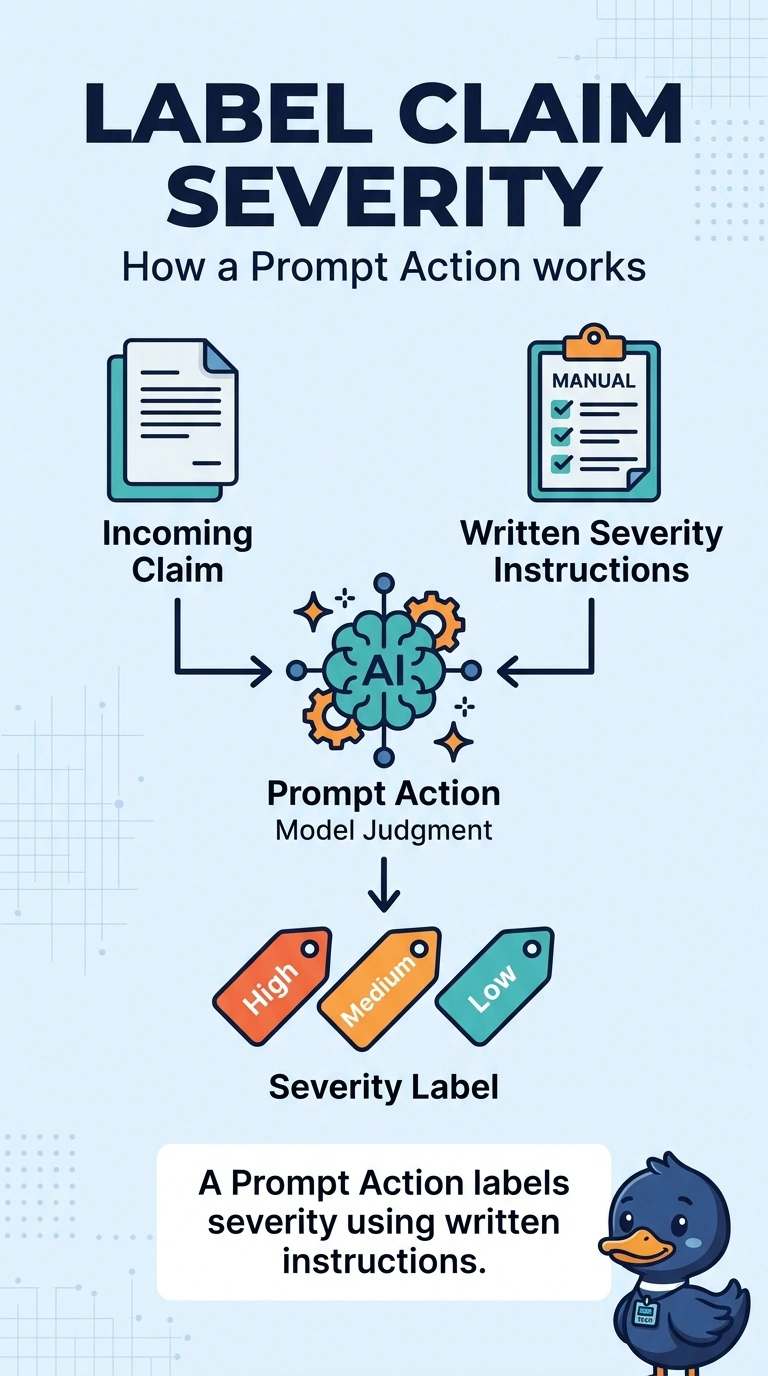
You can think of severity labeling as sorting the mail, not stamping the ledger: use a prompt action to apply the written instructions to the claim note. Let the existing flow create the reserve, since it already handles the policy system; a fixed path is not the right tool for the model’s judgment.
Full Explanation
A prompt action is the Copilot Studio component that sends instructions and content to a model and uses the model’s result. Severity labeling fits this role: claim notes vary, and the written instructions guide the model in choosing a label. The separate flow that creates the reserve remains the fixed path for the policy system and should consume the label rather than replace the judgment. An agent flow suits work whose branches are determined ahead of time without model judgment, so assigning it the labeling would force a variable interpretation into a fixed path. Computer Use drives a user interface; severity labeling is not a screen click on the policy system, and the existing flow already handles that system. The fallback topic runs when the agent cannot help; it is not a classifier for a claim note that the agent can handle. Exam caveat: keep the judgment separate from the ledger write—do not put reserve creation in the prompt action. Practical check: submit two notes that the instructions would label differently, confirm the prompt action returns the expected labels, and verify that the flow posts the matching reserves.