
A retailer's hiring-screen agent rejects applicants and provides no way for a person to reverse that rejection. The responsible-AI review is asked who is answerable for the decision. What should the review require?
Select an answer to reveal the explanation.
Short Explanation
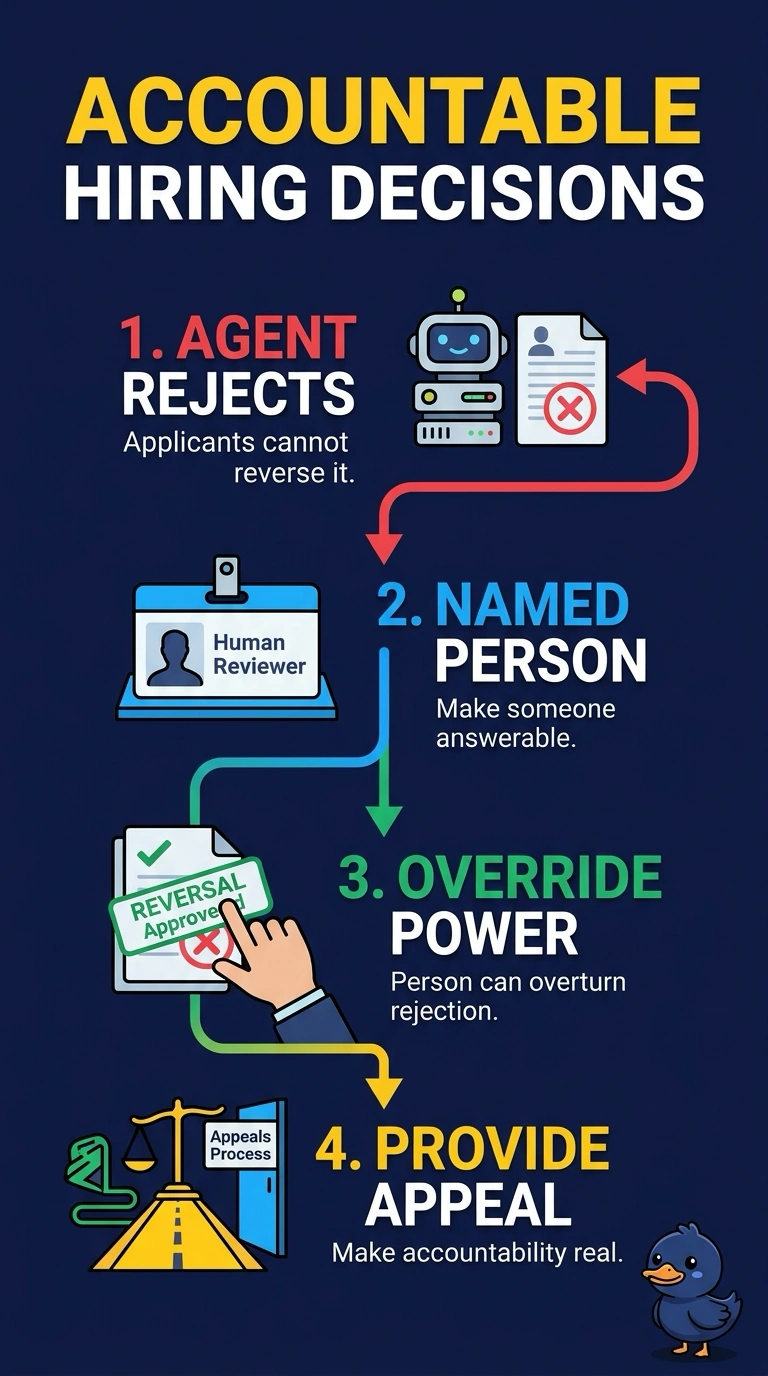
You need a real person who can step in when a hiring screen rejects someone. Requiring a named person who can overturn the agent’s rejection makes accountability concrete and gives the applicant an appeal. A longer instruction to be fair still leaves you with no way to reverse the decision.
Full Explanation
Accountability means a person answers for a consequential decision. When a hiring-screen agent rejects applicants and no one can reverse its decisions, the review should require a named person who can overturn a rejection and provide a real appeal. A longer instruction telling the agent to be fair may change its guidance, but it does not give an applicant a way to challenge or reverse a rejection, so the decision remains without a human who can answer for it. Publishing the same screen on a second career site expands where applicants encounter the process; it does not add anyone who can overturn a rejection. Removing human reviewers so the agent’s rejection stands without an appeal step moves further from accountability, leaving no person able to correct the decision. Exam caveat: an appeal path does not require a person to reread every application before the agent acts; it requires that a person can overturn an agent’s rejection. Practical check: have the agent reject a test applicant, then verify that a named person can reverse that rejection and that the applicant’s status reflects the reversal.