
A hospital discharge agent messages patients with next steps and does not tell them the message is automated. The responsible-AI review has not required that disclosure. What should the review require?
Select an answer to reveal the explanation.
Short Explanation
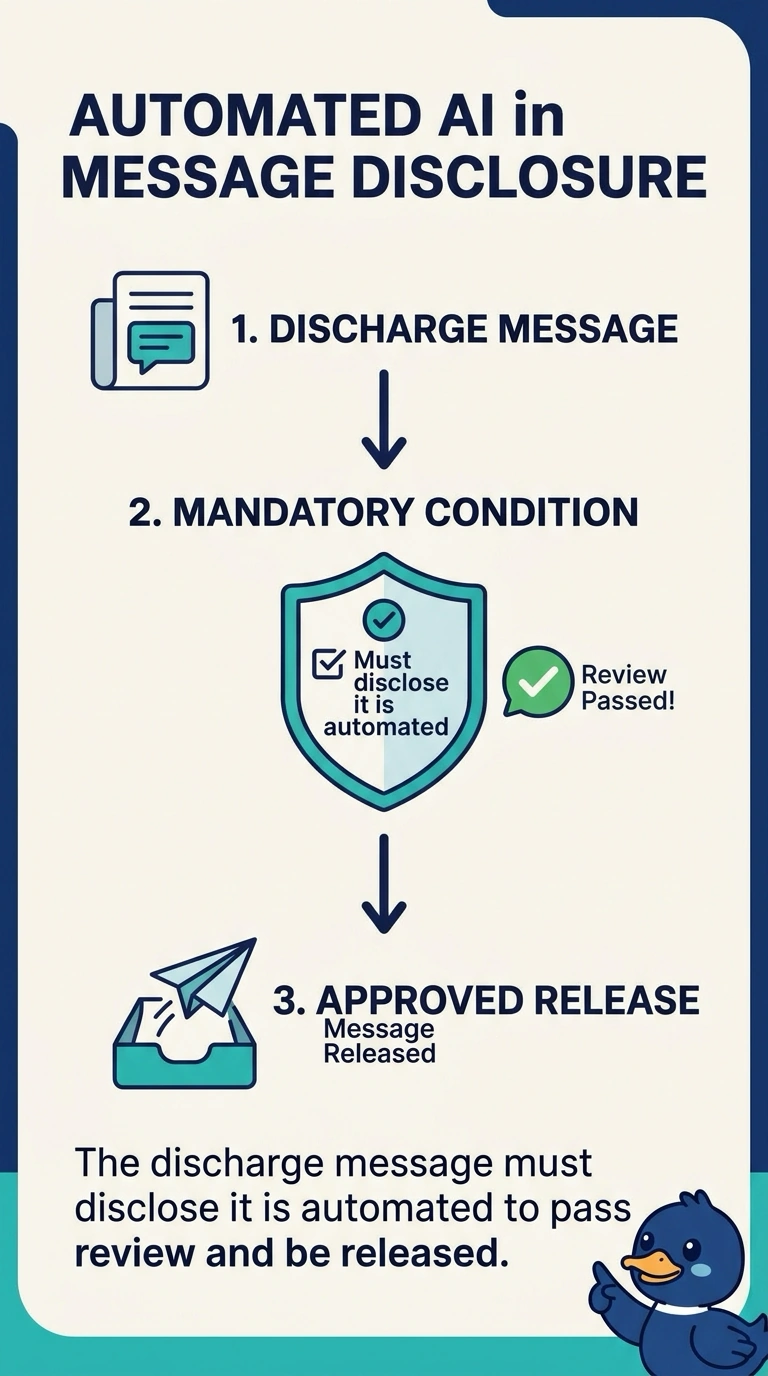
A stranger at the bedside should say who they are before they give instructions. You require the discharge agent to disclose that the message is automated, and you make that disclosure a condition of the responsible-AI review. A note that only says to be helpful leaves the patient guessing who sent it.
Full Explanation
Transparency means people can tell they are dealing with an automated system. A discharge message that reads as if a clinician sent it fails that principle when the sender is an agent, so the review should require the disclosure before release. Patients then know how to judge the next steps and where to ask for a person. A fairness comparison of clinical outcomes answers a different principle and does not tell the patient the sender is automated, so the transparency gap stays open. Deleting every discharge message removes the next steps entirely, which is a service cut rather than a disclosure, and the hospital still needs a way to send those steps honestly. A longer instruction that says to sound helpful changes tone and still withholds the fact that an agent sent the note. Exam caveat: the disclosure names the automated sender. It does not require the text message to explain model architecture. Operational check: send a test discharge message and confirm the patient-facing text states that it is automated, and that a message without that statement fails the review.