
A contact-center agent is released because a pilot showed a high thumbs-up rate. Leaders have no measure of whether answers match the knowledge source, whether the customer's request was completed, or whether the agent's actions were correct. What should testing add?
Select an answer to reveal the explanation.
Short Explanation
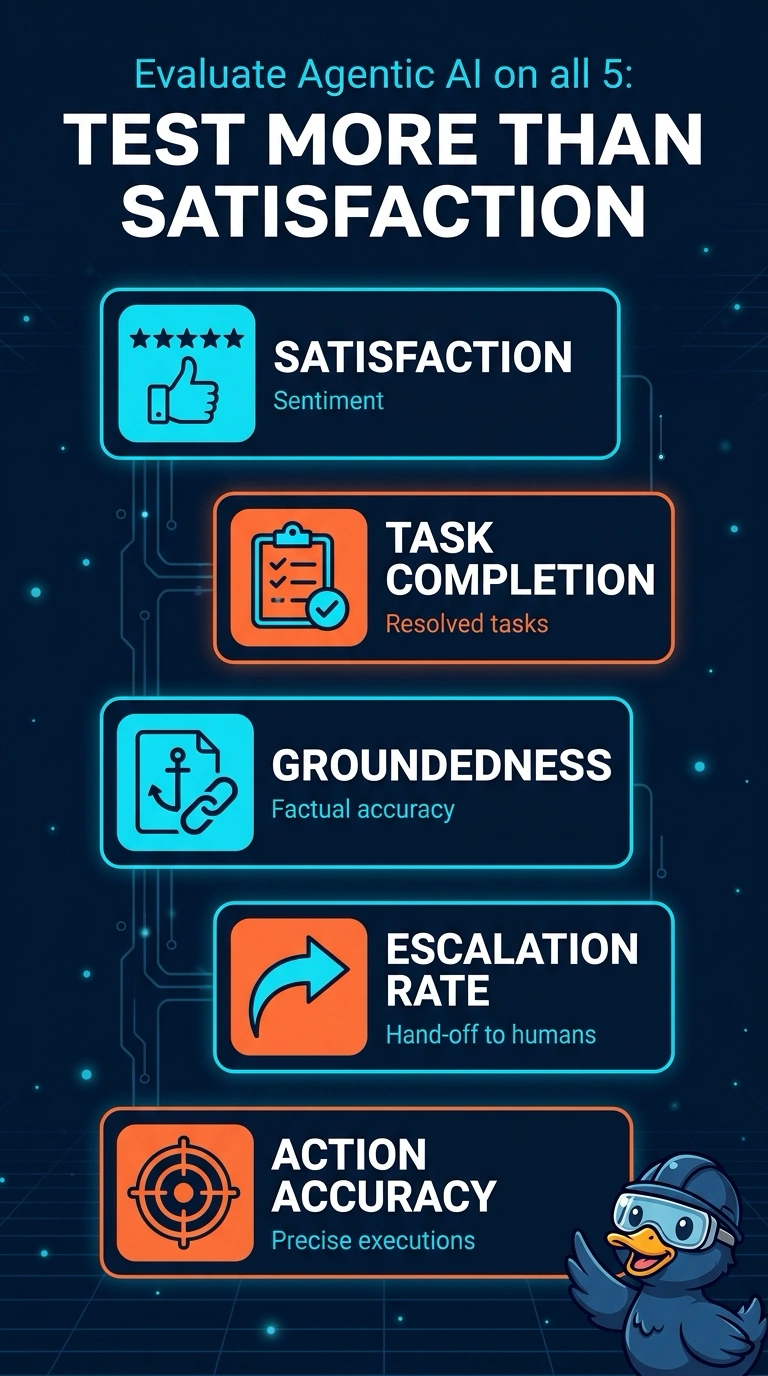
A round of applause does not tell you the clerk booked the right flight. You keep the thumbs-up if you like it, and you add task completion, groundedness, escalation, and whether the actions were right. Shipping a week with the scoreboard unplugged is not a test.
Full Explanation
Agent testing needs metrics that match what the agent is allowed to do. Satisfaction can stay, but it does not show whether the answer is supported by the knowledge source, whether the request was completed, whether the agent escalated when it should, or whether a tool action was correct. Those four close the gap the leaders named. A pilot that reports only a thumbs-up rate can hide a confident wrong answer. A longer system prompt is an authoring change, not a test result, and word count does not measure grounding or completion. A production week with metrics off removes the evidence the release decision lacks and calls it a pilot. A vision model scores images, and nothing in this contact-center agent is an image problem. Exam caveat: groundedness means the answer stays within the approved sources, not merely that the prose sounds confident. Operational check: build a small set of cases with expected answers and expected actions, run them before release, and block release when completion or action accuracy misses the bar the team wrote down.