
A bank sorts its backlog of agent fixes by which manager shouted loudest, rather than by how often the answer failed. The same wrong fee answer has failed for hundreds of customers and sits near the bottom. What should the architect do with the backlog?
Select an answer to reveal the explanation.
Short Explanation
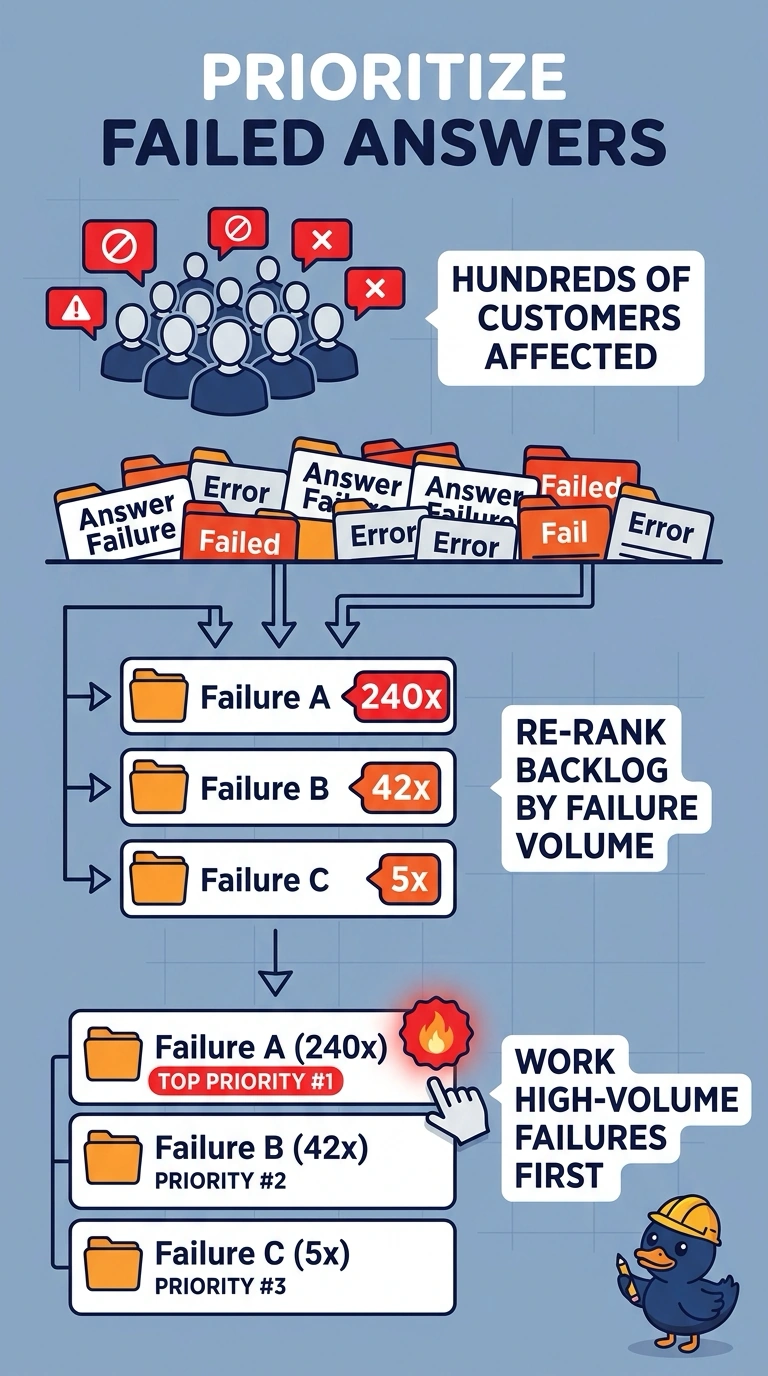
The loudest voice in the hallway is a poor way to sort a repair list. You re-rank the backlog by how often each answer failed, so the fee mistake that hit hundreds of customers comes first. How senior the complaint is does not measure how often the answer failed.
Full Explanation
A backlog of agent fixes should be ordered by the damage each failure does, and failure volume is the signal this bank is ignoring. The wrong fee answer has failed for hundreds of customers, so re-ranking by how often each answer failed puts that item first. Keeping the shout-based order leaves a loud manager's preference above a failure that hits far more people, which is the sort the bank already has. Closing the backlog and retuning the whole model skips the ranking and assumes every weight is the defect, before anyone has shown which step the fee answer gets wrong. Deleting the failure counts removes the volume signal and leaves the shout order as the only sort, which repeats the original problem. Volume is the first cut. Severity and responsible-AI impact can break ties after that, and they still do not restore shouting as the sort key. Exam caveat: re-ranking the backlog is not the same step as tuning a model. The rank tells the team what to fix. Operational check: sort the open items by failure count and confirm the fee answer is at the top before any tuning work starts.