
A bank runs an autonomous agent that drafts a case note when a transaction alert is created. There is no chat. Supervisors want to know whether the agent is behaving. What should operations monitor first?
Select an answer to reveal the explanation.
Short Explanation
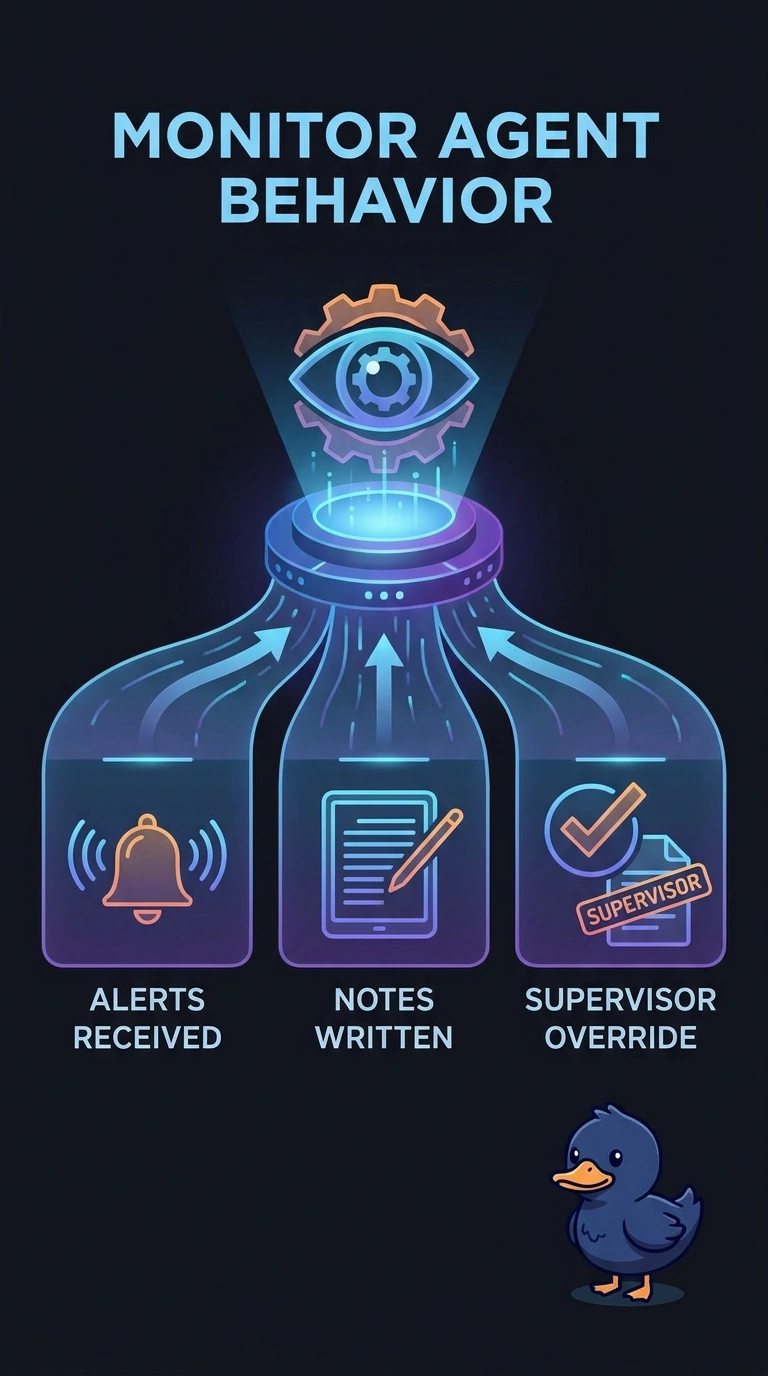
You cannot grade a worker who never talks to customers by how friendly the conversation felt. You should watch the alerts that woke the agent, the notes it wrote, and the times a supervisor changed them. A chat score measures a channel this agent does not have.
Full Explanation
An autonomous agent is judged by the work it starts and finishes, because nobody is having a conversation with it. The useful trail is the alert that triggered a run, the case note the agent wrote, and whether a supervisor later overrode that note. Those three signals show volume, output, and disagreement, which is the first operational picture. A thumbs-up rate needs a chat transcript, and this agent has no chat, so the metric would stay empty even while the agent filed bad notes. License counts tell you what the fraud team is allowed to buy, not whether this agent handled an alert correctly. System-prompt length is an authoring detail, not a runtime signal, and a longer instruction does not prove the note was right. Exam caveat: chat satisfaction is a fair metric for a prompt-and-response agent and a misleading one for an event-triggered agent. Operational check: open yesterday's alert queue and confirm each alert has an agent run, a note, and a field showing whether a person changed that note.