
After pushing an emergency change to fix a flapping interface at a cooperative's aggregation site, an engineer wants the rollback history to show a plain-language note explaining what the change was for, so a colleague reviewing the commit history later doesn't have to guess. What should the engineer do?
Select an answer to reveal the explanation.
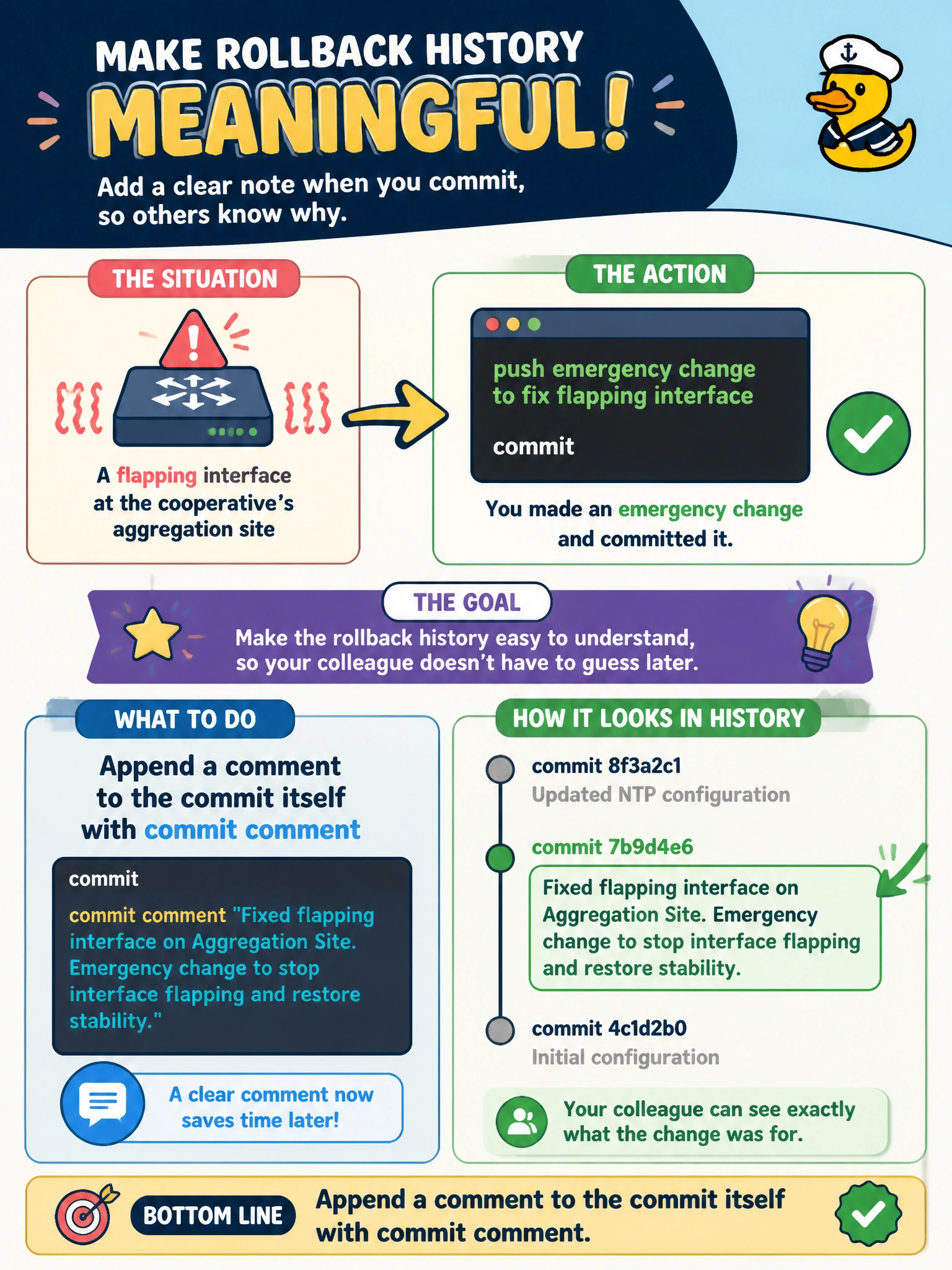
Short Explanation
commit comment tags the commit event itself, not any one config line, with a short note. Later, show system commit lists every past commit alongside whatever comment was attached, so the reason for a change is right there in the history.
Full Explanation
commit comment "text" attaches the given text to that specific commit record, which then shows up next to that entry when show system commit is run later, making it easy to identify which rollback number corresponds to which real-world change without relying on memory or a separate change log. apply-groups is a configuration-reuse mechanism for applying shared statement blocks across multiple hierarchies; it has nothing to do with documenting why a commit happened. Renaming the candidate configuration file isn't an operation Junos exposes for this purpose, and it wouldn't touch the commit history Junos maintains automatically. annotate is a real Junos command, but it attaches a comment to a configuration statement or hierarchy level within the config itself, which persists as part of the configuration content rather than as metadata on the commit event — a different audit trail than what the colleague needs. Caveat: a comment applies only to the one commit it was issued with, so future changes need their own comment if the same traceability is wanted going forward. Check: run show system commit and confirm the comment text appears next to the correct rollback number.