
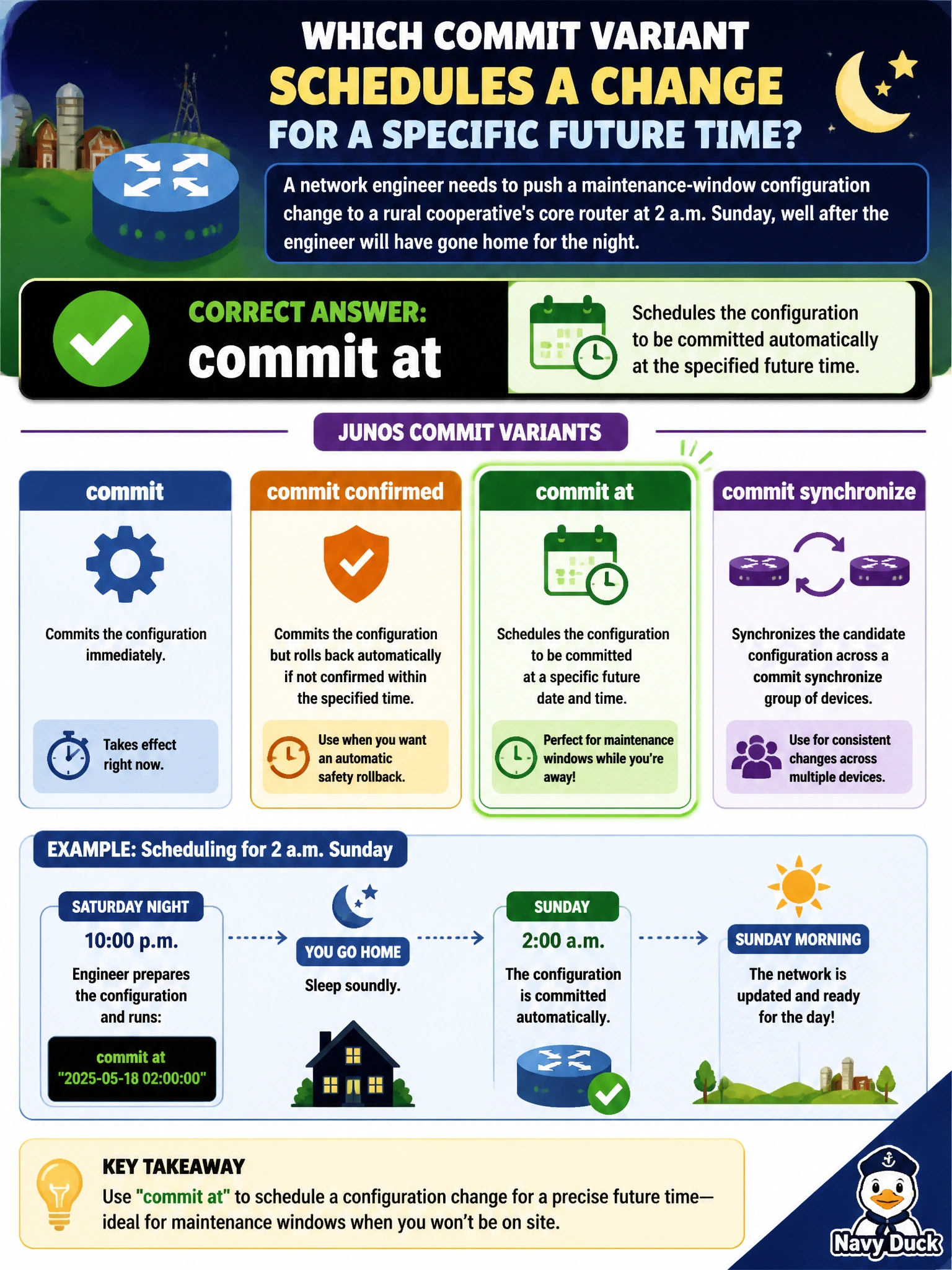
A network engineer needs to push a maintenance-window configuration change to a rural cooperative's core router at 2 a.m. Sunday, well after the engineer will have gone home for the night. Which commit variant lets the change be scheduled to take effect at that specific future time?
Select an answer to reveal the explanation.
Short Explanation
commit at is basically setting an alarm clock for the configuration: finish editing now, hand Junos a specific time, and walk away. At that moment, the candidate becomes active on its own.
Full Explanation
commit at "HH:MM:SS" (or a full date and time) schedules the commit to fire at that future moment rather than immediately, and the scheduled commit still executes even after the engineer logs out for the night, which is exactly the behavior needed for a 2 a.m. maintenance window with nobody watching. commit confirmed 120 only adds a rollback safety timer, measured in minutes, after an immediate commit — it activates the change right now, not at a chosen future time, so it solves a different problem than delayed scheduling. commit synchronize coordinates a commit across a router's dual routing engines so both stay consistent; it has no timing component at all. commit comment simply attaches a descriptive note to whichever commit is issued, immediate or otherwise, and does nothing to control when that commit happens. Caveat: the candidate configuration must remain unchanged and valid between scheduling and the scheduled time, and a pending scheduled commit can be cancelled beforehand if plans change. Check: show system commit lists any pending scheduled commit along with its target time so the engineer can confirm it was accepted.