
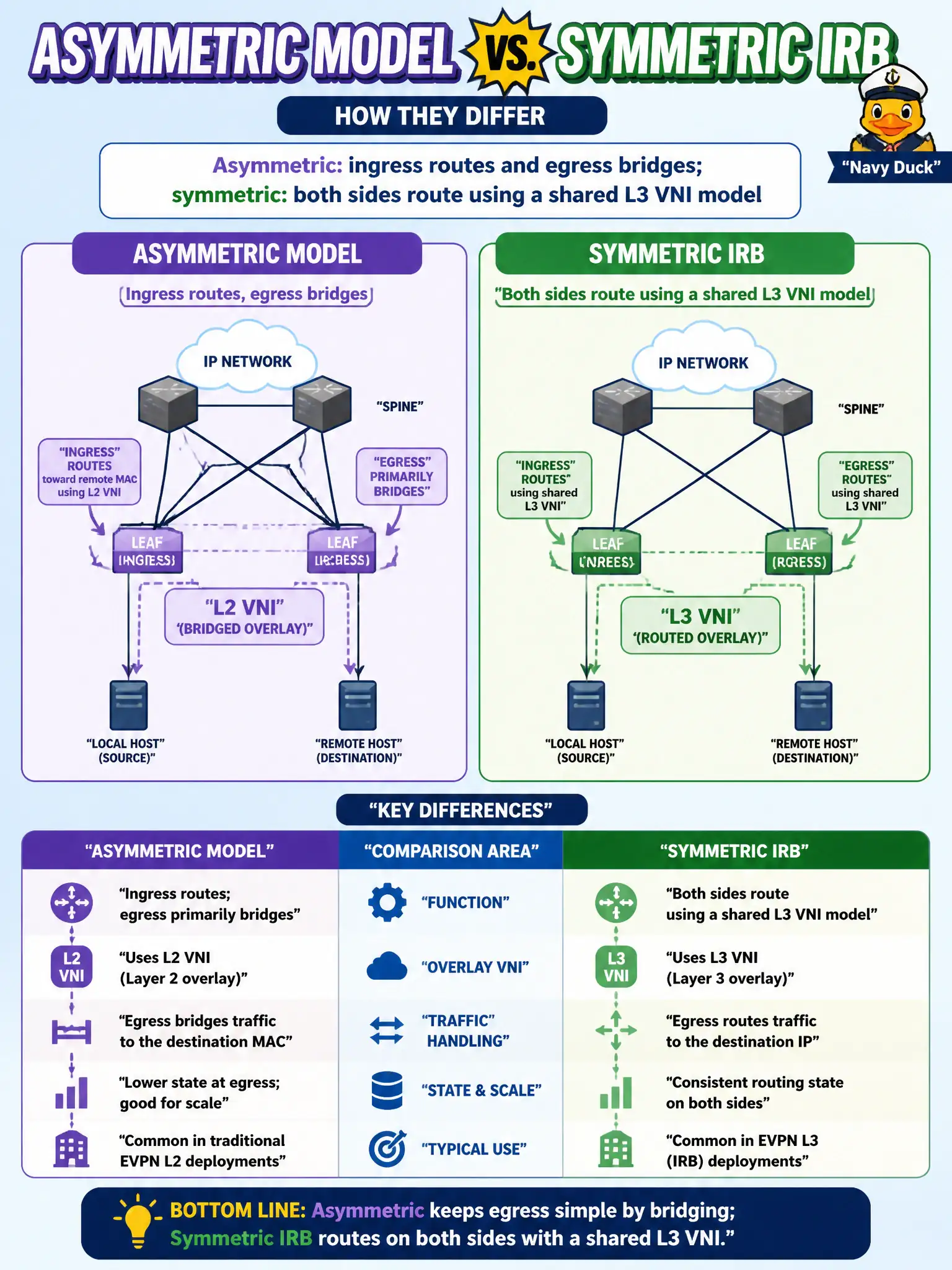
An asymmetric model routes at the ingress leaf toward a remote MAC using the L2 VNI, while the egress primarily bridges. How does that differ from symmetric IRB?
Select an answer to reveal the explanation.
Short Explanation
Asymmetric is a one-way translator at the entrance and a simple bridge at the exit. Symmetric puts routing on both ends with the same L3 VNI playbook. They are not the same thing with different numbers.
Full Explanation
Asymmetric IRB routes at the ingress VTEP and typically relies on the egress to bridge on the L2 VNI toward the destination MAC, whereas symmetric IRB has both sides route using a shared L3 VNI model. That directional difference is the conceptual distinction municipal engineers must apply. Asymmetric and symmetric are not identical aside from VNI numbers. Symmetric does use IRB, and asymmetric still uses VXLAN. Asymmetric does not require MPLS labels in the underlay, and symmetric does not forbid BGP EVPN. Exam caveat: mixed-mode fabrics—one leaf assuming asymmetric, another symmetric—create one-way or hairpinned failures that look like routing-policy bugs. Operational check: document the IRB mode on each city leaf, generate bidirectional inter-subnet flows, capture encapsulations each way, and remediate any leaf that disagrees with the fabric standard. Add bidirectional encapsulation captures to the inter-subnet troubleshooting guide to expose asymmetric/symmetric disagreements early. Add bidirectional encapsulation captures to the inter-subnet troubleshooting guide to expose asymmetric/symmetric disagreements early. Add bidirectional encapsulation captures to the inter-subnet troubleshooting guide to expose asymmetric/symmetric disagreements early.