
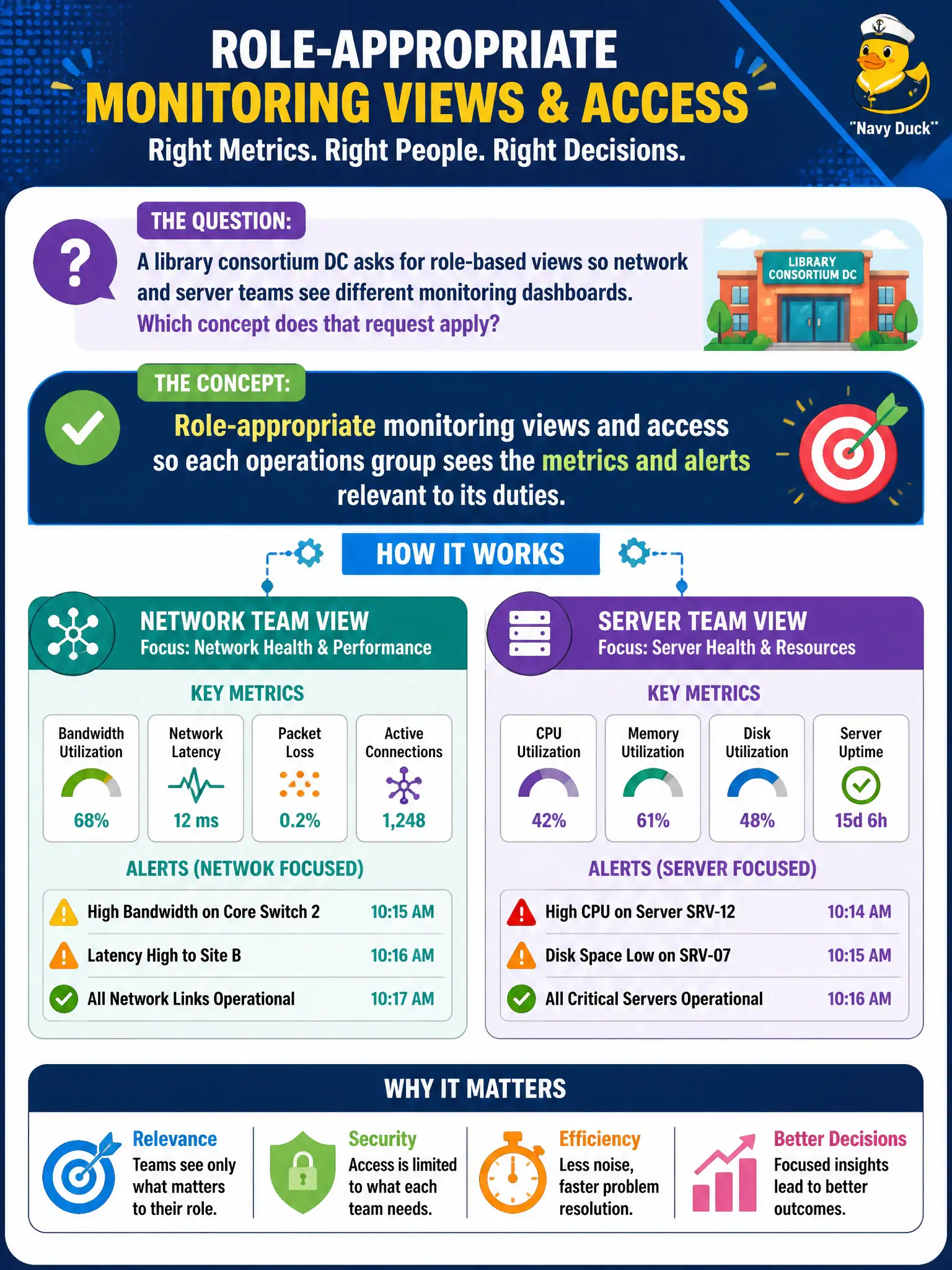
A library consortium DC asks for role-based views so network and server teams see different monitoring dashboards. Which concept does that request apply?
Select an answer to reveal the explanation.
Short Explanation
Network folks need link flaps and BGP peers; server folks need host and app health—same building, different dashboards. Role-based views keep each team effective without drowning them in the other team's noise. One giant root login for everybody is how accidents happen.
Full Explanation
Role-appropriate monitoring views give library-consortium network and server teams the metrics and alerts relevant to their duties without forcing identical privileged dashboards. One shared root-level write view for every team increases accident risk. Hiding all fabric data from every municipal employee forever blocks operations. Raw optical dumps alone without role fit do not serve server teams well. Exam caveat: Separate views from write privileges; read dashboards can still be role-scoped. Operational check: Log in as each role and confirm dashboards show only intended metrics and lack unauthorized write actions. In civic data-center operations, record the expected CLI or collector evidence for this concept so the next on-call engineer can validate fabric behavior without re-deriving the design under incident pressure. In civic data-center operations, record the expected CLI or collector evidence for this concept so the next on-call engineer can validate fabric behavior without re-deriving the design under incident pressure. In civic data-center operations, record the expected CLI or collector evidence for this concept so the next on-call engineer can validate fabric behavior without re-deriving the design under incident pressure.