
The business continuity office has published recovery priorities based on its business impact analysis. The cloud operations team must now make sure its IT service recovery plans support those priorities. Which operational practice is responsible?
Select an answer to reveal the explanation.
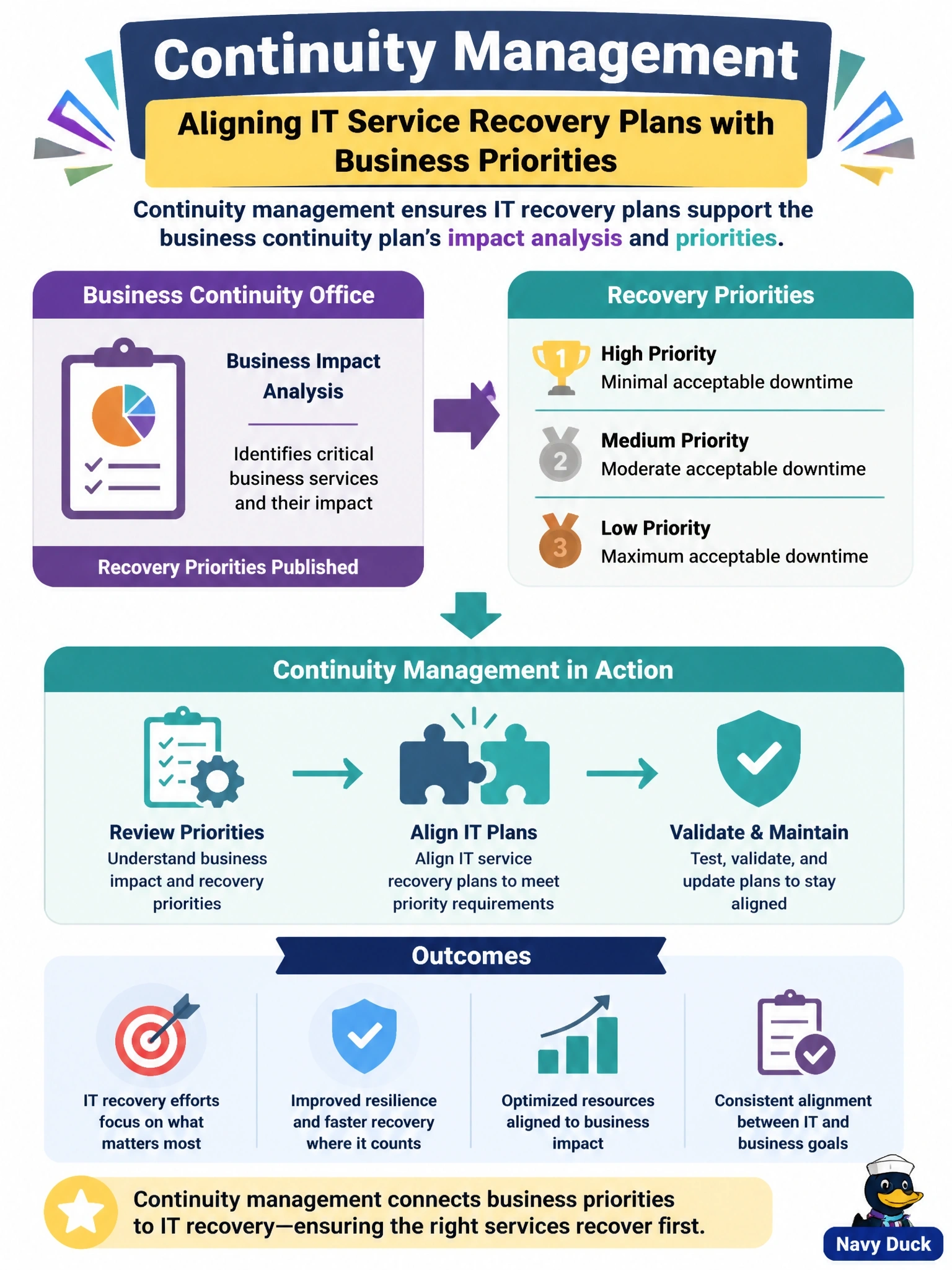
Short Explanation
The business has told you what matters most and how fast it needs it back. Continuity management makes sure your IT recovery plans line up with that list, in the same order. The trap is thinking another practice can quietly stand in for planning the recovery itself.
Full Explanation
IT service continuity management, listed in the outline as continuity management, ensures that IT services can be recovered within the time and to the point required by the business after a serious disruption. It takes inputs from the organization's business continuity program, especially the business impact analysis, recovery time objectives and recovery point objectives, and designs, documents, tests and maintains IT recovery arrangements that meet them. For cloud operations this includes choosing strategies such as pilot light or warm standby and exercising failover. Change management controls modifications to services, including updates to recovery plans, but it does not decide what the plans must achieve or align them with business priorities. Problem management reduces the likelihood and impact of incidents by removing causes; it cannot eliminate disasters such as regional outages, so recovery planning remains necessary. Capacity management plans resources for performance under demand; sizing standby capacity is one input to continuity design, but matching full production load everywhere at all times is neither required nor the practice that aligns recovery with the BIA. Exam caveat: the BIA comes first and drives strategy; IT continuity follows business priorities rather than setting them. Operational check: map each critical service's tested recovery time and point against the BIA targets, and confirm any gaps are recorded with remediation owners.