
During a design review for a new PaaS-hosted application, several developers argue that input validation and authorization checks are unnecessary because the cloud service provider secures the platform. What should the cloud security professional advocate?
Select an answer to reveal the explanation.
Short Explanation
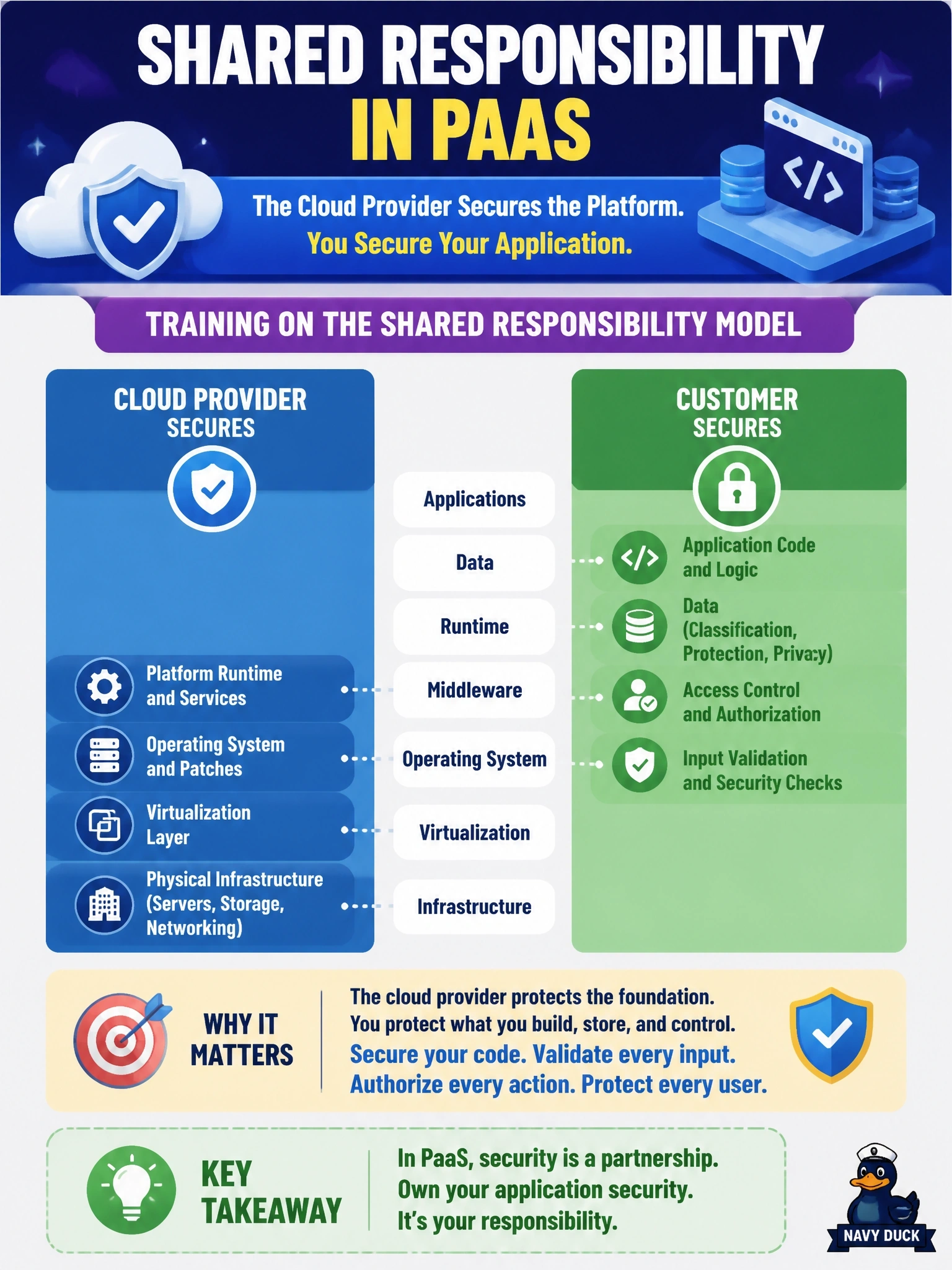
Renting a secure building doesn't lock your office door for you. In PaaS the provider runs the platform, but your code, your data and who gets to do what are still yours. The trap is thinking a WAF or a contract can make up for code that never checks its inputs.
Full Explanation
Under the shared responsibility model, a PaaS provider secures the physical facilities, network, hypervisor, operating system and runtime it manages, while the customer remains responsible for the application it deploys: its code, input validation, authorization logic, configuration, identities and data. Developers who assume otherwise create exactly the flaws attackers exploit at the application layer, so the right response is awareness training that makes the division of responsibility concrete for their service model. Contractual changes cannot move responsibility for customer-written code to the provider, which neither sees nor controls that code. Moving to SaaS changes who builds the application, but the customer still owns its data, its user identities and access configuration, and in any case it abandons rather than secures the application being built. A web application firewall is a valuable compensating layer that can block some common attack patterns, but it cannot enforce business authorization rules or replace validation inside the code, and it is easily bypassed by inputs it does not recognize. Exam caveat: the boundary shifts with IaaS, PaaS and SaaS, but data, identity and access remain customer responsibilities in all three. Operational check: confirm the training covers the specific service model in use and that code review checklists include validation and authorization items.