
A company needs private cloud capacity within six months, has limited capital to spend, and must show regulators that strict physical access controls protect its equipment. Leadership is choosing between building its own data center and leasing colocation space. Which approach best fits these requirements?
Select an answer to reveal the explanation.
Short Explanation
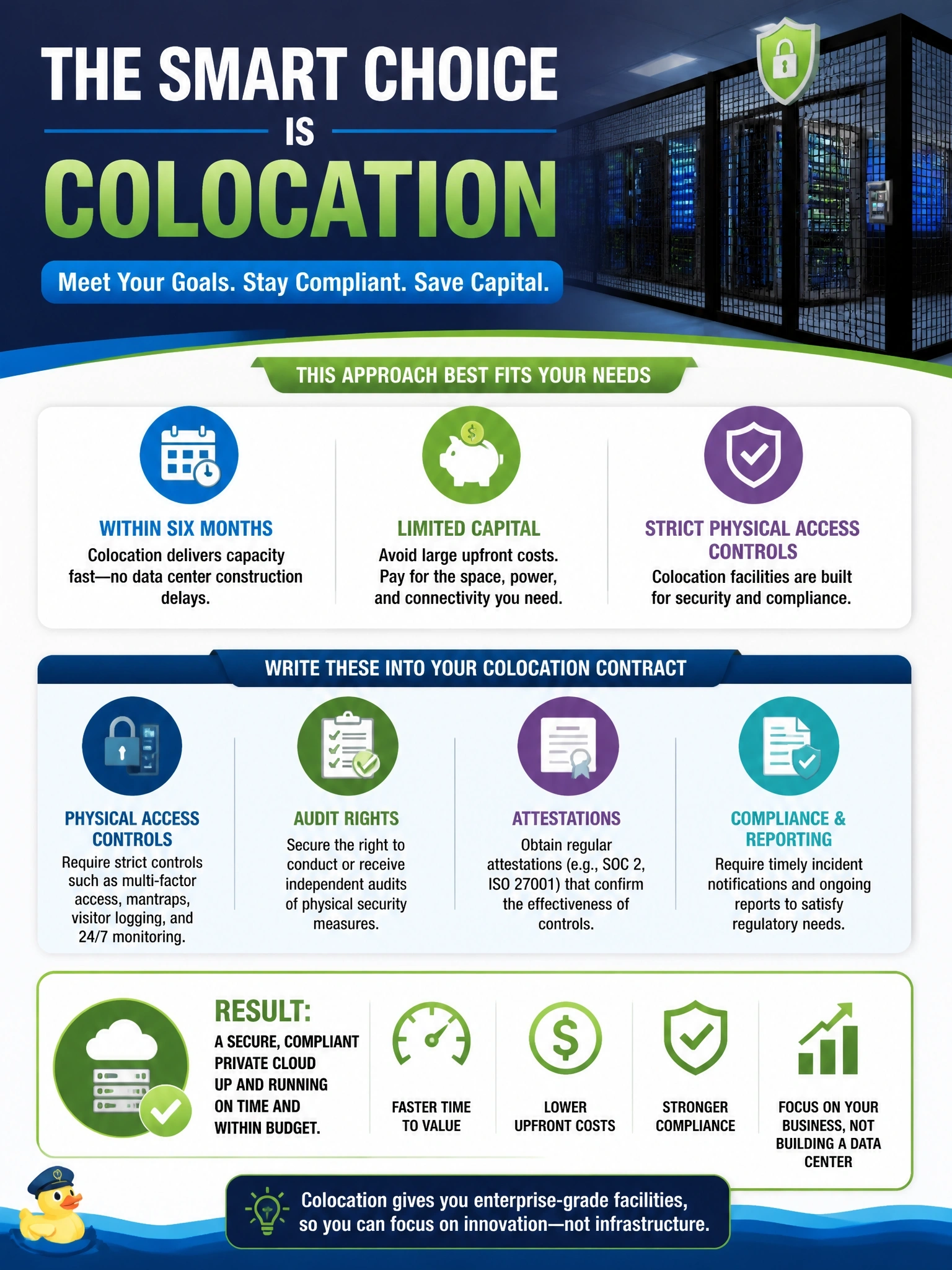
Building gives you total control, but it's slow and expensive, and you've got six months and a tight budget. Colocation gets you in fast, and you claw back the control you need through the contract: required controls, audit rights and attestations. The trap is thinking only an owned building can satisfy a regulator.
Full Explanation
The buy-versus-build decision weighs control, cost, time to deploy and compliance. Building a data center gives the organization full control over design and operations but demands significant capital, specialist staff and typically a long construction and commissioning timeline. Leasing colocation space trades some direct control for speed and lower capital expenditure, with the operator providing power, cooling and the physical shell. The control gap is closed contractually: the agreement specifies required physical safeguards such as cage locks, access logging and escort rules, grants audit rights, and obliges the operator to provide independent attestations regulators accept. Claiming only an owned building satisfies regulators is incorrect; regulators assess whether controls exist and are evidenced, not who owns the walls. Presenting marketing claims to regulators provides no assurance, because unverified statements are not evidence of control operation. Building on leased land does not remove construction capital needs, and the timeline claim is unrealistic for a secure facility, so it conflicts with both constraints. Exam caveat: when control is outsourced, the contract and assurance reports become the control evidence. Operational check: map each regulatory physical control requirement to a specific contract clause or attestation section before signing.