
A company has two separate needs: a virtual machine image must be moved to a second cloud provider and run there without being rebuilt, and two SaaS applications from different vendors must exchange purchase orders automatically and act on them. How should these two needs be classified?
Select an answer to reveal the explanation.
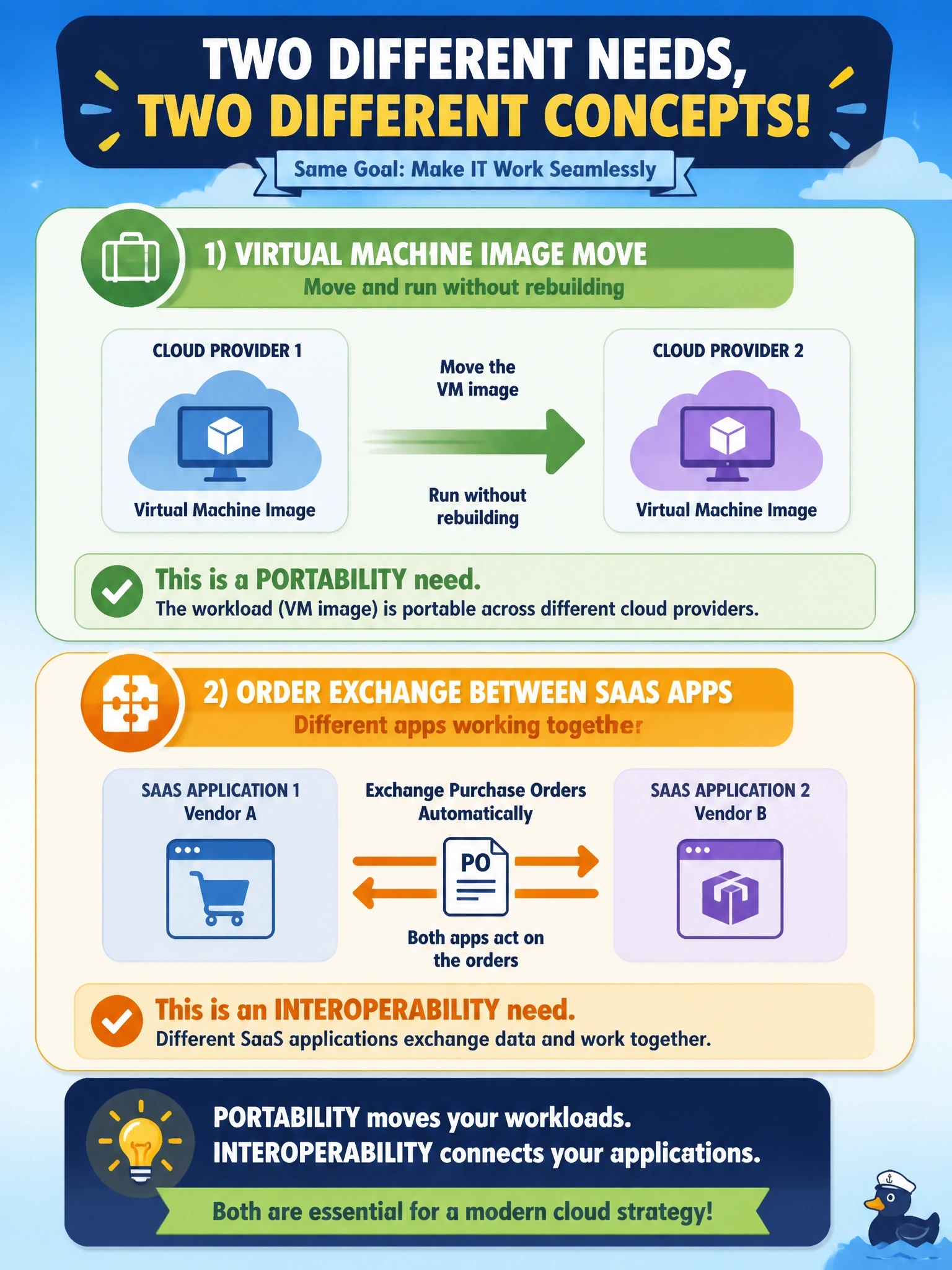
Short Explanation
Portability is moving your furniture into a new house and having it fit; interoperability is two neighbors passing notes over the fence and understanding each other. The VM move is the furniture, the order exchange is the notes. The trap is mixing them up because both cross a boundary.
Full Explanation
Portability is the ability to move data or applications from one system to another, such as between providers, so they remain usable without being rebuilt or re-entered. Moving a virtual machine image to a second provider and running it there depends on compatible image formats, virtualization and configuration, which is a portability concern. Interoperability is the ability of two or more systems or applications to exchange information and mutually use what was exchanged. Two SaaS applications sending purchase orders to each other and acting on them is a continuing exchange that depends on shared formats and interfaces, the definition of interoperability. Reversing the labels inverts the definitions: the image is not exchanged between two running systems, and the orders are not being relocated. Calling both interoperability ignores that the image is relocated, not exchanged. Calling both reversibility misapplies a term that covers retrieving data and having the provider delete it at the end of a contract. Exam caveat: both requirements are reduced by open standards and documented interfaces, which is why they appear together under vendor lock-in. Operational check: test-import the image at the second provider, and run a contract test confirming each SaaS application parses the other's order messages correctly.