
Data loss prevention alerts suggest that an employee may be copying confidential product designs to a personal cloud account. What should the security manager do FIRST?
Select an answer to reveal the explanation.
Short Explanation
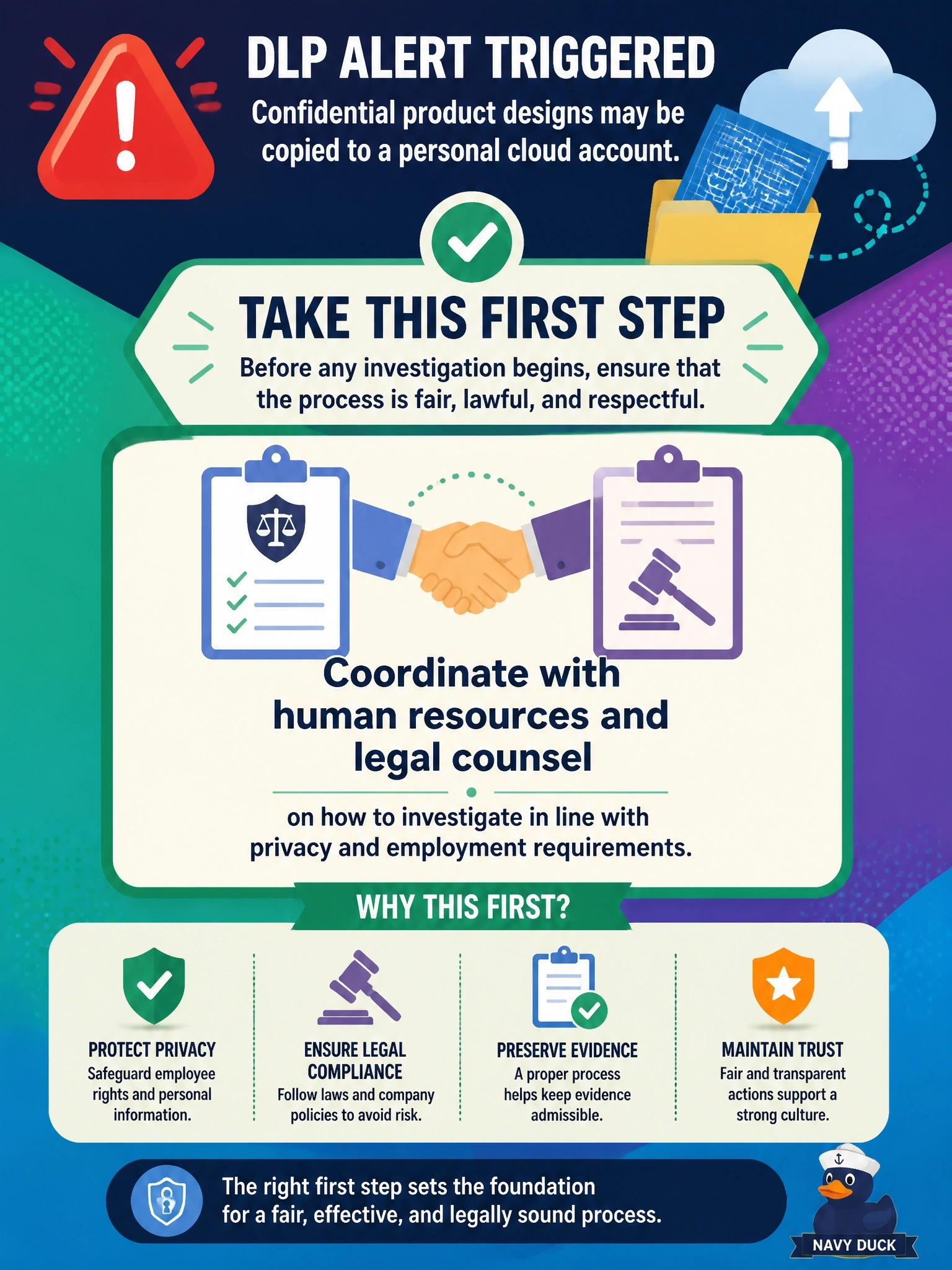
Insider cases are a minefield: employment law, privacy rules and the risk of tipping someone off. You bring HR and legal in before anyone makes a move. The traps are the fast, dramatic actions that can wreck the case or break the rules.
Full Explanation
Investigations into suspected employee misconduct involve legal, privacy and employment considerations as well as security. Coordinating first with human resources and legal counsel ensures that monitoring and evidence collection are lawful and consistent with policy and employee notices, that the employee's rights are respected and that any later disciplinary or legal action is not undermined by procedural errors. The joint team can then decide on evidence preservation, access restrictions and interviews. Confronting the employee immediately may prompt deletion of evidence or further exfiltration, and it occurs without the procedural safeguards that HR and counsel provide. Examining personal devices raises significant legal and privacy issues; the organization generally cannot access personal property without consent or legal authority, and doing so may expose it to liability. Disabling accounts for an entire department causes widespread business disruption, penalizes uninvolved staff and alerts the suspect, without a proportionate basis. Exam caveat: urgent containment, such as blocking the specific transfer channel, may be appropriate, but it should be agreed with the coordinating team and documented. Operational check: confirm the investigation has documented authorization, defined scope, a preservation plan and HR and legal sign-off before interviews take place.