
A regulator has indicated that it may review the organization's handling of a significant data breach. What should the security manager ensure about the incident investigation records?
Select an answer to reveal the explanation.
Short Explanation
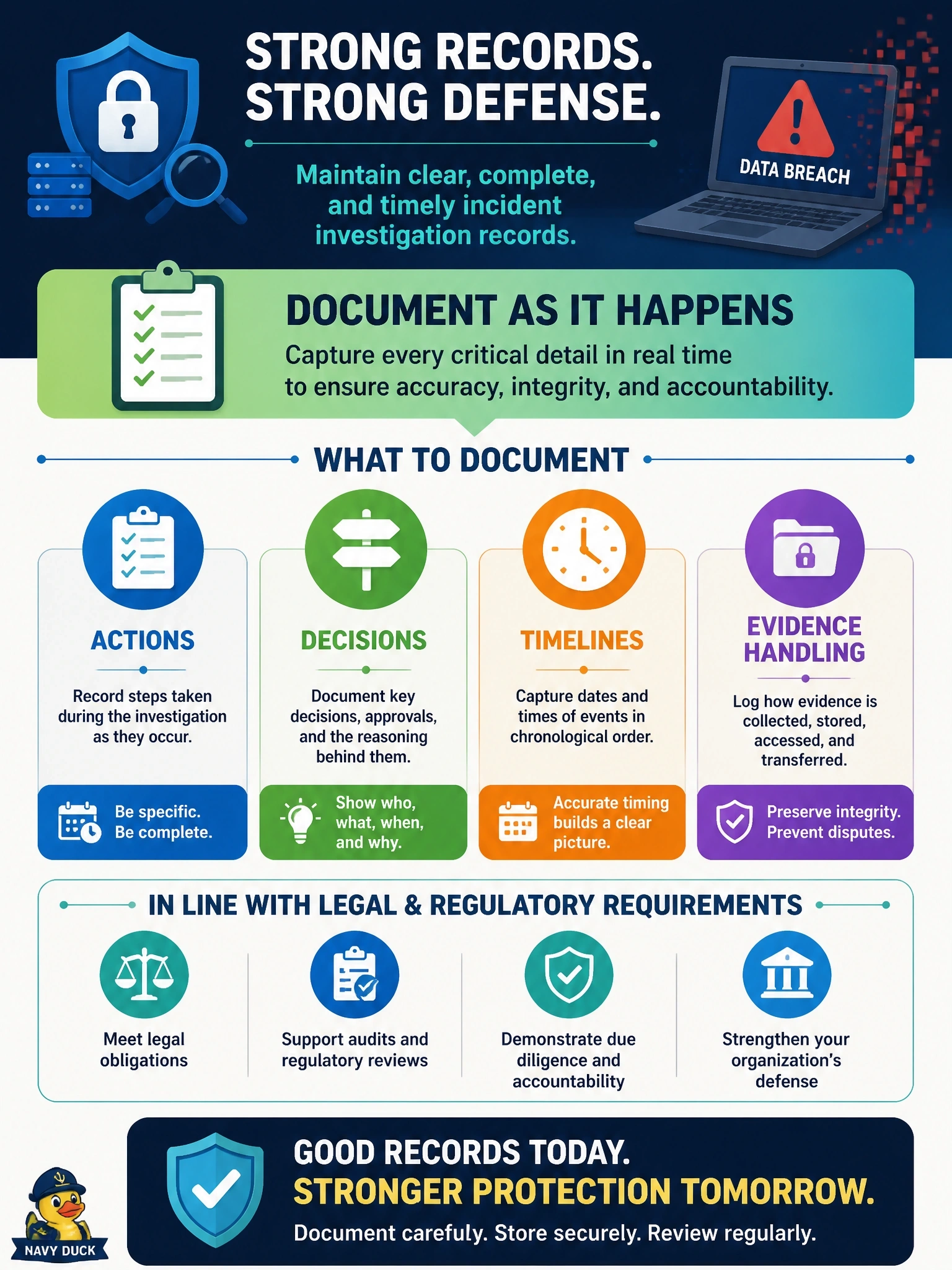
If it isn't written down when it happened, a regulator will treat it as if it didn't happen. Think of a ship's log: you make entries in real time, not rebuilt from memory. Trimming the record to look better is a trap that can backfire badly.
Full Explanation
Regulators assess whether the organization acted reasonably and met its obligations, and they rely on records to make that judgment. Contemporaneous documentation captures what was known at each point, what decisions were made and by whom, what actions were taken, how evidence was handled and when notifications were made. Records created as events unfold are more accurate and more credible than later reconstructions, and their content should be guided by legal counsel and applicable regulatory requirements. A summary written from memory after closure is prone to gaps and errors in timing, which matter when compliance with notification timeframes is under scrutiny. Limiting documentation to technical findings omits decision rationale, communications and approvals, which are precisely what a regulator will ask about; legal exposure should be managed through counsel, not by withholding facts from the record. Recording only decisions that proved correct misrepresents the investigation, undermines credibility if discovered and can constitute a serious compliance failure. Exam caveat: some communications may be prepared under legal privilege at counsel's direction, which affects how they are handled but not whether actions are recorded. Operational check: confirm an incident log with timestamps, owners and decision rationale is maintained throughout and preserved under the applicable retention rules.