
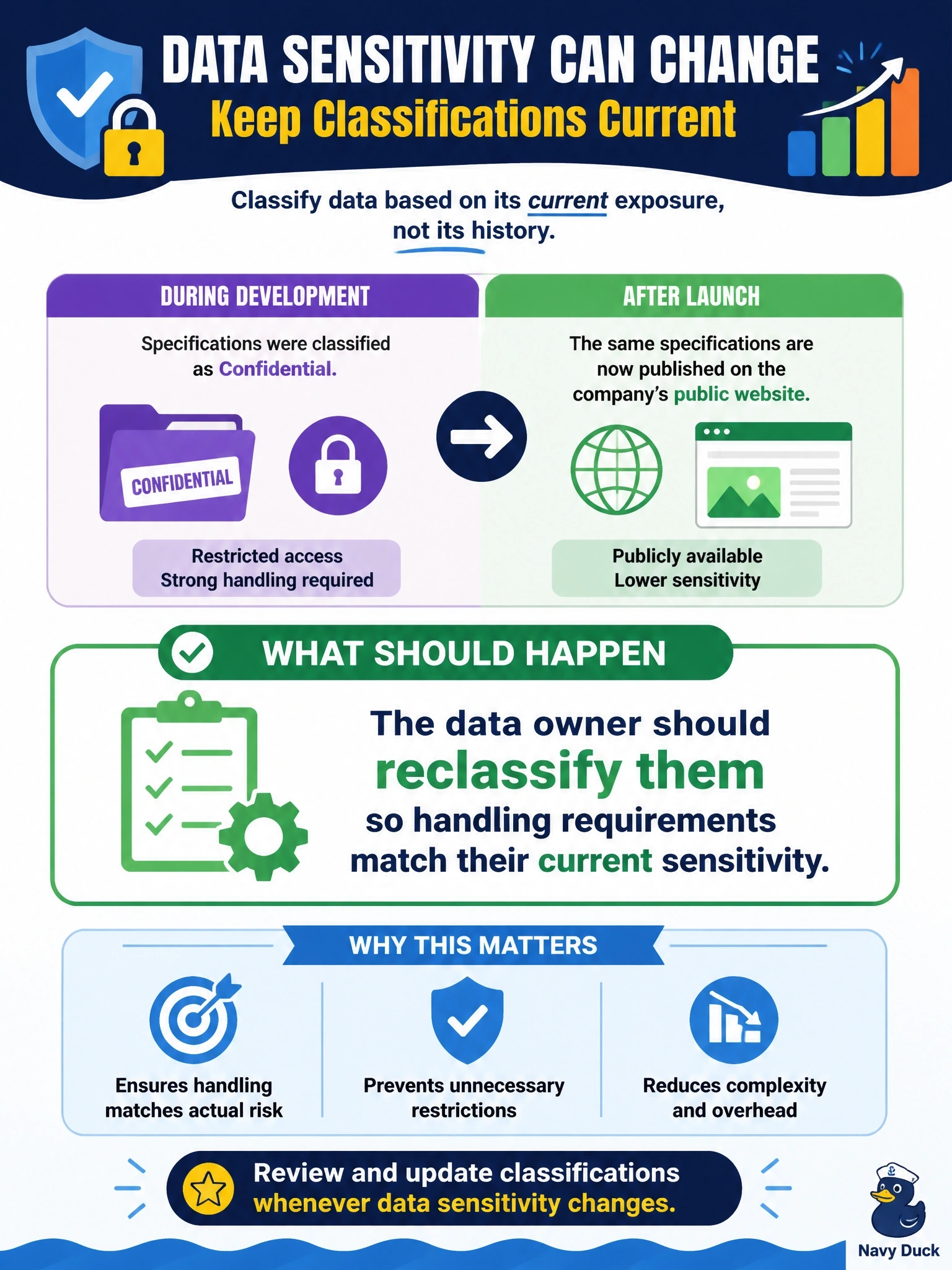
Product specifications were classified as confidential during development. The product has now launched, and the same specifications are published on the company's public website. What should happen to the internal copies?
Select an answer to reveal the explanation.
Short Explanation
Yesterday's secret recipe is today's printed menu. Classification follows the information through its life, so when the sensitivity drops, you have the owner relabel it, rather than guarding a menu like the crown jewels.
Full Explanation
Information sensitivity changes over its life cycle, and classification must follow those changes. Once the specifications are public, continuing to handle them as confidential imposes unnecessary cost and restricts legitimate use, while weakening the credibility of the scheme. The data owner, who assigned the original classification, should review and reclassify the information so that handling requirements match its current value and sensitivity. Building such review points into the life cycle, such as at product launch, keeps classifications accurate. Keeping the confidential label permanently treats classification as fixed, which leads to widespread over-classification and makes it harder for staff to recognize genuinely sensitive material. Deleting the internal copies confuses a change in sensitivity with an end of usefulness; the documents still have business value and may be subject to retention requirements, so disposal follows retention rules, not publication. Having the security team reclassify every product document automatically on launch removes the owner's decision and ignores that some product documents, such as unreleased roadmaps or cost data, remain sensitive after launch. Exam caveat: reclassification can also move information upward. Operational check: confirm the owner's reclassification decision and date are recorded in the inventory.