
During awareness training, several employees ask why they should bother applying classification labels to the documents they create each day. Which explanation BEST answers them?
Select an answer to reveal the explanation.
Short Explanation
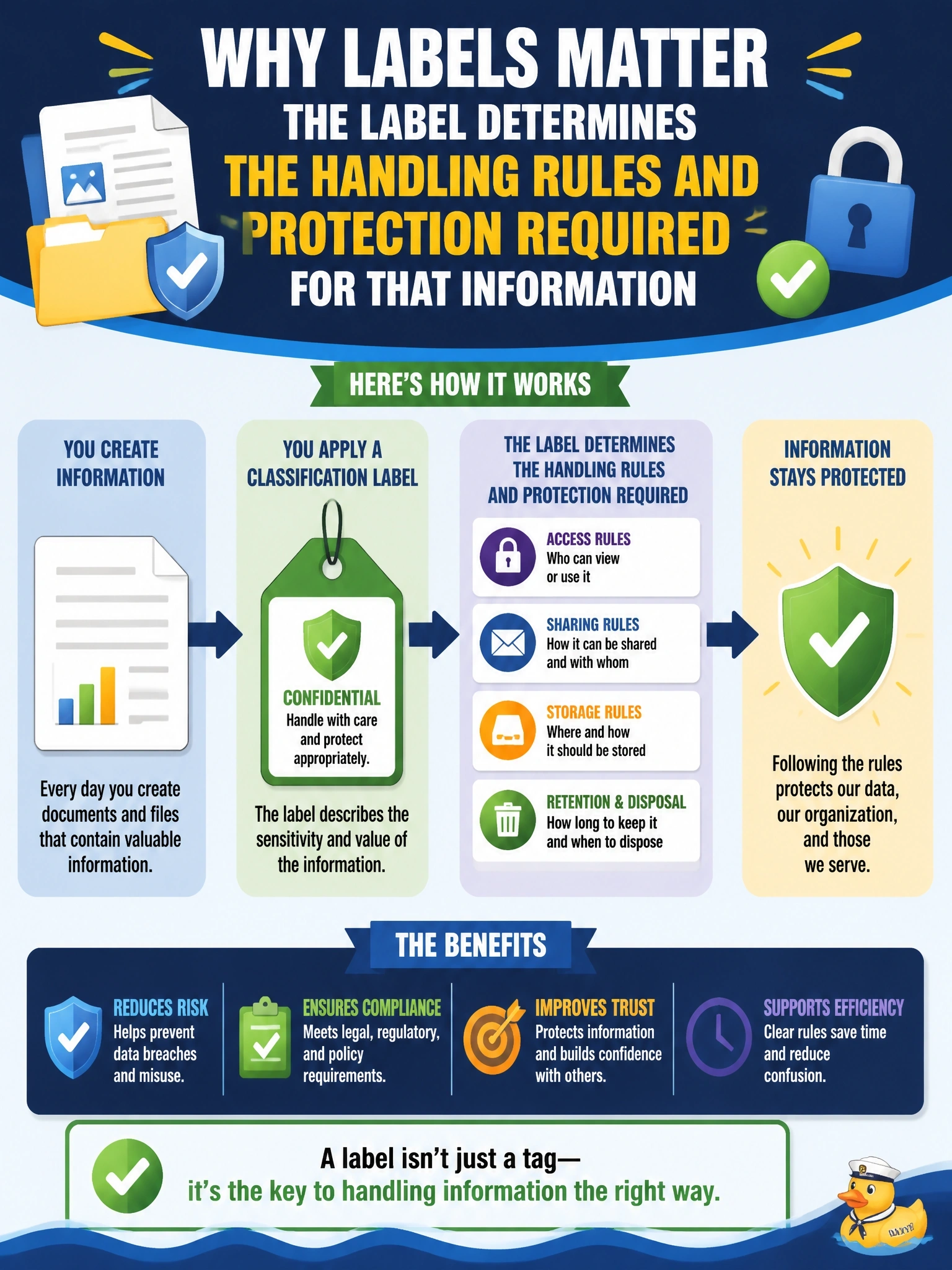
A label on a box is what tells the movers 'fragile, this side up.' Your classification label works the same way: it's what tells everyone, and every system, how to handle that document, and it isn't just paperwork for auditors.
Full Explanation
Classification is the link between the value of information and the protection it receives. Once information carries a classification, the organization's handling rules specify how it may be stored, shared, transmitted, retained and destroyed, and technical controls can enforce those rules. For staff, that is the practical meaning of a label: it tells them and the systems they use what is permitted for that information, and it ensures sensitive material receives proportionate protection while less sensitive material is not burdened with unnecessary controls. Satisfying auditors is a side effect at most; a label exists to drive handling, and treating it as a compliance artifact encourages careless labeling. Monitoring access to sensitive files may use classification as an input, but surveillance of employees is not the purpose of classifying information and presenting it that way undermines cooperation. Ranking employees by the sensitivity of information they may handle describes personnel clearance or authorization, a related but distinct concept that governs people rather than information. Exam caveat: classification without associated handling rules delivers little value, so both must be defined together. Operational check: confirm each classification level has published handling rules that staff can find and that key controls enforce them.