
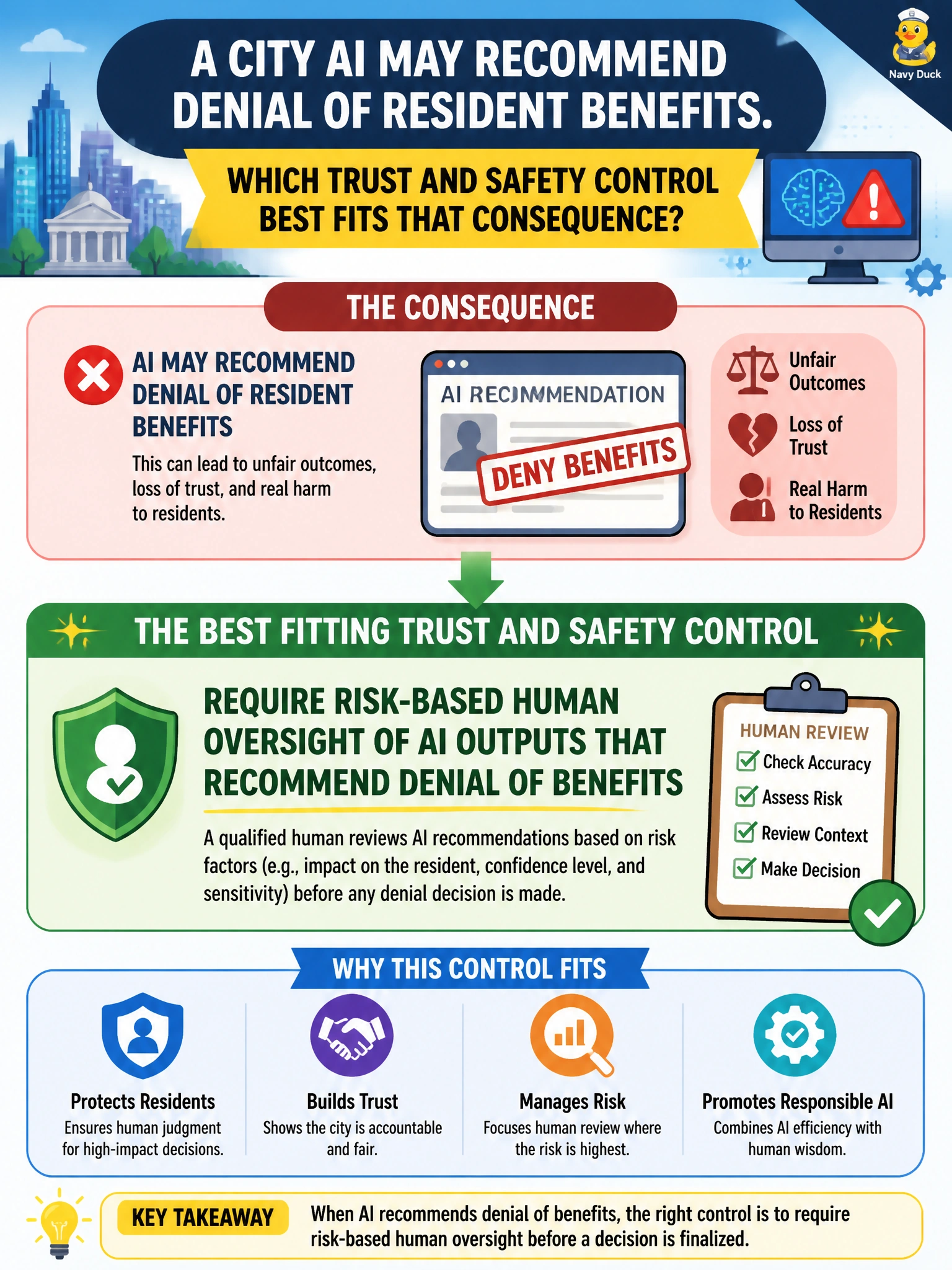
A city AI may recommend denial of resident benefits. Which trust and safety control best fits that consequence?
Select an answer to reveal the explanation.
Short Explanation
When the system leans toward “no” on benefits, a human still needs a seat at the table. Risk-based oversight on those denial recommendations is how cities keep trust and safety real.
Full Explanation
When city AI may recommend denial of resident benefits, consequences are adverse and often irreversible without appeal friction. Risk-based human oversight of those outputs keeps a qualified reviewer in the loop for high-impact decisions, supporting due process, error correction, and public trust in municipal benefits administration. Publishing aggregate fairness metrics for benefit decisions in transparency reports gives the public a high-level view but does not intervene before a denial lands, so model error or biased features can still harm applicants without a human checkpoint. Adding plain-language explanations to denial notices sent to affected residents helps residents understand the outcome but never puts a qualified person between the recommendation and the applicant losing benefits, so the adverse action still ships unchecked. Recording denial recommendations with confidence scores for periodic model performance review only informs later model tuning and does not require review before the denial takes effect, which is too late for the resident who needed the review before the decision landed. Exam caveat: AAISM trust-and-safety expectations emphasize human oversight proportional to impact—especially for civic AI that can deny benefits or other entitlements. Operational check: route denial recommendations to reviewers with decision rights, log AI suggestion versus human final action, measure override rates and disparate impacts, and prohibit silent full automation of adverse benefit outcomes.
Prefer to study offline? Printable PDF study book + test engine ($7.50, unofficial). These questions stay free here.