
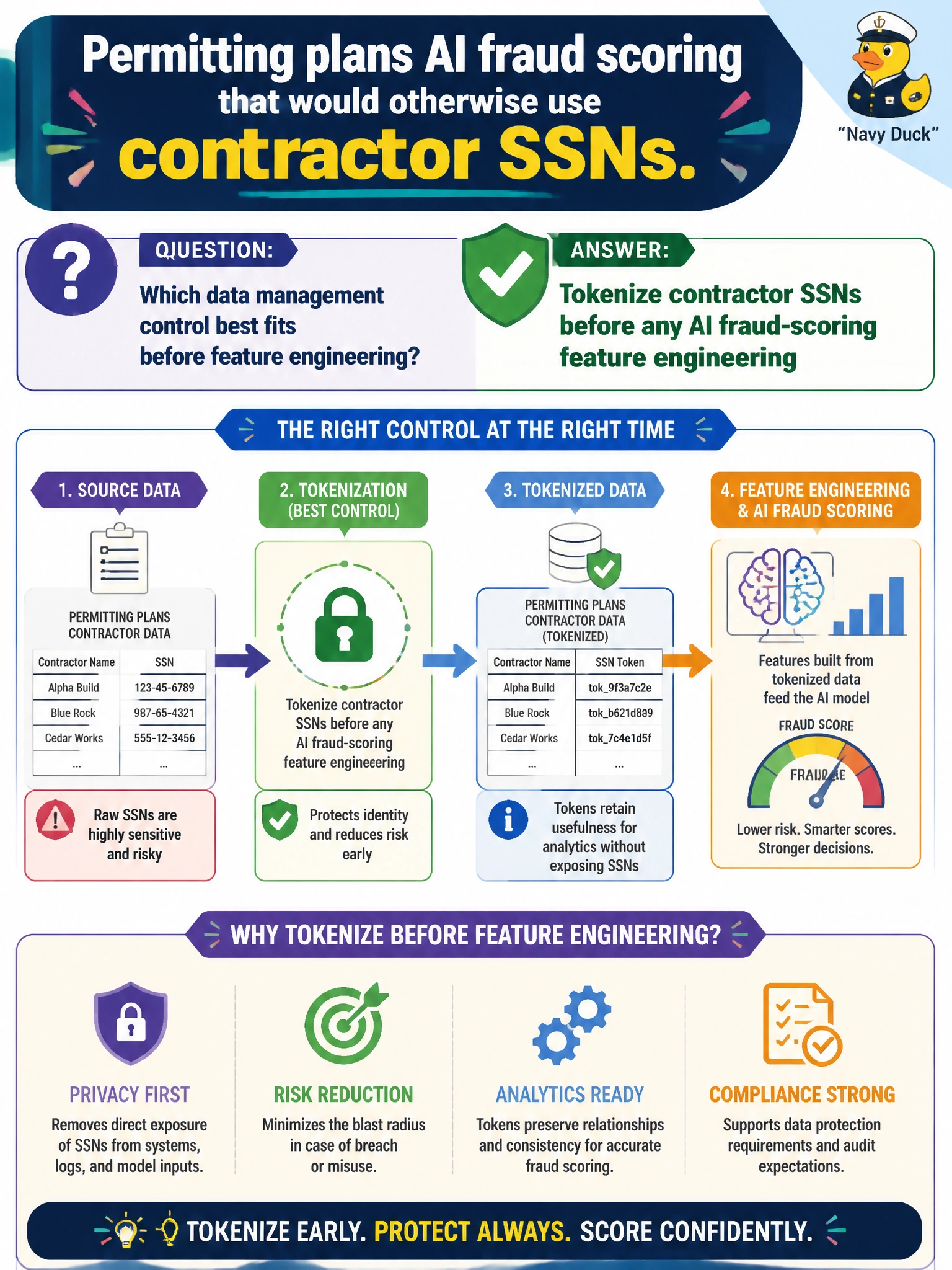
Permitting plans AI fraud scoring that would otherwise use contractor SSNs. Which data management control best fits before feature engineering?
Select an answer to reveal the explanation.
Short Explanation
You don’t need the real SSN sitting in the feature kitchen. Tokenize first, then build fraud-scoring features so the model works without spreading identifiers around.
Full Explanation
Permitting fraud-scoring pipelines that would otherwise consume contractor SSNs should tokenize those identifiers before feature engineering. Encrypting contractor SSNs with AES-256 before fraud-scoring feature engineering still permits raw identifiers to be decrypted for model use, so it does not stop SSNs from circulating through feature tables, notebooks, and intermediate stores, and it introduces key-management theft risk. Using AES-256 encryption before fraud-scoring feature engineering still feeds real SSNs into feature engineering, maximizing identifier sprawl across the AI pipeline and leaving copies in logs and exports whenever the keys are used. Applying dynamic masking to contractor SSNs during fraud-scoring engineering is still a high-risk handling pattern because it leaves raw SSNs available to the model, creating endpoint and pipeline leakage paths even if outputs hide them. Enforcing role-based access on contractor SSNs in feature engineering still ignores least privilege because raw identifiers remain reachable by training jobs instead of being tokenized before feature construction. Exam caveat: sensitive identifiers in civic AI should be protected before feature construction, not cleaned up later after copies proliferate. Operational check: insert a tokenization service upstream of permitting fraud feature jobs, ban raw SSN columns in feature stores, monitor for plaintext SSN patterns, and grant detokenization only under audited break-glass roles.
Prefer to study offline? Printable PDF study book + test engine ($7.50, unofficial). These questions stay free here.