
County IT archives prompts and responses from a resident-services assistant. How should that AI interaction data be managed?
Select an answer to reveal the explanation.
Short Explanation
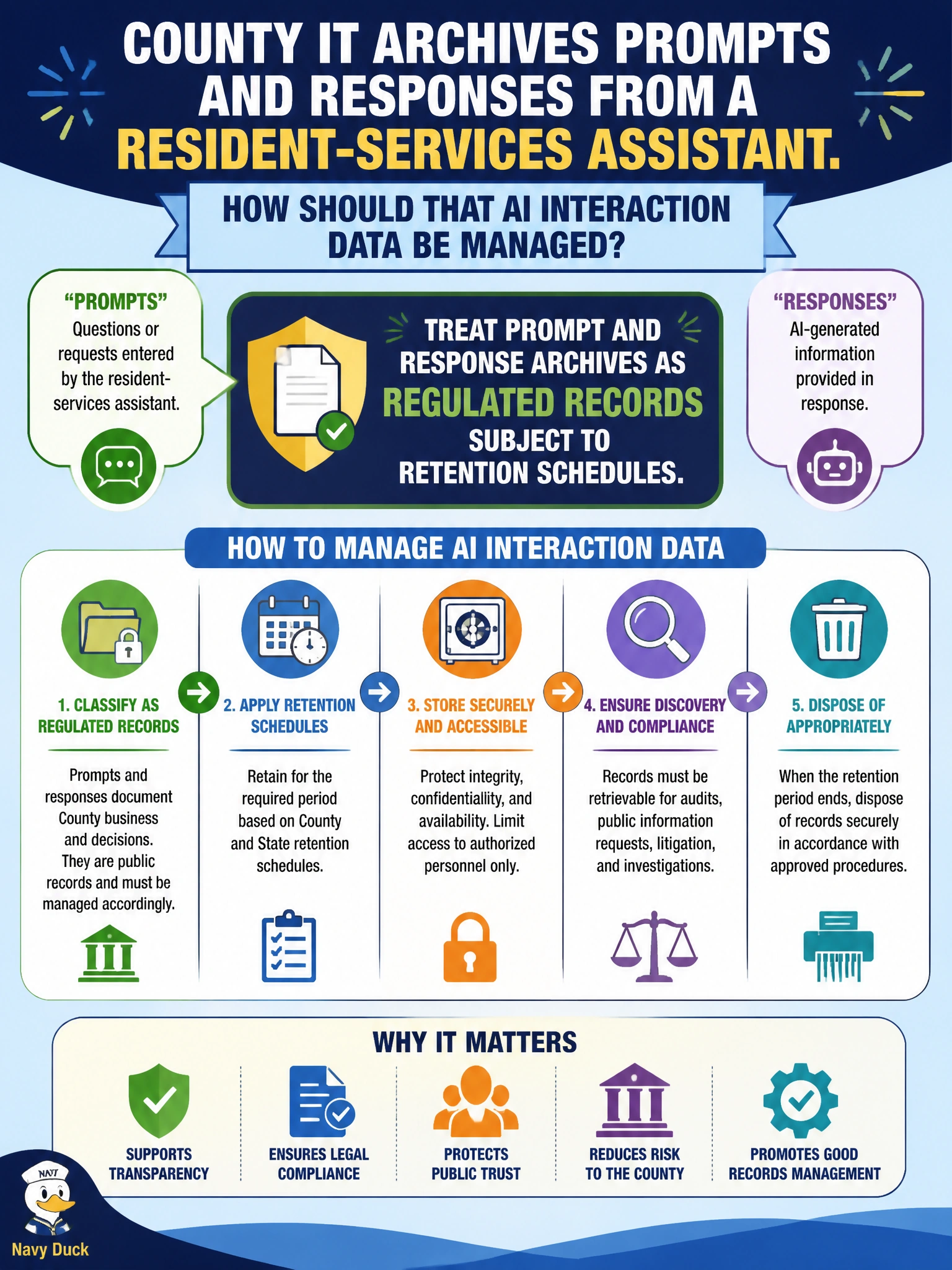
Those prompts and answers are records, not scratch paper. Put them on a real retention schedule like other regulated county records—don’t just manage them as system logs under standard backup rotation or treat de-identified copies as exempt.
Full Explanation
County resident-services assistant prompts and responses are municipal interaction records. They may contain PII, service requests, and decision-relevant statements that trigger retention, legal hold, privacy, and public-records obligations. Treating those archives as regulated records subject to retention schedules aligns AI logging with existing civic records management rather than inventing an unmanaged side channel. Managing prompt and response archives as system logs under standard backup rotation mixes regulated interaction records with routine operational logs and lets backup rotation override mandated retention schedules, so disposal and legal holds can be missed. Transferring prompt and response archives to cold storage upon reaching retention limits does not satisfy the obligation if those limits call for disposal rather than continued preservation—cold storage still means retained, and keeping expired records around under a different storage tier can violate the same retention schedule it appears to respect. Retaining prompt and response archives as de-identified datasets exempt from retention schedules does not remove their status as regulated records, since de-identification does not eliminate retention, legal hold, and public-records obligations and re-identification risk remains. Exam caveat: AI interaction data is still organizational data; AAISM data management expects retention and classification discipline comparable to other regulated municipal records. Operational check: classify prompt/response archives, map them to retention schedules and hold procedures, store them in governed repositories with access control, and avoid managing them as system logs under standard backup rotation or retaining them as de-identified datasets exempt from retention schedules without records-management approval.
Prefer to study offline? Printable PDF study book + test engine ($7.50, unofficial). These questions stay free here.