
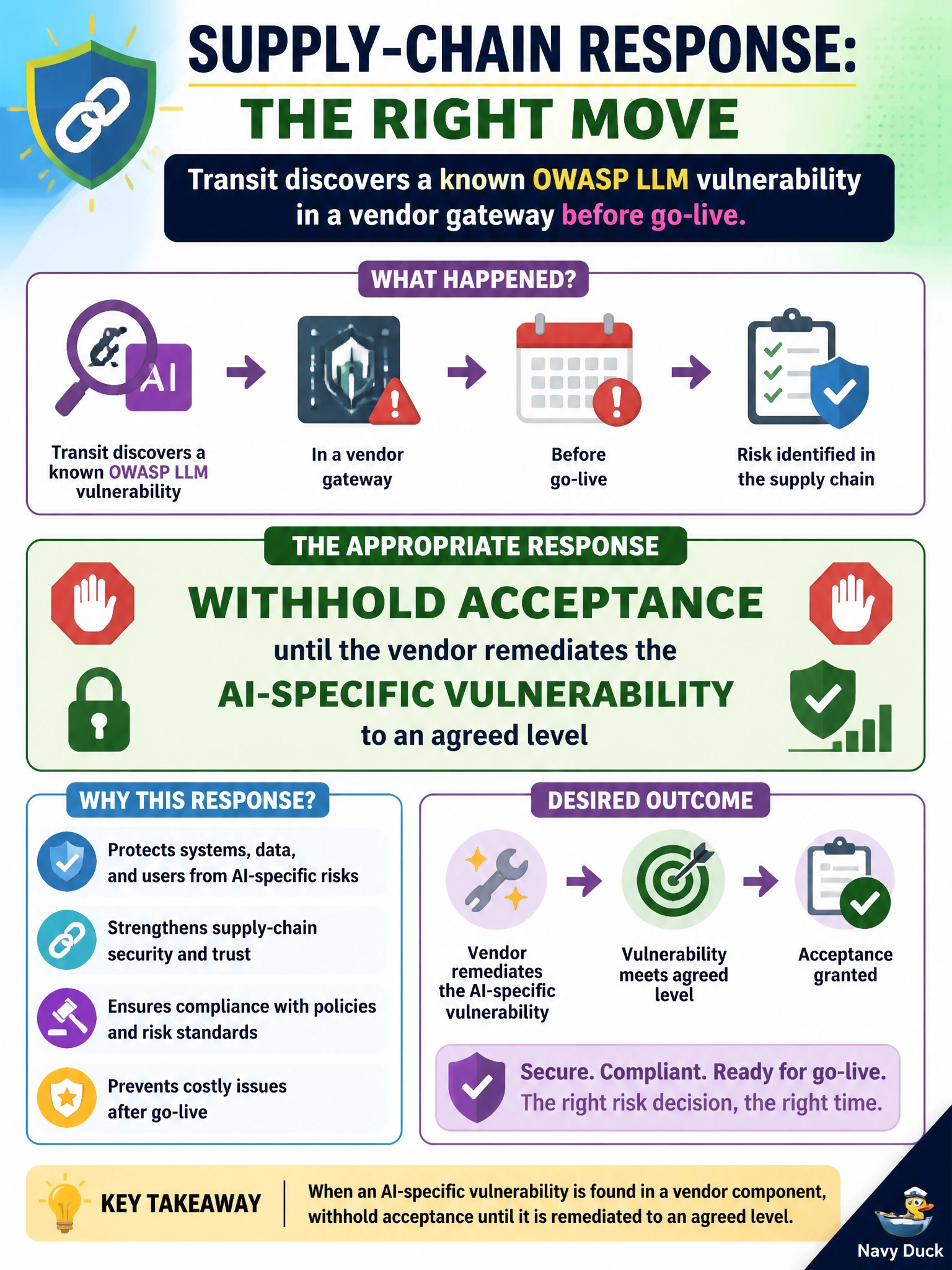
Transit discovers a known OWASP LLM vulnerability in a vendor gateway before go-live. What is the appropriate supply-chain response?
Select an answer to reveal the explanation.
Short Explanation
A known LLM gateway hole before go-live is a stop sign, not a shrug. Hold acceptance until the vendor fixes it to the bar you set. You’ll still be exposed if you settle for a fresh SOC 2, wider logging coverage, or an upstream model patch that leaves the gateway flaw in place.
Full Explanation
Transit discovering a known OWASP LLM vulnerability in a vendor gateway before go-live should withhold acceptance until the vendor remediates the AI-specific vulnerability to an agreed level. That supply-chain response is appropriate because knowingly launching with an unremediated LLM-class flaw converts a controllable pre-production finding into resident-facing residual risk. Acceptance gates enforce remediation priority and document residual risk only after informed municipal decision. Withholding acceptance until the vendor passes SOC 2 reassessment for the gateway to an agreed level fails because a SOC 2 reassessment evidences general control operation, not remediation of the specific OWASP LLM gateway flaw, so it substitutes compliance re-attestation for a targeted fix and retest. Withholding acceptance until the vendor deploys expanded prompt logging to an agreed coverage level fails because expanded logging improves observability but does not remediate the underlying LLM vulnerability; conditioning acceptance on monitoring coverage leaves the exploitable flaw in place. Withholding acceptance until the upstream model provider releases a patched model version to an agreed level fails because the finding is in the vendor's gateway implementation, not the upstream base model, so it misplaces accountability to a third party whose release cannot remediate the gateway-specific flaw. Exam cavelet: “agreed level” may allow compensating controls for lower severities, but critical AI gateway flaws generally require fix-or-no-go by the gateway vendor rather than waiting-for-upstream-patch theater. Operational check: open a blocker finding, define remediation acceptance criteria with the vendor, retest the OWASP LLM issue, and withhold production acceptance until evidence meets the agreed residual-risk threshold.
Prefer to study offline? Printable PDF study book + test engine ($7.50, unofficial). These questions stay free here.