
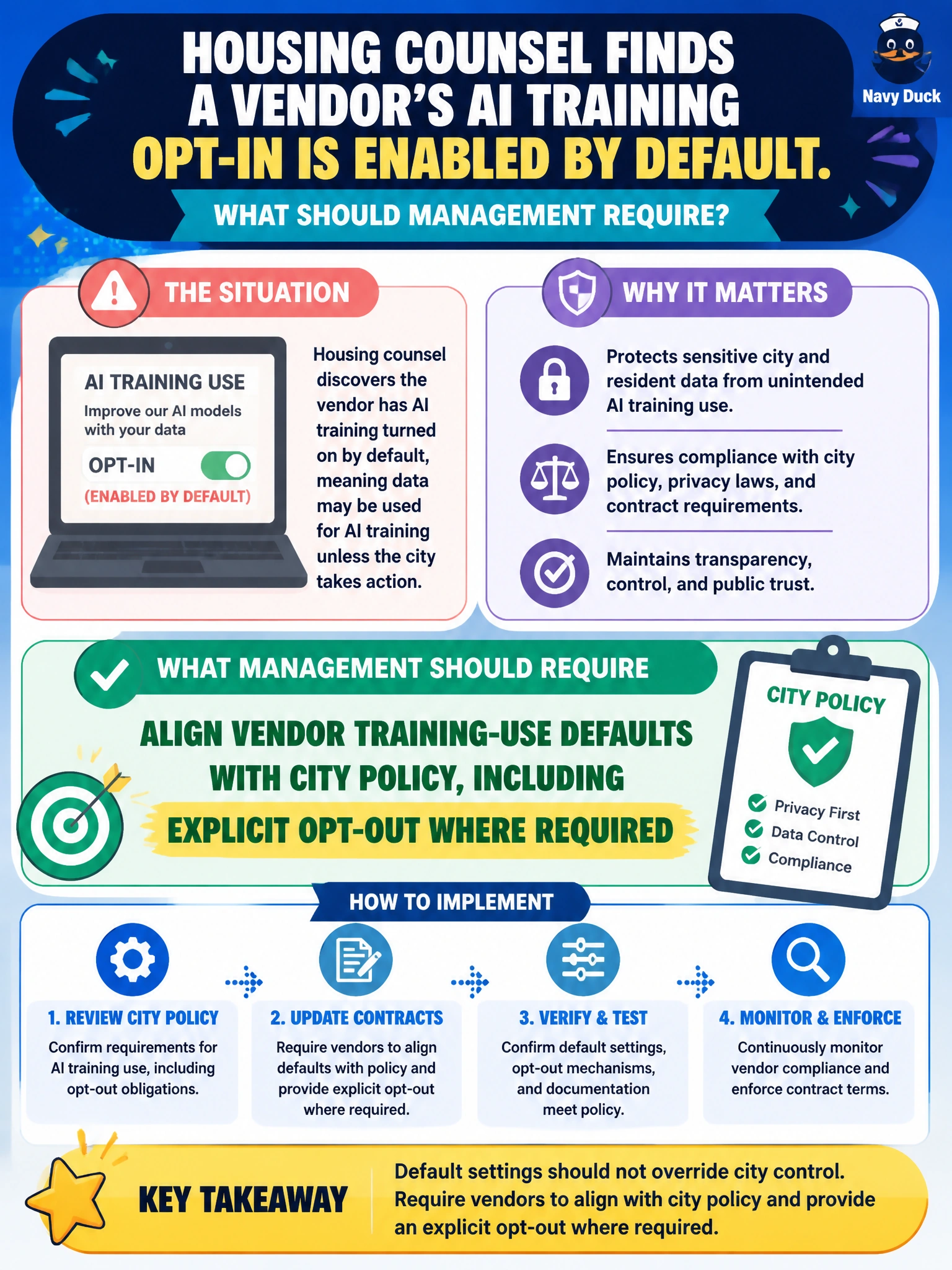
Housing counsel finds a vendor’s AI training opt-in is enabled by default. What should management require?
Select an answer to reveal the explanation.
Short Explanation
Default opt-in for training can quietly feed tenant data into the vendor’s models. Force the settings—and the contract—to match city policy, including opt-out. Small print doesn’t overrule municipal rules.
Full Explanation
Housing counsel finding a vendor’s AI training opt-in enabled by default should require aligning vendor training-use defaults with city policy, including explicit opt-out where required. That management requirement works because default opt-in can silently divert tenant-related prompts and documents into vendor model improvement pipelines contrary to municipal privacy and purpose limits. Configuration and contract must both reflect city policy before housing AI is used.
Accepting the default because changing it requires a ticket fails conceptually because operational friction does not authorize noncompliant data use of tenant information. Encouraging staff to paste extra tenant PII to improve vendor models fails because it expands unauthorized training contributions and worsens privacy harm. Ignoring training clauses because they appear in small print fails because inconspicuous terms remain binding risk and do not override municipal policy obligations.
Exam caveat: UI opt-out can be reverted by vendor updates; contractual prohibitions and monitoring are needed in addition to a one-time toggle. Operational check: disable training opt-in immediately, confirm opt-out in writing and in the admin console, amend the contract to forbid training on city housing data without express approval, and re-verify the setting after major vendor releases.
Prefer to study offline? Printable PDF study book + test engine ($7.50, unofficial). These questions stay free here.