
A permitting office relies heavily on AI plan-check suggestions. Which risk scenario should the assessment document and treat?
Select an answer to reveal the explanation.
Short Explanation
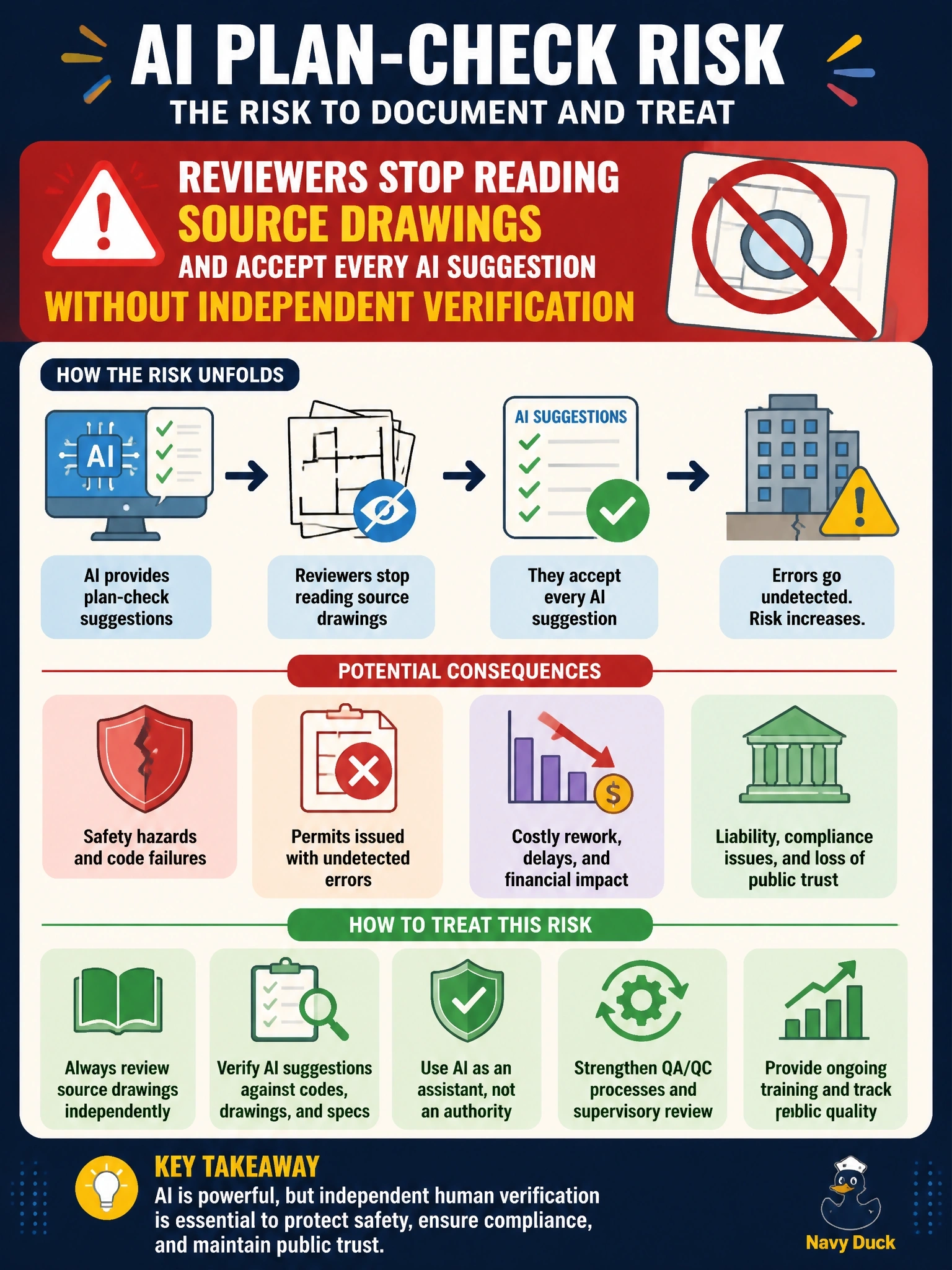
Overreliance is the quiet failure mode: the AI looks so helpful that humans stop checking. Document the scenario where reviewers rubber-stamp suggestions, then treat it with oversight and sampling—not wishful thinking. A validation practice or a tracking metric is a control, not the unchecked-acceptance risk, and spot-checking edge cases is under-reliance, not overreliance.
Full Explanation
Municipal AI risk assessments for permitting must document overreliance scenarios because plan-check suggestions can influence building safety and code compliance decisions. The scenario to identify and treat is reviewers ceasing independent verification of source drawings and accepting every AI suggestion. That condition converts a decision-support tool into an ungoverned authority path: errors, hallucinations, or biased recommendations can pass into permits without human challenge. Treatment typically includes mandatory human verification of structural and life-safety elements, sampling audits of AI-accepted packages, escalation when confidence is low or drawings conflict, and metrics that detect declining review depth over time. Documenting the scenario works because risk registers drive controls, training, and residual-risk decisions rather than assuming staff will always stay skeptical.
Reviewers validating AI suggestions against source drawings and recording rationale for overrides fails as the primary scenario because a documented validation practice is a control measure, not the unchecked acceptance risk that converts a decision-support tool into an ungoverned authority path. The office tracking AI suggestion acceptance rates to monitor review quality trends fails as the primary scenario because metrics alone are monitoring tools, not the operational risk of rubber-stamping plan checks without independent verification. Staff speeding up plan reviews by relying primarily on AI suggestions and spot-checking only unusual edge-case drawings against source documents fails as the primary scenario because selective verification under different conditions still describes an under-reliance pattern, not the unchecked acceptance risk that converts a decision-support tool into an ungoverned authority path.
Exam caveat: overreliance risk can coexist with underuse; both may appear, but life-safety AI risk treatment prioritizes unchecked acceptance of recommendations that affect code compliance. Operational check: sample recent AI-assisted plan reviews for evidence of independent drawing checks, track override and escalation rates, and require supervisors to attest that critical AI suggestions were verified before permit issuance.
Prefer to study offline? Printable PDF study book + test engine ($7.50, unofficial). These questions stay free here.