
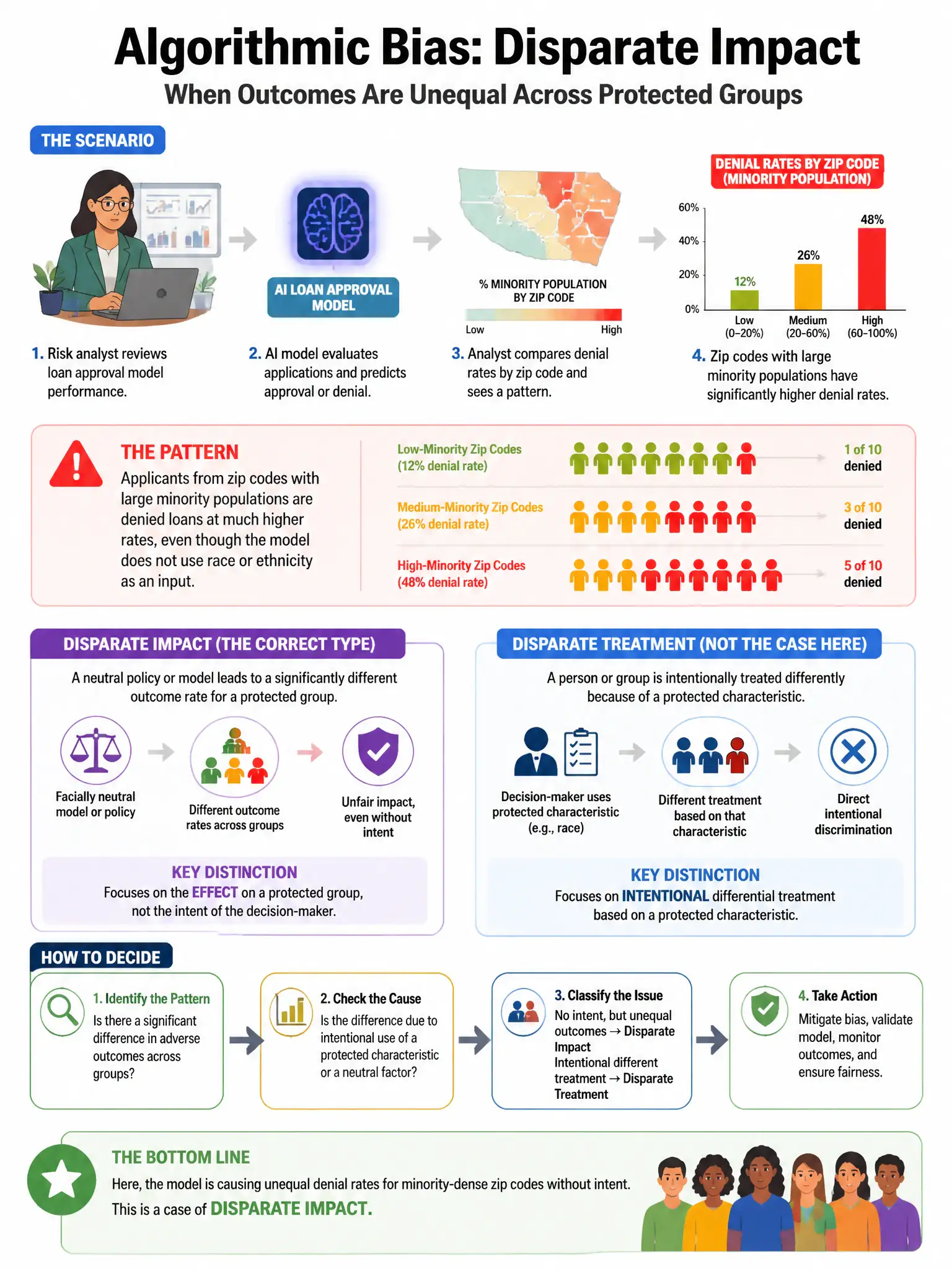
A risk analyst discovers that an AI-powered loan approval model produces significantly higher denial rates for applicants from zip codes with large minority populations. Which type of AI risk does this most directly represent?
Select an answer to reveal the explanation.
Short Explanation
Here's the deal — you're seeing proximate discrimination through correlated features because zip code can act as a proxy for race, producing disparate impact even when race isn't explicitly included. Drift and adversarial attacks don't explain a stable structural bias pattern.
Full Explanation
The correct answer is proximate discrimination through correlated features because using zip code as a feature can act as a proxy for race, producing disparate impact even when race is not explicitly included. The model drift due to data distribution shift answer is wrong because drift refers to model performance degradation over time, not structural bias. The adversarial perturbation of input vectors answer is wrong because adversarial perturbation is a deliberate attack on inputs, not a systemic bias pattern. The concept drift in the target variable answer is wrong because concept drift refers to changes in the relationship between features and outcomes over time.