
Under SR 11-7 guidance on model risk management, what is the key distinction between a 'model limitation' and a 'model error'?
Select an answer to reveal the explanation.
Short Explanation
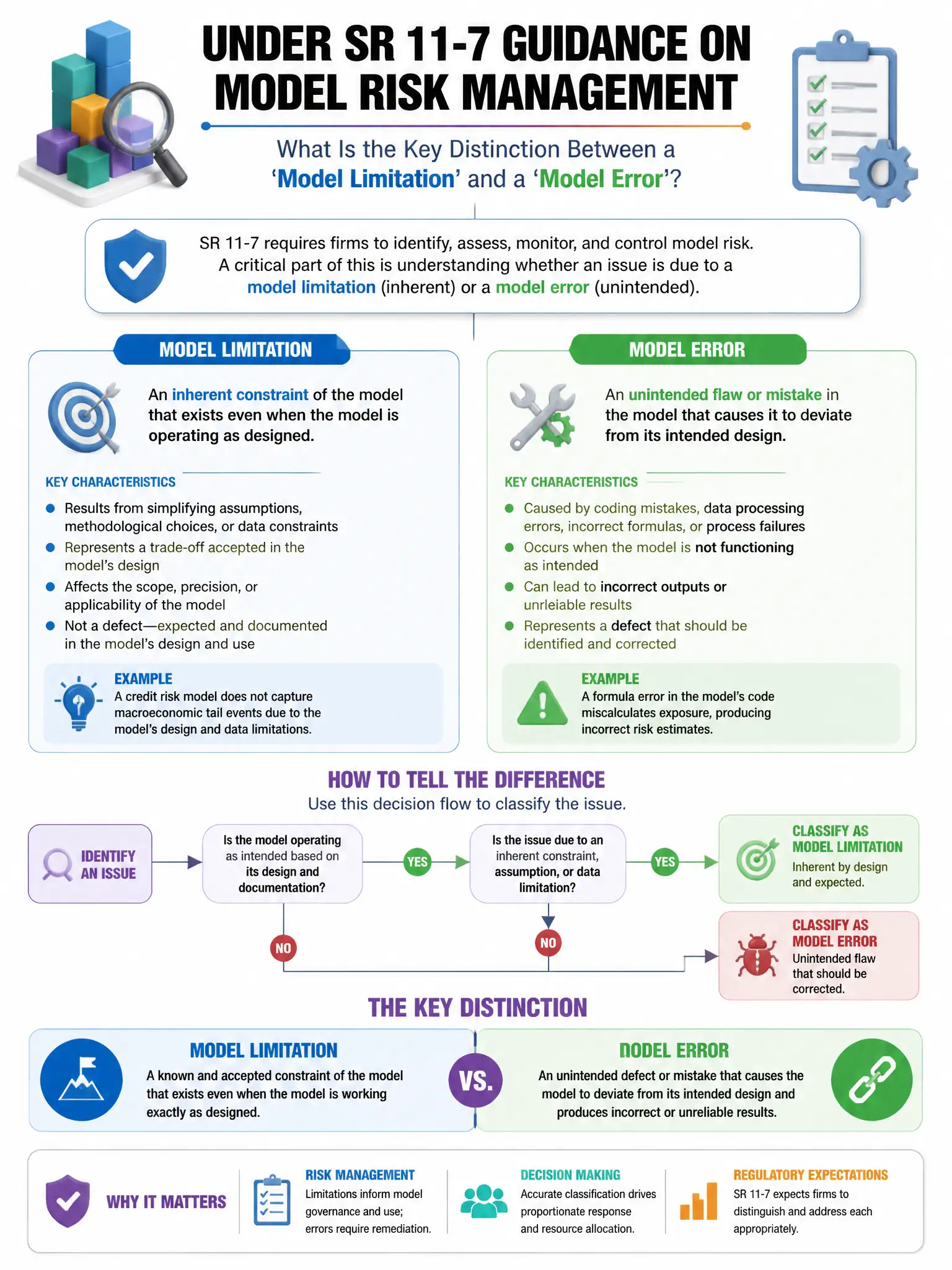
Here's the deal — a model limitation is a known constraint you disclose and manage, like scope boundaries or simplifying assumptions, while a model error is an unintended flaw that makes the model produce wrong outputs. Limitations aren't bugs; they're accepted constraints, and errors need correction.
Full Explanation
The correct distinction is that a model limitation is a known constraint in model design or applicability—such as scope boundaries, simplifying assumptions, or data constraints—that is disclosed and managed, while a model error is an unintended flaw in logic, implementation, or data that causes the model to produce incorrect outputs. Limitations are not bugs; they are accepted constraints. Errors require correction. This distinction is fundamental to model risk governance and dictates different response actions. The option saying limitations are documented in the model risk tier while model errors are reported to regulators conflates documentation and reporting requirements. The option saying model errors are limited to coding mistakes in the model implementation, while limitations refer only to data quality issues, incorrectly restricts errors to coding mistakes and limitations to data quality. The option saying model limitations require remediation within 30 days, while model errors may be accepted with compensating controls, imposes specific timelines not defined in SR 11-7.