
A technology company's legal team advises that their AI system must comply with the EU AI Act's transparency obligations for limited-risk AI systems. Which obligation is SPECIFICALLY required for AI systems that interact with natural persons (such as chatbots)?
Select an answer to reveal the explanation.
Short Explanation
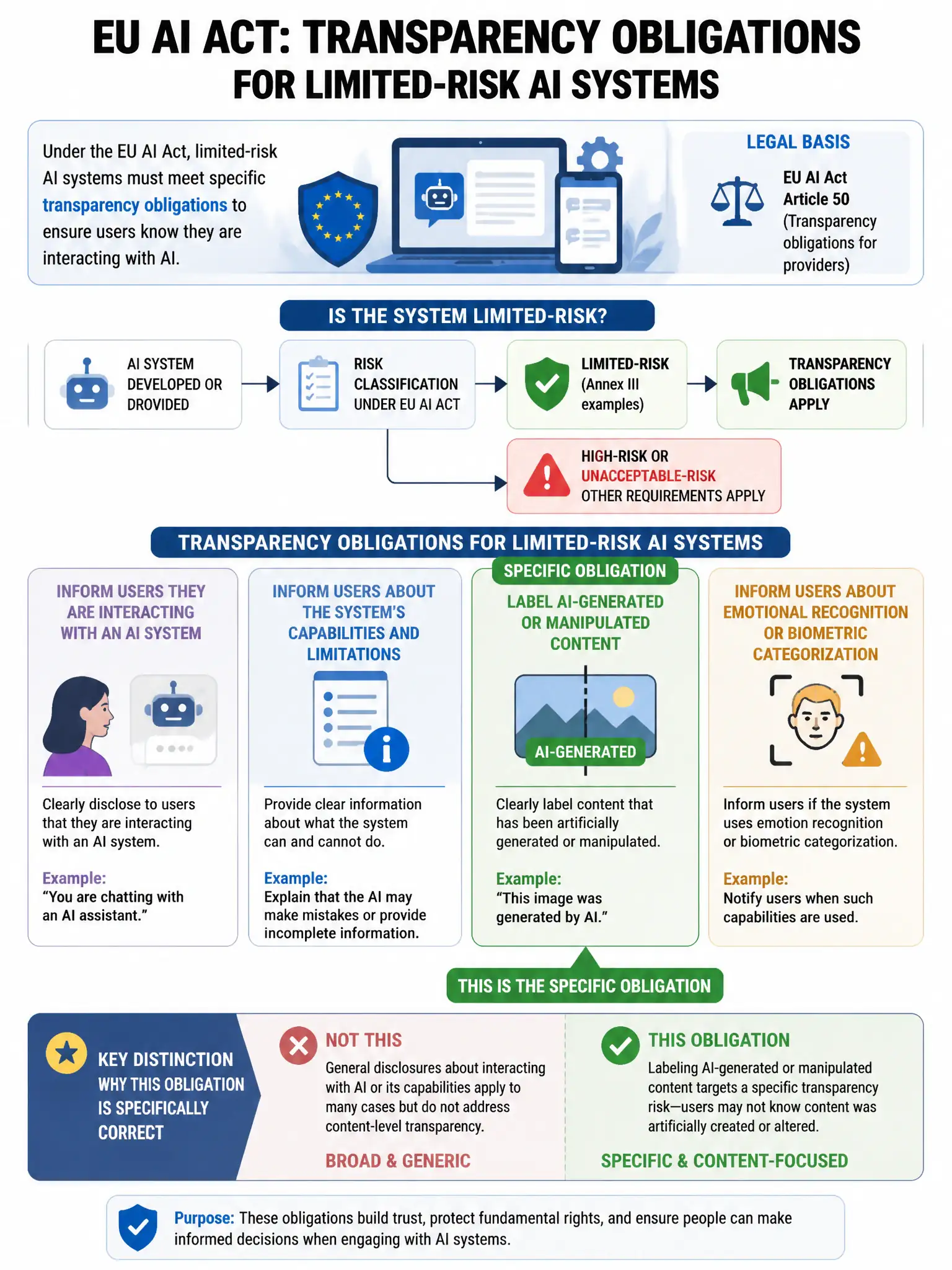
Here's the deal — you need to tell users they're talking to an AI, not a person, unless it's already obvious from context. That's the EU AI Act's transparency rule for limited-risk systems like chatbots.
Full Explanation
The correct obligation is to inform natural persons that they are interacting with an AI system, unless this is already obvious from context. This is the EU AI Act's transparency requirement for limited-risk AI systems that interact with humans, specifically AI chatbots and virtual assistants, and it's found in Article 50. Conducting a conformity assessment and registering the system in the EU AI database is a high-risk AI requirement, not the limited-risk transparency rule for chatbots. Providing a detailed technical summary of the AI model's architecture and training methodology is not required for limited-risk systems. Appointing a qualified technical person to supervise all user interactions with the AI system is not an EU AI Act transparency requirement.