
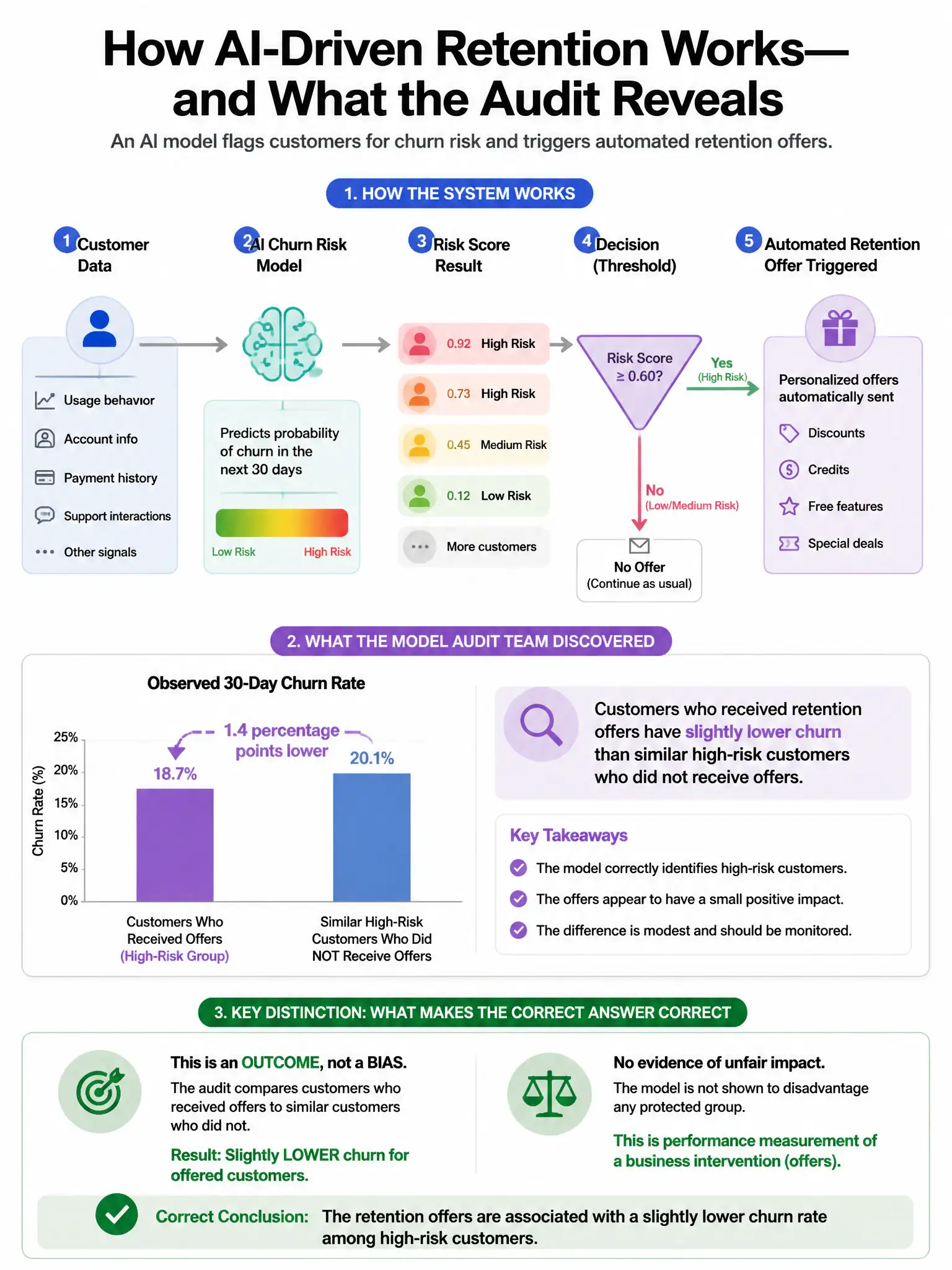
An AI model flags customers for churn risk and triggers automated retention offers. The model audit team discovers that customers who received retention offers have slightly lower churn rates, but wealthier customers receive more generous offers (higher discounts) because their historical lifetime value is used as a feature. What ethical concern should be prioritized in the audit report?
Select an answer to reveal the explanation.
Short Explanation
Here's the deal — you should prioritize the fairness concern because lifetime value is a wealth proxy, and using it to size retention offers can create a two-tiered service that disadvantages lower-income customers. That can trigger consumer fairness and unfair business practices concerns, even if it looks commercially rational.
Full Explanation
The correct concern is that using lifetime value as a differentiator in retention offers creates disparate treatment that may systematically disadvantage lower-income customers and raise consumer fairness concerns. Lifetime value acts as a wealth proxy because it correlates with income, so tying offer generosity to it can create a two-tiered service quality. In regulated industries such as banking, insurance, and telecommunications, this can trigger consumer fairness and unfair business practices concerns, even when commercially rational. The option saying accuracy should be improved first is wrong because accuracy is secondary here. The option saying the model works as intended because higher-value customers merit larger incentives reflects business logic but ignores regulatory and ethical dimensions. The option saying automation eliminates human review is wrong because it would amplify the ethical issue.