
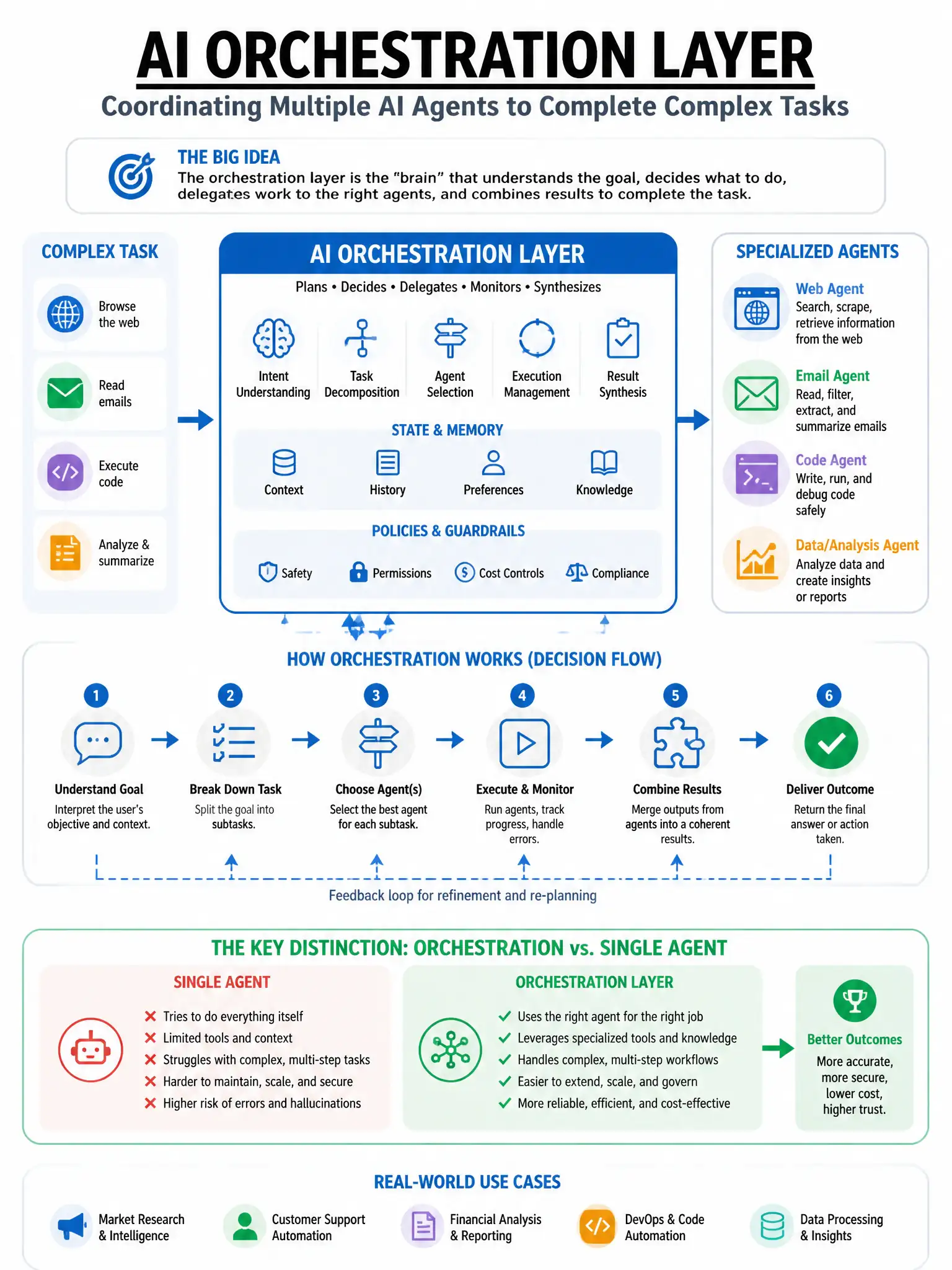
A company is building an AI orchestration layer that coordinates multiple AI agents to complete complex tasks, including browsing the web, reading emails, and executing code. What is the MOST significant new risk category introduced by this multi-agent architecture?
Select an answer to reveal the explanation.
Short Explanation
Here's the deal — cascading failure and privilege escalation is the big new risk because a compromised, hallucinating, or prompt-injected agent can trigger actions across other agents, escalating privileges and taking irreversible real-world actions at scale. An agent browsing the web can receive a malicious instruction, trigger code execution in another agent, and then send emails through a third agent.
Full Explanation
Cascading failure and privilege escalation risks where a compromised or hallucinating agent triggers unintended actions across the broader agent ecosystem is correct because multi-agent systems introduce a new attack surface where a single compromised, hallucinating, or prompt-injected agent can trigger a cascade of actions across other agents, potentially escalating privileges and taking irreversible real-world actions at scale. An agent with web browsing capability that receives a malicious instruction can trigger code execution in another agent, which then sends emails via a third agent. This cascading amplification of errors is unique to agentic architectures. Increased computational cost from running multiple AI models simultaneously, intellectual property risk from AI agents accessing competitors' publicly available information, and model performance degradation from context window limitations when processing information across multiple agents are real concerns but not the defining new risk category of multi-agent systems.