
Which control BEST addresses the risk of unauthorized access to sensitive information when deploying an LLM with retrieval-augmented generation (RAG) connected to a corporate document repository?
Select an answer to reveal the explanation.
Short Explanation
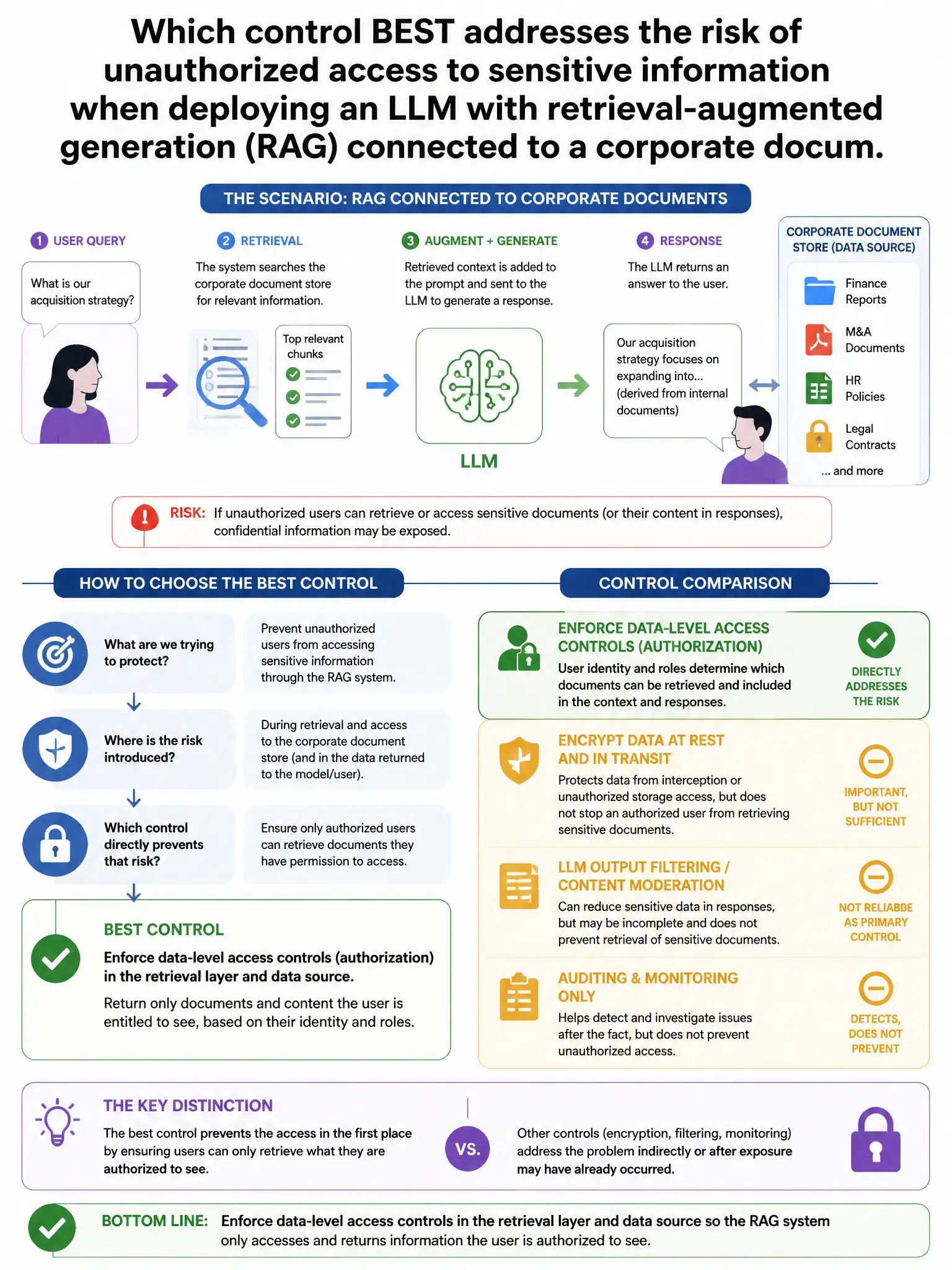
Here's the deal — you need to control what the retrieval layer can pull for each user. In a RAG setup, the big risk is the model grabbing documents the requester shouldn't see, so document-level access controls at retrieval stop that before it happens.
Full Explanation
The correct control is implementing document-level access controls in the retrieval layer so that the LLM only retrieves and uses documents that the requesting user is authorized to access. In a RAG architecture, the primary data exfiltration risk is the LLM retrieving and exposing documents the user is not authorized to see. Implementing access controls at the retrieval layer ensures that the document search is scoped to the user's permissions before documents are included in the LLM's context. Using a smaller, less capable language model to reduce the risk of sophisticated attacks does not prevent unauthorized retrieval; it merely reduces capability. Encrypting all documents in the knowledge base with AES-256 encryption protects documents from external access but does not control which authenticated users can retrieve which documents. Requiring users to authenticate with multi-factor authentication before accessing the LLM interface authenticates user identity but does not limit what documents an authenticated user can access through the LLM.