
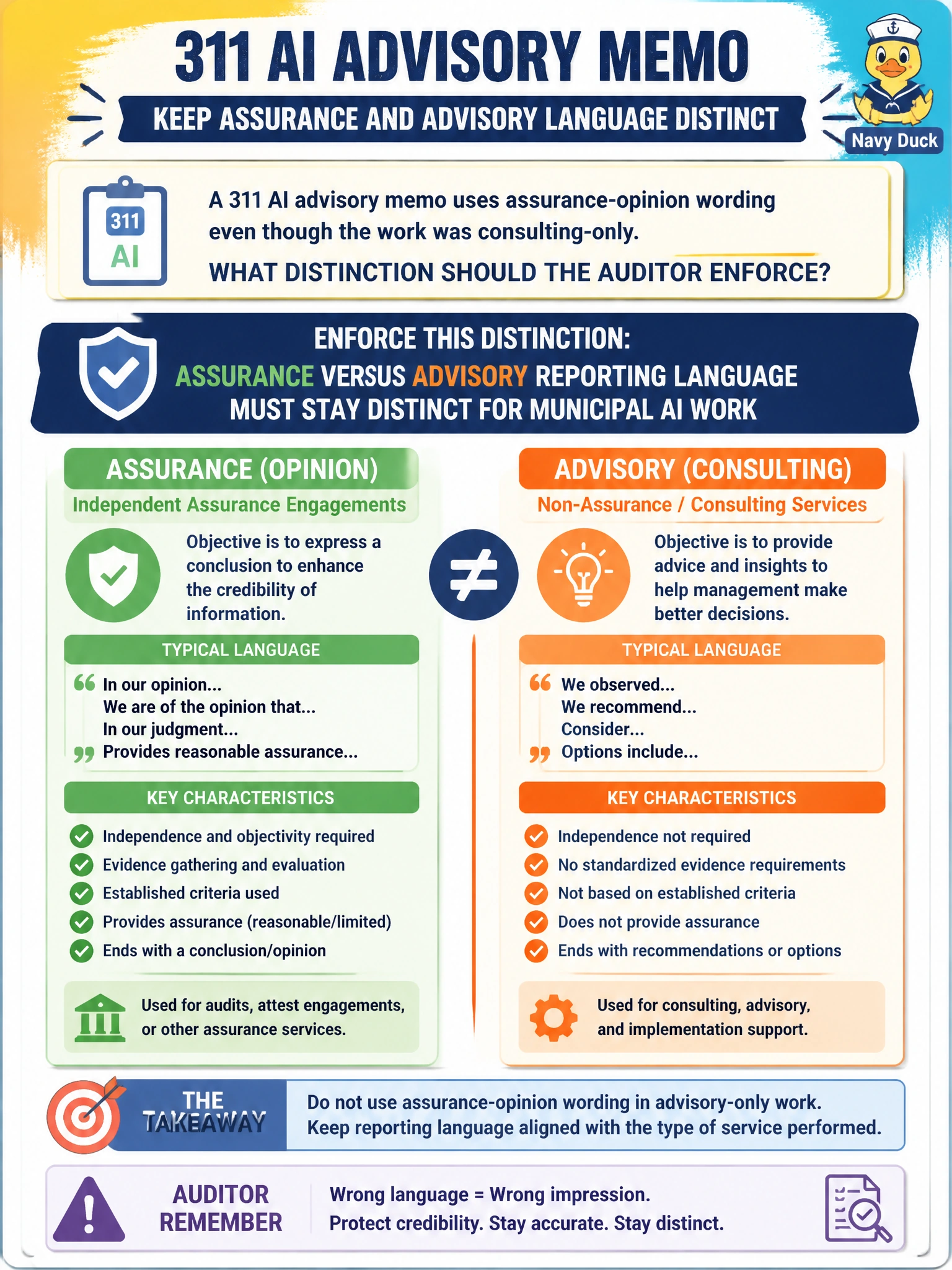
A 311 AI advisory memo uses assurance-opinion wording even though the work was consulting-only. What distinction should the auditor enforce?
Select an answer to reveal the explanation.
Short Explanation
If it was advice, do not dress it up like an assurance opinion — readers will get the wrong idea. Keep the 311 AI memo language honest about the engagement type. Labels matter.
Full Explanation
Enforcing a clear distinction between assurance and advisory reporting language is required when a 311 AI memo uses opinion-style wording for consulting-only work. Assurance opinions imply a defined level of examination and conclusion under professional standards; advisory suggestions do not. Mislabeling confuses municipal readers about reliance and the nature of the 311 AI engagement.
Saying advisory memos may express limited assurance based on 311 inquiry procedures fails by concept: even limited assurance is still assurance language, and consulting-only work should not express any assurance conclusion. Saying consulting results should follow audit opinion structure to support municipal reliance fails because that structure implies assurance and invites inappropriate reliance on advisory work. Saying engagement letters for 311 work can define reporting language instead of the memo fails because the memo itself must carry clear engagement-type language; stakeholders reading the memo cannot rely on a separate letter to avoid over-reliance.
Exam caveat: even advisory work should avoid careless “we audited” phrasing in headers, emails, and slide titles that travel beyond the memo. Operational check: align the 311 AI deliverable title, introductory purpose statement, and conclusion wording with the engagement letter; have a standards reviewer confirm no unintended assurance language remains.