
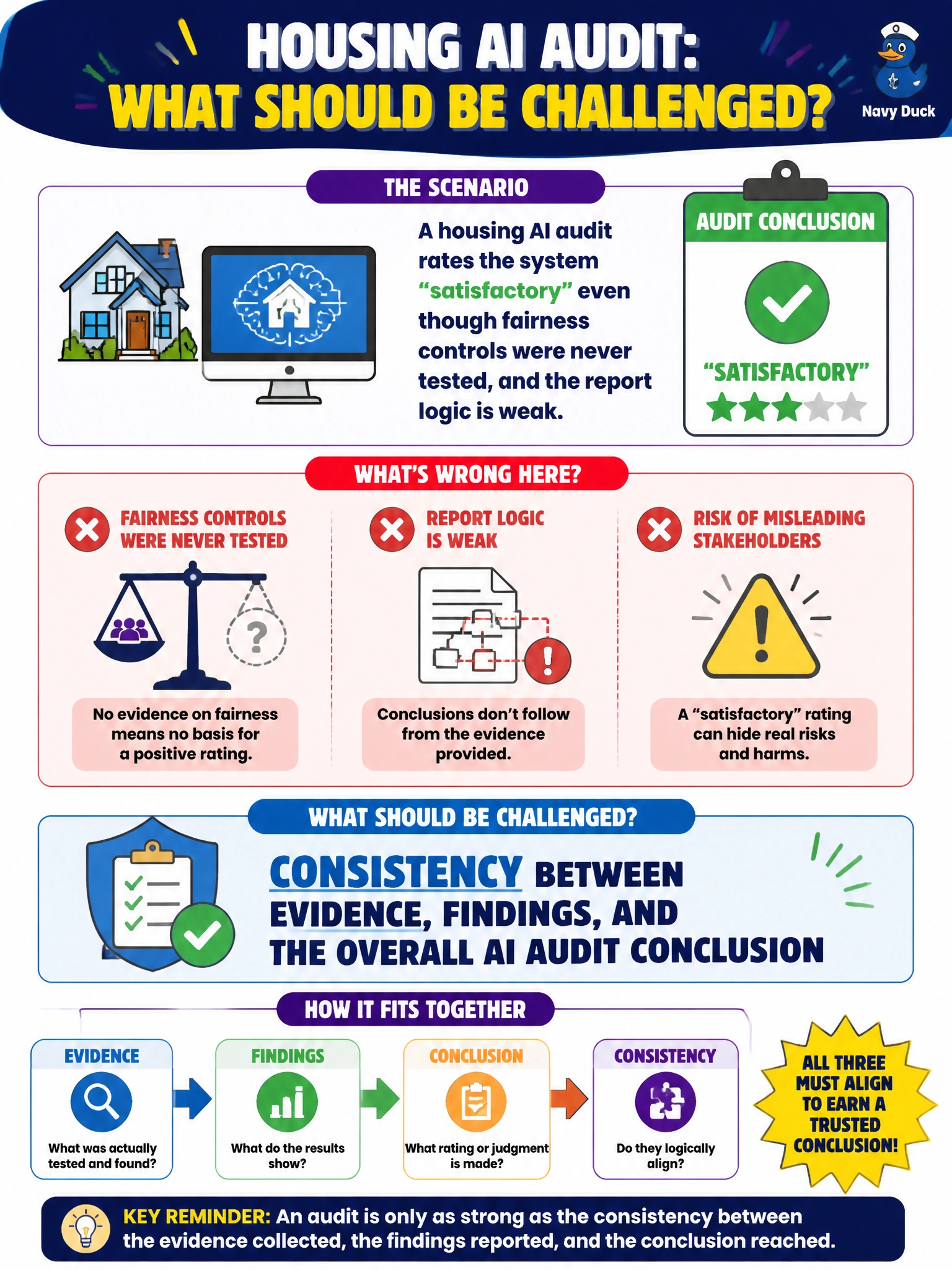
A housing AI audit rates the system 'satisfactory' even though fairness controls were never tested, and the report logic is weak. What should be challenged?
Select an answer to reveal the explanation.
Short Explanation
Calling it satisfactory while skipping fairness tests is a logic gap you can drive a truck through. Conclusions have to match what was actually examined. Fix the rating or finish the testing.
Full Explanation
Consistency between evidence, findings, and the overall AI audit conclusion should be challenged when a housing system is rated satisfactory despite never testing fairness controls. Overall ratings must reflect the coverage and results of work performed. A positive conclusion that ignores untested, high-relevance fairness risk exhibits weak report logic for civic housing AI.
Challenging the completeness of the descriptive appendix detailing model architecture choices fails because the audit’s defect is not missing architectural description; it is that the satisfactory rating ignores untested, high-relevance fairness controls, so the conclusion lacks evidentiary support. Challenging the timeliness of publication of the municipal audit report on the website fails because the problem is not when the report was published but that its conclusion is inconsistent with the evidence; timing does not cure weak report logic. Challenging the sufficiency of training records for municipal staff operating the housing system fails because the relevant deficiency is the mismatch between the satisfactory rating and untested fairness risk, not staff training documentation.
Exam caveat: if fairness was legitimately out of scope, the report must say so and avoid a broad satisfactory claim that implies full control coverage. Operational check: map each rating element to tests performed; either complete fairness testing before affirming satisfactory status or revise the housing AI conclusion and disclose the coverage gap.