
A water utility AI audit deploys continuous auditing scripts that watch model confidence scores for anomalies. What technique is being applied?
Select an answer to reveal the explanation.
Short Explanation
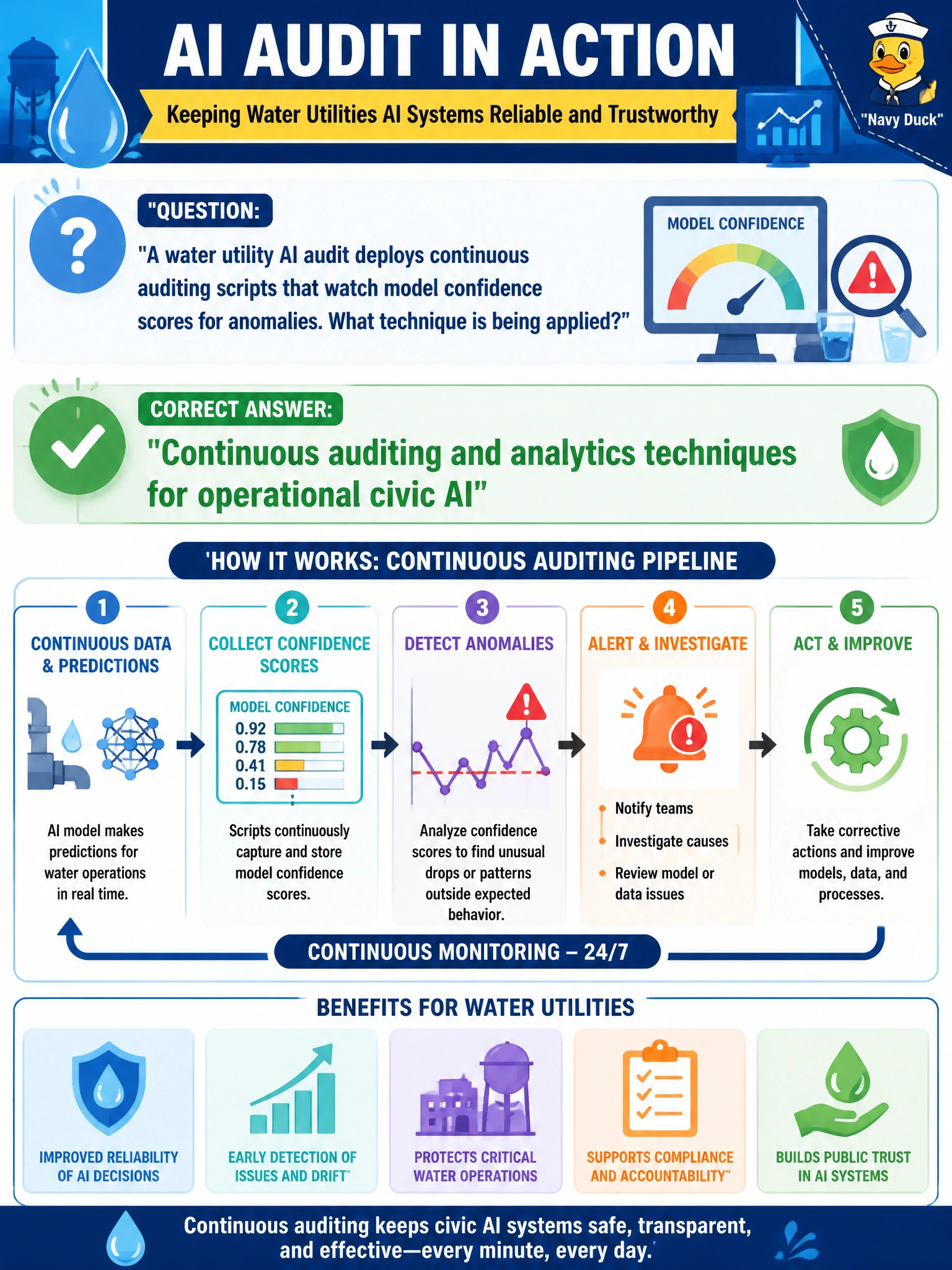
Scripts watching confidence scores around the clock — that is continuous auditing for the plant's AI. It catches weird dips between annual visits. Alerting on SCADA pressure for leak detection watches pipes, not your model confidence.
Full Explanation
Deploying scripts that continuously watch water-utility model confidence scores applies continuous auditing and analytics techniques for operational civic AI. Automated, ongoing tests detect anomalies between traditional audit cycles and improve timely assurance over plant-facing models. The technique complements substantive fieldwork rather than waiting solely for periodic samples. Periodic substantive testing of billing transactions for assurance fails by concept: that approach examines historical billing samples rather than continuously auditing live AI model confidence metrics. Retrospective validation of model accuracy using archived test sets fails because reviewing archived results cannot detect streaming confidence anomalies as they occur. Automated anomaly alerting on SCADA pressure readings for leak detection fails because it watches physical water pressure, not model confidence scores, so it does not address the AI control objective described. Exam caveat: confidence scores can drift or be recalibrated; alerts need tuned thresholds and ownership or they become noise operators ignore. Operational check: define confidence baselines and alert rules, log investigations, test that alerts reach responsible plant or data-science owners, and periodically validate that the continuous auditing scripts still point at production water AI endpoints.