
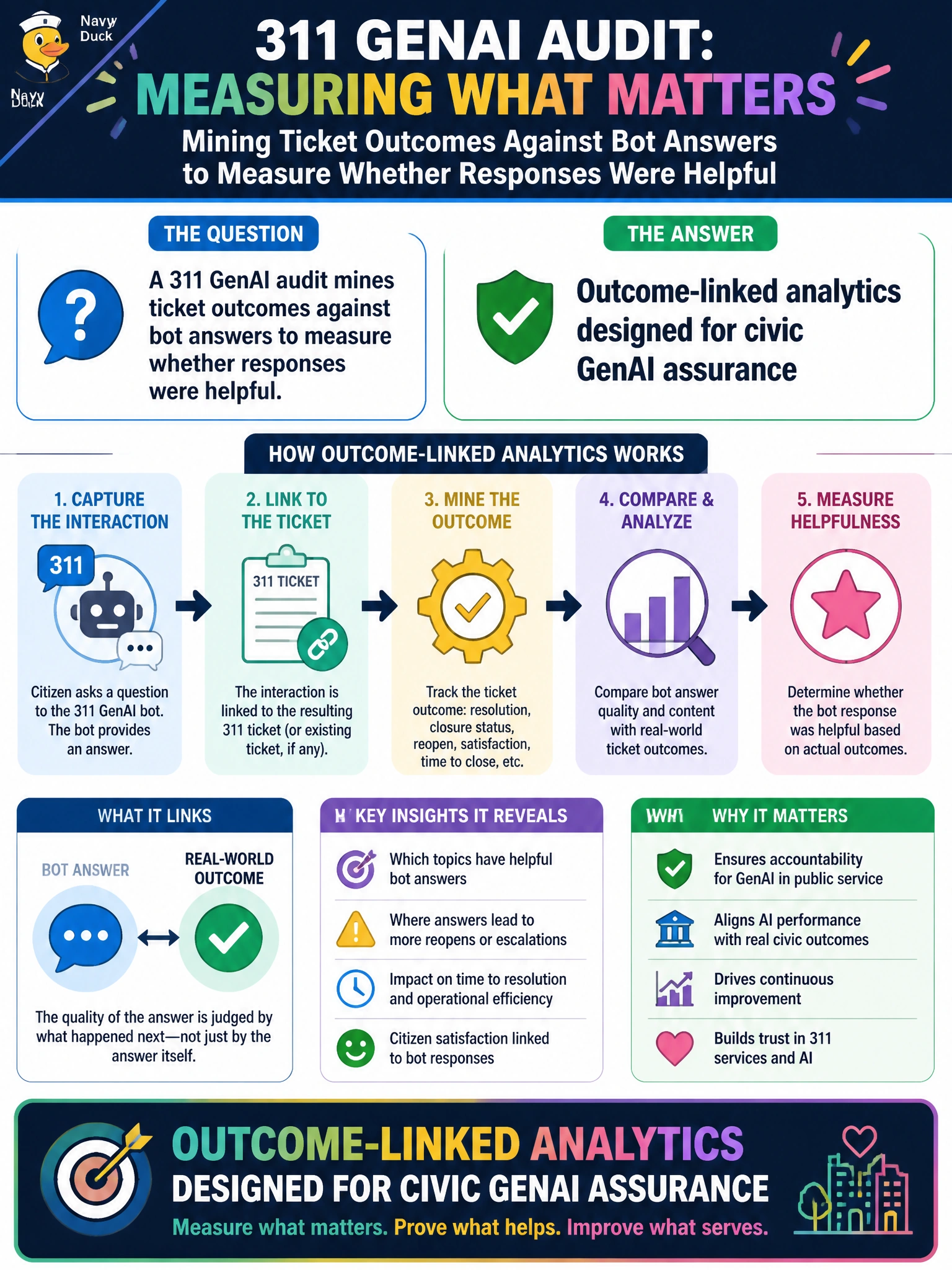
A 311 GenAI audit mines ticket outcomes against bot answers to measure whether responses were helpful. What analytics design does this exemplify?
Select an answer to reveal the explanation.
Short Explanation
Helpfulness is not a vibe check — link the bot answer to what happened on the ticket. Outcome-tied analytics tell the real 311 story. Fluency scoring alone doesn’t show you if residents got help.
Full Explanation
Mining 311 ticket outcomes against bot answers exemplifies outcome-linked analytics designed for civic GenAI assurance. Connecting what the chatbot said to whether the resident’s issue closed successfully, reopened, or escalated measures helpfulness in operational terms rather than stylistic proxies. That design supports objective evaluation of GenAI service quality for municipal contact centers.
Response fluency scoring tuned for chatbot answer quality fails because polished wording does not confirm that a specific bot answer resolved the resident’s issue. Ticket throughput dashboards tracking 311 request volumes fail because counting ticket volume does not tie individual bot answers to whether those answers helped close the underlying ticket. Script similarity scoring comparing bot replies to approved templates fails because matching an approved script does not validate that the response produced a successful resolution for the resident.
Exam caveat: outcome labels can be noisy (residents close tickets for many reasons); poor outcome taxonomy design can bias the analytics. Operational check: define outcome metrics with business owners, join bot response IDs to ticket dispositions under privacy rules, and sample mismatches for qualitative review in the 311 GenAI audit.