
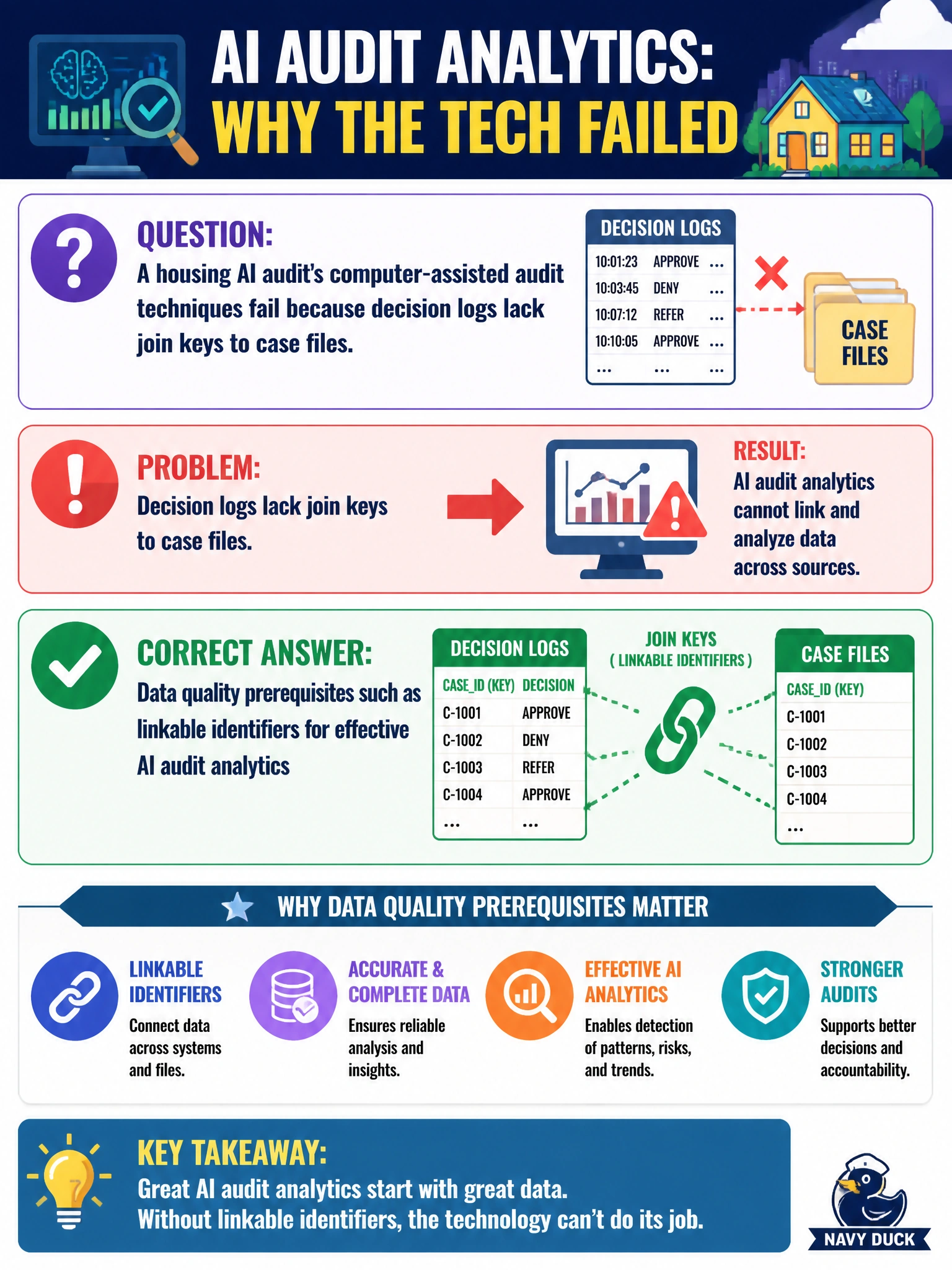
A housing AI audit's computer-assisted audit techniques fail because decision logs lack join keys to case files. What prerequisite is missing?
Select an answer to reveal the explanation.
Short Explanation
No join key means the decision log and the case file cannot shake hands — analytics stalls. Fix the data quality plumbing first. Fairness dashboards don't rebuild missing join keys either.
Full Explanation
Missing join keys between housing AI decision logs and case files means data quality prerequisites for effective computer-assisted audit techniques are absent. Without linkable identifiers, auditors cannot connect model outputs to application attributes, outcomes, or protected-class proxies needed for substantive and fairness analytics. Fixing referential integrity and extract design is a precondition to reliable civic AI audit analytics.
Comprehensive model documentation covering intended use and validation for housing allocation fails because documentation describes the model but does not supply the linkable identifiers required to join decision logs to case files. Deployment of fairness dashboards monitoring approval disparities across applicant groups fails because dashboards report on disparities after the fact but cannot create the join keys needed to connect model outputs to case records. Independent validation of proprietary model accuracy using held-out test performance metrics fails because held-out accuracy measures model performance in isolation and does not establish the case-to-decision linkage auditors need.
Exam caveat: inventing join keys after the fact without provenance can create false matches; remediation should restore authoritative identifiers from source systems. Operational check: define required keys in the housing AI logging standard, test extract completeness of those keys, and only then run CAATs that depend on case-to-decision linkage.