
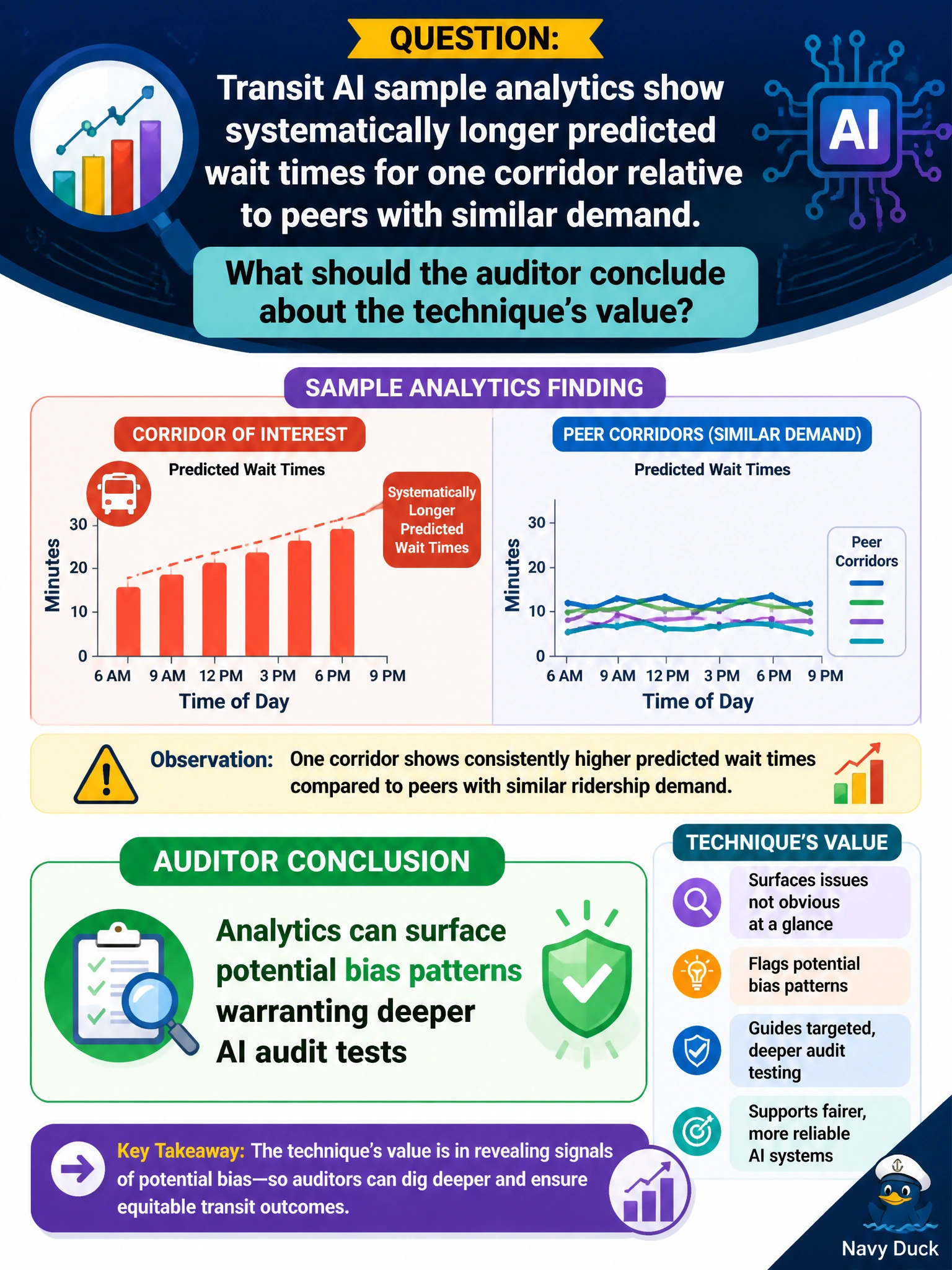
Transit AI sample analytics show systematically longer predicted wait times for one corridor relative to peers with similar demand. What should the auditor conclude about the technique's value?
Select an answer to reveal the explanation.
Short Explanation
If one corridor keeps getting longer predicted waits, analytics just spotted a fairness lead. It is not the final verdict — it is the reason to dig deeper. That is how transit AI audits use numbers.
Full Explanation
Systematically longer predicted wait times for one transit corridor relative to peers with similar demand shows that analytics can surface potential bias patterns warranting deeper AI audit tests. The technique’s value is detection and prioritization: disparate outputs under comparable conditions are a red flag for fairness, data, or calibration issues, not an automatic legal conclusion. Auditors should treat the pattern as a lead for stratified testing and root-cause analysis on the civic transit model.
Claiming analytics demonstrates discriminatory intent behind the corridor disparity finding fails by concept: a disparity pattern is a lead for further testing, not proof of intent, and intent cannot be established from analytics alone. Asserting analytics validates model accuracy by matching sampled predictions to scheduled arrival intervals fails because the finding concerns fairness-related output patterns under comparable demand, not accuracy validation against schedules. Treating analytics as identifying training data imbalance as root cause of corridor disparity fails because the technique surfaces potential bias patterns for deeper audit tests; it does not by itself establish root cause.
Exam caveat: similar demand controls may still omit confounders (transfers, accessibility mix, incident rates); superficial disparity stats can mislead without careful peer definition. Operational check: validate peer matching, reperform corridor comparisons on independent periods, and escalate confirmed disparities into substantive tests of training data, features, and monitoring for the transit AI system.