
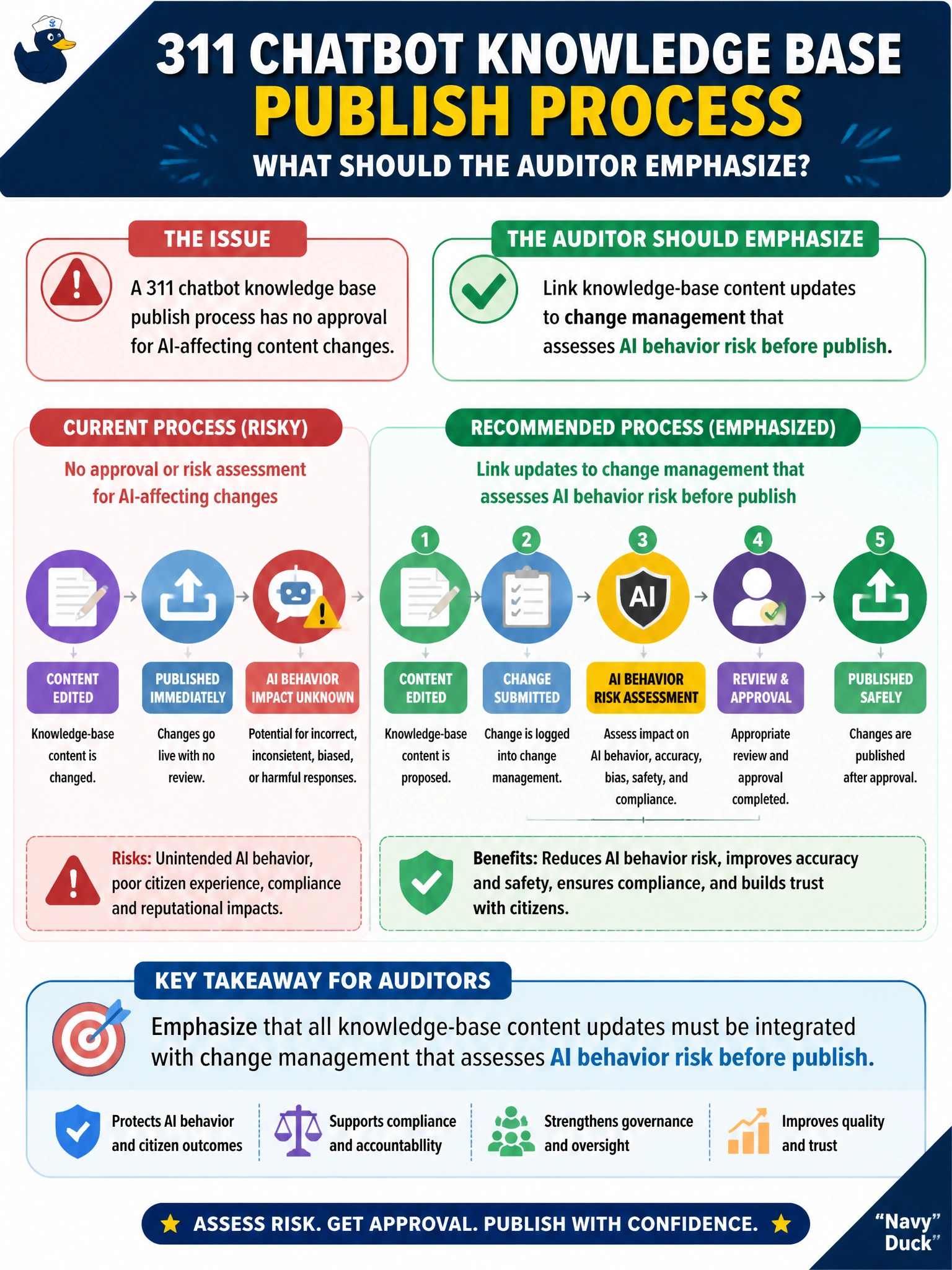
A 311 chatbot knowledge base publish process has no approval for AI-affecting content changes. What should the auditor emphasize?
Select an answer to reveal the explanation.
Short Explanation
The KB is the chatbot's textbook, but copyediting for grammar and tone won't stop wrong answers — it just polishes the lesson. Approve AI-affecting content changes with an eye on bot behavior. Version history won't fix answers the bot already gave.
Full Explanation
Linking 311 knowledge-base content updates to change management that assesses AI behavior risk before publish works because retrieval corpora are runtime inputs that change chatbot answers as surely as model swaps. An unreviewed article about bulk trash, benefits, or safety procedures can be cited confidently to thousands of residents within minutes of publish. Change-linked publish paths evaluate accuracy, conflicts with other articles, outdated redirects, and sensitive topics before the live index updates. The correct emphasis is AI-aware content change control, not treating the KB as inert intranet copy.
Requiring copyediting approval for grammar and tone before publish fails because it only polishes language and does not assess whether the article changes chatbot behavior or introduces inaccurate, conflicting, or unsafe answers. Approving content through the intranet workflow while exempting chatbot training updates from formal change management fails conceptually: the retrieval corpus is itself a runtime input, so exempting its updates from change control reopens the exact unreviewed-publish risk the intranet approval step was meant to close. Maintaining version history to enable rollback after faulty chatbot answers fails because rollback is reactive — it cannot prevent residents from receiving wrong information in the first place.
Exam caveat: over-gating trivial typos can drive shadow publishing; risk-tier the KB so high-impact service and safety articles get stronger review while low-risk edits stay lightweight. Operational check: mark AI-affecting KB templates, require change tickets with chatbot test queries before publish, and sample live answers after each corpus sync to confirm they match the approved article version.