
A library chatbot lifecycle plan ignores dependency updates for the embedding model. What should the auditor emphasize?
Select an answer to reveal the explanation.
Short Explanation
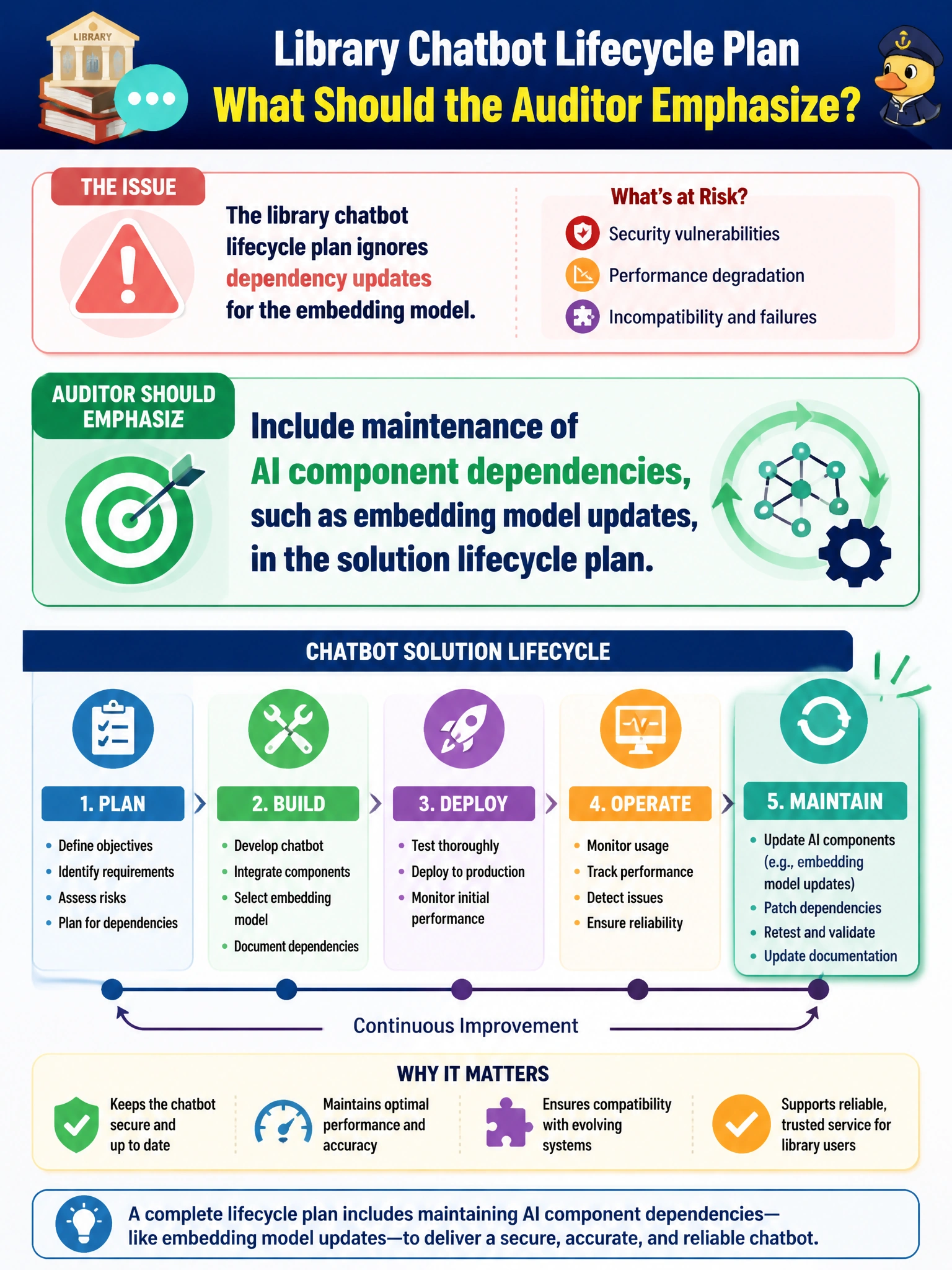
Embeddings are a living ingredient, not a dusty spice jar. Plan for dependency updates in the chatbot lifecycle or retrieval quality silently rots. You don't maintain dependencies by rebuilding indexes on a routine schedule while freezing the model, or by recording the version and waiting for procurement renewal.
Full Explanation
Including maintenance of AI component dependencies, such as embedding model updates, in the library chatbot lifecycle plan works because retrieval quality and safety depend on living components, not only the chat model. Embedding upgrades, tokenizer changes, and vector index rebuilds can alter nearest-neighbor results and thus which policy passages the bot cites. Lifecycle plans that ignore dependency maintenance allow silent degradation or unassessed behavior change. Local ownership of dependency tracking, testing, and scheduled updates keeps the civic chatbot operable as the stack evolves.
Freezing the embedding model after initial validation and updating it only for vendor-announced critical security patches fails because retrieval quality can still drift as the library's own corpus grows and changes, a dependency risk that security-only triggers never catch. Rebuilding vector indexes on a routine schedule while continuing to operate the original embedding model version fails because it mistakes index refreshes for dependency maintenance; the embedding model itself stays stale, so retrieval quality and safety can still degrade as the corpus and risk landscape change. Recording the embedding model version in release notes and reviewing dependencies during the next procurement renewal fails because it defers local lifecycle ownership and lacks a regular review cadence, allowing the chatbot to run on outdated dependencies far too long.
Exam caveat: updating embeddings without re-indexing and re-evaluating retrieval can be worse than delayed updates—maintenance must include evaluation, not blind version bumps. Operational check: maintain a dependency register for embeddings and related libraries, schedule review cadences, run retrieval regression tests on update, and record approval before promoting new embedding versions into the live library chatbot.