
A specialty coatings warehouse stores bulk totes of flammable resins, organic peroxides, and water-reactive catalysts inside a dedicated chemical storage building. Local fire officials ask the facility to post exterior building signage that communicates acute health, flammability, instability, and special hazards to arriving responders at a glance. Which hazard identification system meets this requirement?
Select an answer to reveal the explanation.
Short Explanation
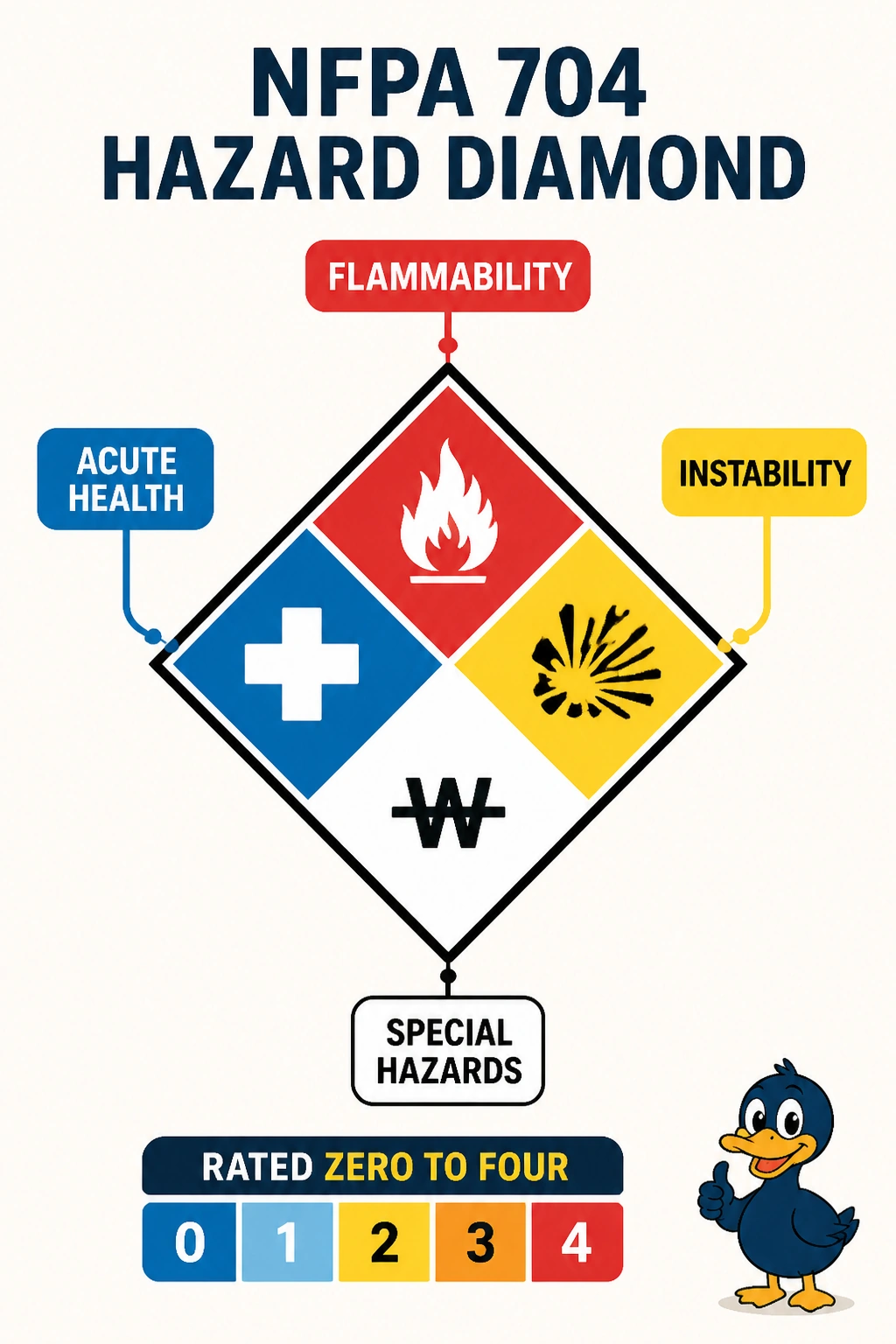
When firefighters roll up to a smoking chemical warehouse, they need an instant snapshot of what could hurt them before they ever step inside. You should post NFPA 704 signage on stationary storage buildings because its color-coded, zero-to-four ratings warn responders of health, flammability, instability, and special hazards. Do not fall into the trap of using DOT transport placards or container-level HazCom labels for fixed-facility responder signage.
Full Explanation
NFPA 704 establishes the standard diamond identification system for stationary facilities, using blue for health, red for flammability, yellow for instability, and white for special hazards such as water reactivity or oxidizers. Selecting NFPA 704 four-quadrant hazard diamond signage rated zero to four is correct because it gives emergency responders an immediate, standardized visual assessment of worst-case stationary storage hazards from a safe distance. Choosing DOT 49 CFR Part 172 diamond transport placards mounted on the exterior warehouse doors fails because DOT placards govern hazardous materials in active transportation on vehicles and bulk packagings rather than fixed storage buildings. Choosing OSHA Hazard Communication pictograms printed on the building exterior wall fails because OSHA HazCom 29 CFR 1910.1200 labels and GHS pictograms are designed for individual workplace chemical containers and worker handling rather than rapid exterior fire-response assessment. Choosing EPA RCRA hazardous waste accumulation start-date labels on the loading bay fails because RCRA labels track waste generator accumulation timelines and waste codes rather than communicating multi-hazard emergency response ratings. As a caveat, NFPA 704 ratings reflect the highest hazard present in the storage area, so inventory changes can alter the required numbers. As an operational check, review the building chemical inventory quarterly, update the exterior diamond ratings if higher-hazard materials are introduced, and confirm the sign remains unobstructed and visible from the fire lane.
Prefer to study offline? Printable PDF study book + test engine ($7.50, unofficial). These questions stay free here.