
A manufacturing facility plans to store sealed drums of flammable and corrosive raw materials in a covered outdoor pad adjacent to a public alley. What combination of site security and hazard communication controls should the facility implement for this storage area?
Select an answer to reveal the explanation.
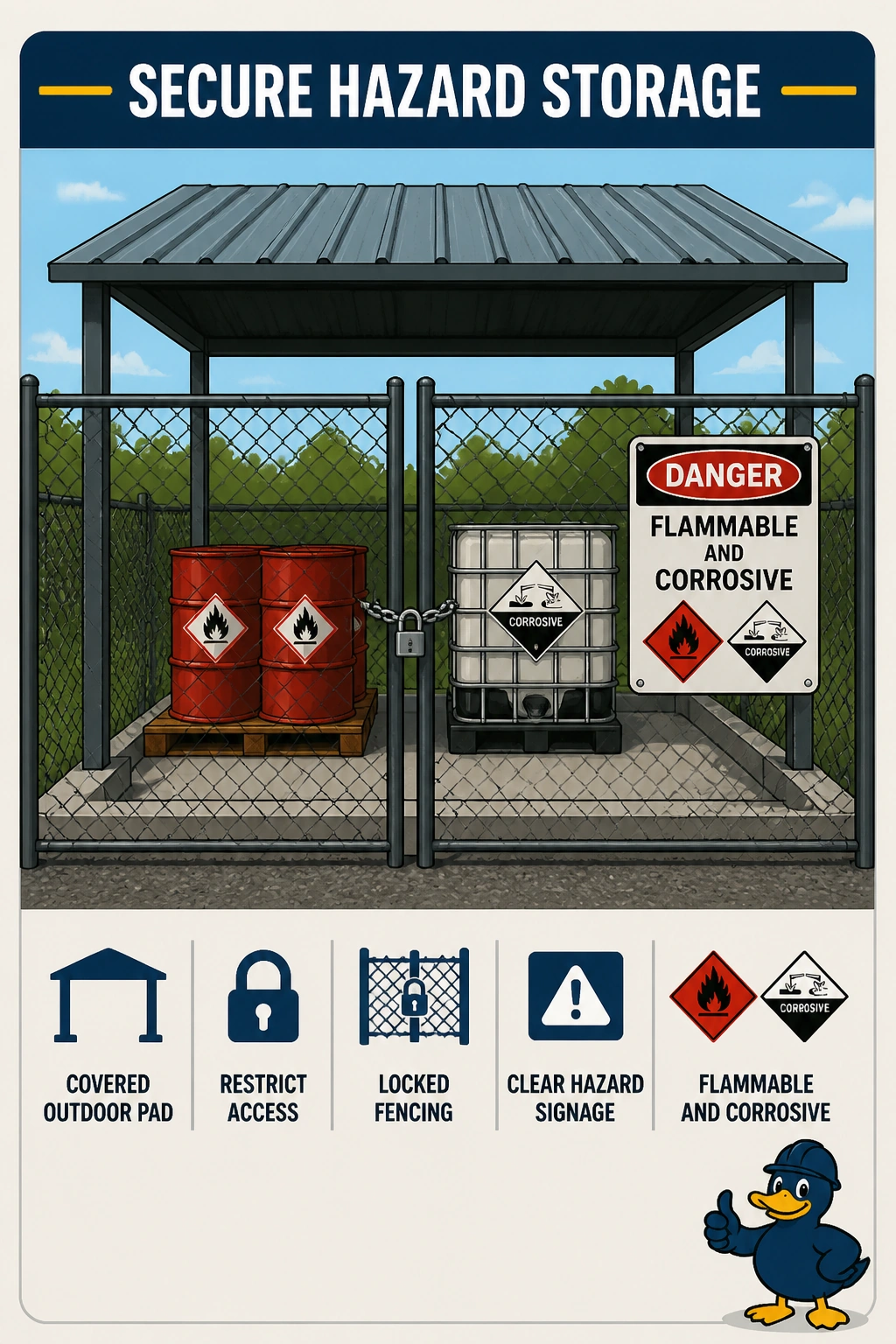
Short Explanation
Storing hazardous chemicals next to a public alley without a lock is like leaving the keys in a parked truck—you are inviting tampering and releases. At the same time, removing labels to hide contents is a classic trap that blinds emergency responders.
Full Explanation
Outdoor hazardous material storage near public access requires physical security paired with clear hazard identification, so the facility must Restrict access with locked fencing and post clear hazard signage. Controlled entry prevents unauthorized tampering, vandalism, or accidental entry by the public, while visible NFPA 704 or hazard warning signs alert workers and firefighters to fire, reactivity, and health risks before they enter. Choosing to Store unlabeled drums near an unlocked public loading dock leaves containers vulnerable to unauthorized handling and violates fundamental hazard communication requirements. Choosing to Remove all container labels to prevent theft by outsiders creates an extreme safety hazard by turning known chemicals into unidentified containers for employees and emergency crews. Deciding to Stack flammable drums directly against the boiler room wall introduces an immediate ignition source and radiant heat hazard adjacent to flammable liquids. As an operational caveat, outdoor storage pads must also maintain separation from property lines, storm drains, and ignition sources while providing weather-resistant secondary containment. For an operational check, verify gate locks, lighting, and sign legibility during weekly facility inspections.
Prefer to study offline? Printable PDF study book + test engine ($7.50, unofficial). These questions stay free here.