
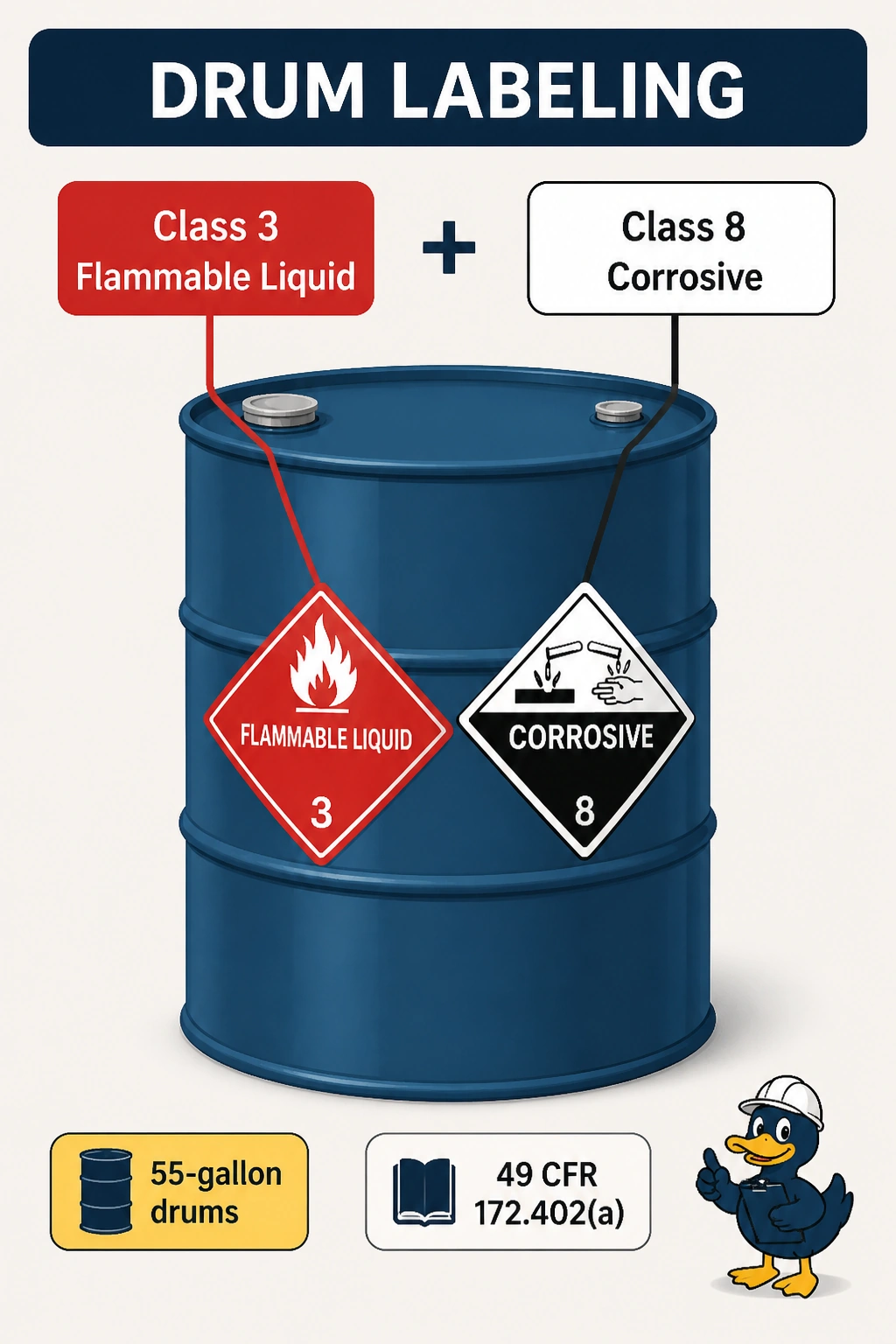
A chemical manufacturer prepares 55-gallon drums of a liquid classified as Class 3 Flammable Liquid with a subsidiary hazard of Class 8 Corrosive in Column 6 of the DOT Hazardous Materials Table. Which labeling configuration is required on each drum under 49 CFR 172.402(a)?
Select an answer to reveal the explanation.
Short Explanation
When a chemical carries two dangers, DOT makes sure emergency responders see both hazards right on the drum. The trap is treating a subsidiary hazard as optional paperwork when it actually belongs on the package exterior. Check Column 6 of the Hazardous Materials Table so your labels tell the whole story.
Full Explanation
Under DOT Hazardous Materials Regulations at 49 CFR 172.402, each package containing a hazardous material must be labeled with both primary and subsidiary hazard labels as specified in Column 6 of the 49 CFR 172.101 Hazardous Materials Table. Choosing to Apply both the primary Class 3 label and the subsidiary Class 8 corrosive label ensures carriers and first responders immediately recognize both flammability and corrosivity risks. Choosing to Apply only the primary Class 3 flammable liquid label fails because omitting a required subsidiary label leaves handlers unaware of chemical burn hazards during a leak. Choosing to List the secondary hazard only on the bill of lading fails because package exterior hazard communication is required independently of shipping paper entries. Choosing to Substitute a single custom mixed-hazard label fails because DOT specifies standardized hazard class diamonds and prohibits unapproved composite labels. Exam caveat: subsidiary labels must be placed adjacent to the primary hazard label on the same surface of the package when space allows. Operational check: cross-check Column 6 of the Hazardous Materials Table against every drum's applied labels during pre-shipment dock inspection.
Prefer to study offline? Printable PDF study book + test engine ($7.50, unofficial). These questions stay free here.