
A manufacturing facility is preparing an off-site highway shipment of drummed spent ignitable solvent classified as RCRA hazardous waste to a permitted treatment facility. How should the shipper document the shipment to satisfy both EPA RCRA tracking and DOT Hazardous Materials Regulations?
Select an answer to reveal the explanation.
Short Explanation
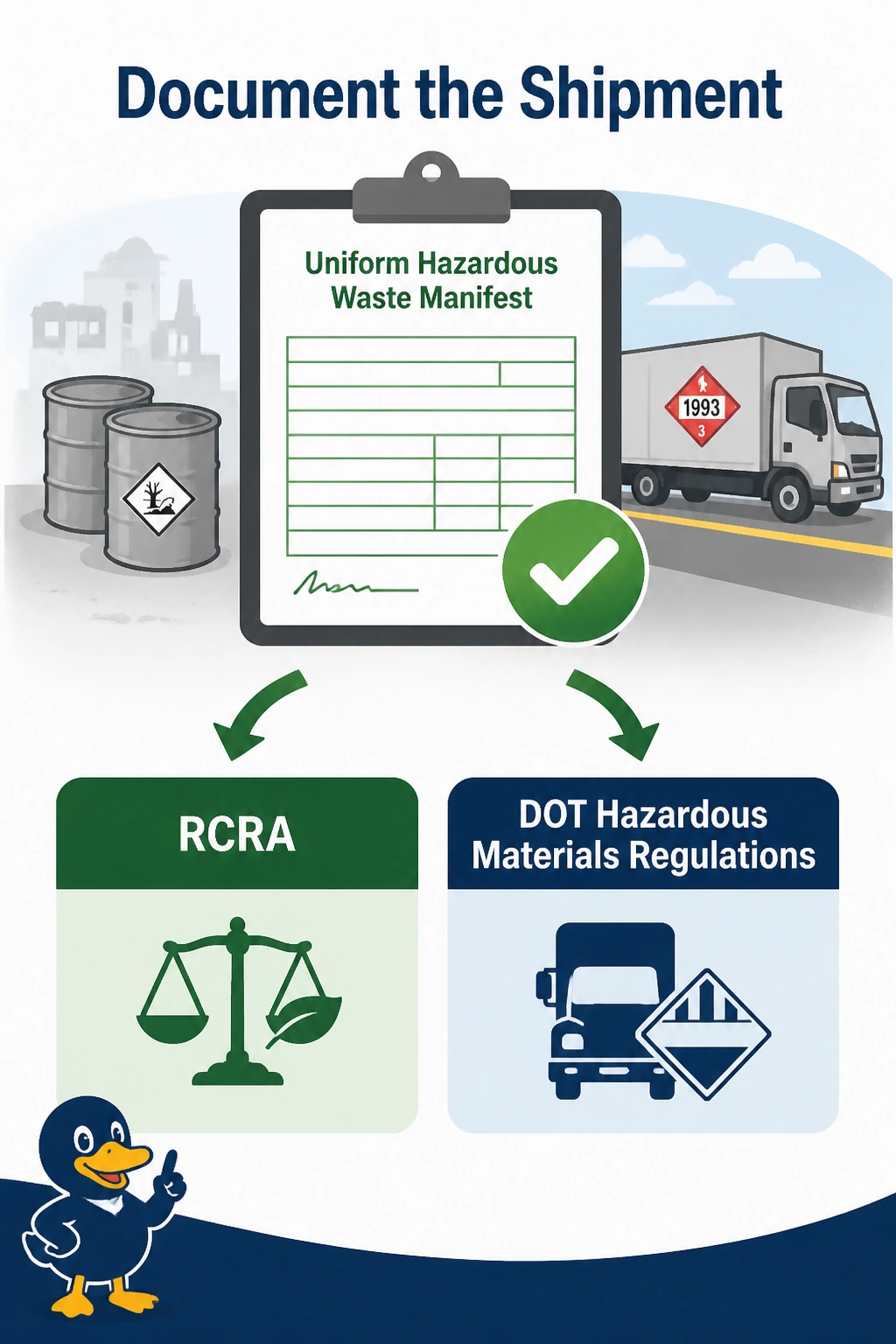
Why do double paperwork when one federal form does both jobs? The trap is thinking you need a plain bill of lading or can mail the manifest later, when DOT 49 CFR 172.205 lets your Uniform Hazardous Waste Manifest serve as the DOT shipping paper.
Full Explanation
Under DOT 49 CFR 172.205 and EPA 40 CFR 262.20, Using a properly completed Uniform Hazardous Waste Manifest to satisfy both RCRA and DOT shipping paper rules fulfills cradle-to-grave hazardous waste tracking while carrying the required DOT basic description, emergency response phone number, and shipper's certification. Preparing a standard commercial bill of lading without EPA waste codes because DOT rules preempt RCRA manifests violates RCRA generator manifesting mandates, as both regulations apply concurrently. Attaching a Safety Data Sheet to the outside of each drum instead of preparing any hazardous waste shipping paper fails both programs because an SDS lacks package counts, waste codes, and chain-of-custody signatures. Shipping the hazardous waste under a verbal carrier agreement and mailing the manifest within thirty days after delivery is illegal because the signed paper or e-Manifest shipping document must accompany the consignment during transport. One caveat is that non-hazardous wastes or universal wastes managed under 40 CFR Part 273 follow different documentation rules. As an operational check, confirm the manifest carries the Waste prefix on the proper shipping name and matches drum counts before the driver departs.
Prefer to study offline? Printable PDF study book + test engine ($7.50, unofficial). These questions stay free here.