
Emergency responders have successfully stopped a ruptured tank valve leak, verified that airborne vapor concentrations are below hazardous levels, and removed the immediate threat to life and property. A contractor is now hired to excavate the remaining contaminated soil over the next two weeks. How should this post-emergency phase be managed?
Select an answer to reveal the explanation.
Short Explanation
Once the valve is shut and the immediate danger passes, your emergency sprint turns into a planned remediation marathon. The trap is thinking you can drop HAZWOPER protections just because the leak stopped, or stay stuck in emergency rescue mode during routine soil excavation.
Full Explanation
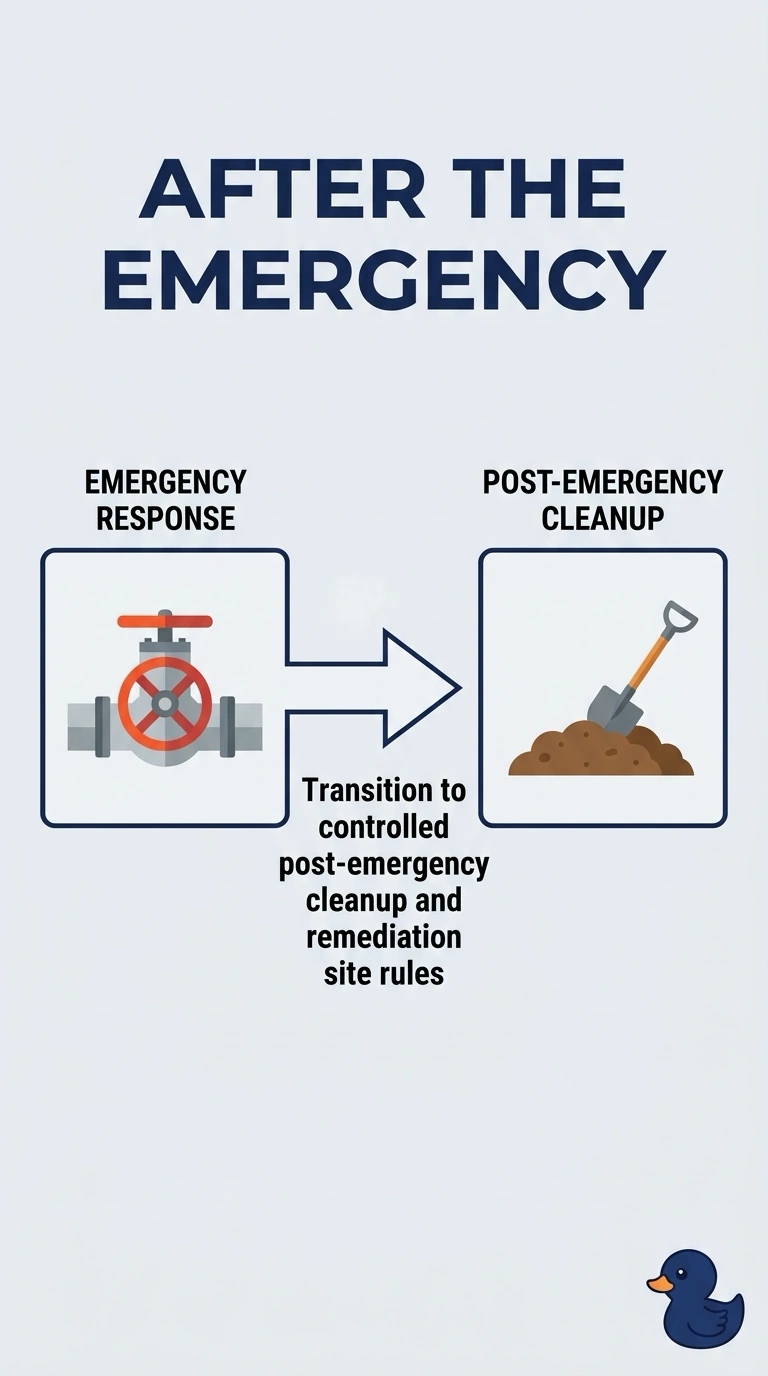
OSHA 29 CFR 1910.120 draws a clear boundary between emergency response to an uncontrolled release and subsequent site cleanup once the acute hazard is stabilized. Transition to controlled post-emergency cleanup and remediation site rules is required because the active leak has stopped, emergency rescue is over, and long-term excavation workers must now operate under a site-specific Health and Safety Plan, medical surveillance, and appropriate HAZWOPER cleanup training. Continue operating solely under emergency rescue command rules keeps unnecessary emergency exemptions in place when planned remedial engineering controls and formal site-safety documentation should govern. Permit unprotected site entry because the active leak has stopped ignores residual soil contamination, dermal contact risks, and potential vapor pockets released during excavation. Defer all safety planning until laboratory soil results arrive leaves crews exposed during mobilization and initial earthwork, when presumptive protective measures are needed. As an exam caveat, if excavation uncovers intact leaking drums or sudden vapor spikes that exceed site control capabilities, the operation must revert immediately to emergency response procedures. For an operational check, hold a formal transition briefing signed by the incident commander and remediation supervisor before demobilizing emergency units.
Prefer to study offline? Printable PDF study book + test engine ($7.50, unofficial). These questions stay free here.