
A tanker truck overturns on a state highway bordering a municipal riverfront, spilling a toxic industrial liquid that threatens both highway traffic and the city drinking-water intake. Which Incident Command System structure allows the state highway patrol, municipal fire department, and environmental agency to coordinate a single set of incident objectives?
Select an answer to reveal the explanation.
Short Explanation
When a spill crosses from pavement into a city water supply, you cannot let agencies work at cross-purposes. The trap is running separate command posts or handing control to a private carrier when Unified Command is built to align multi-agency authority.
Full Explanation
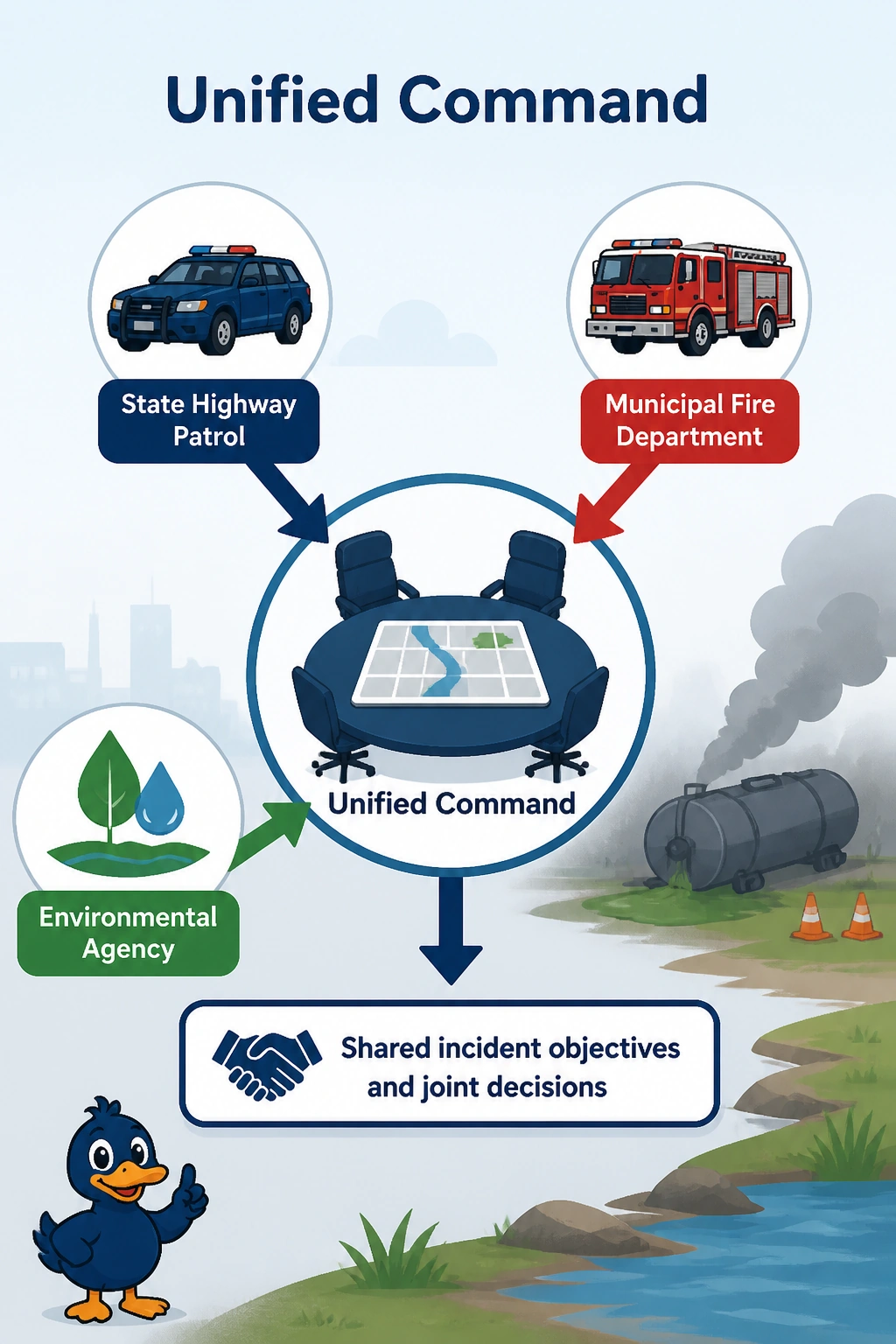
In the Incident Command System, Unified Command with shared incident objectives and joint decisions allows multiple agencies with legal or geographic jurisdiction to manage an incident together without surrendering their statutory authority. By agreeing on common objectives, a single Incident Action Plan, and coordinated resource allocation, highway, fire, and environmental officials avoid conflicting orders. Using Delegated Single Command by the carrier is inappropriate because a private transporter lacks public-safety and environmental enforcement authority. Maintaining independent agency command posts operating separately fragments communications, duplicates equipment, and delays protective actions for the drinking-water intake. Attempting a transfer of all response authority to the shipper is improper because the shipper is not an emergency response authority and cannot direct public-safety agencies. As a caveat, Unified Command still uses a single Operations Section Chief to execute the joint plan in the field. As an operational check, verify that all participating agencies designate an authorized representative at the Incident Command Post and sign off on each operational period's Incident Action Plan.
Prefer to study offline? Printable PDF study book + test engine ($7.50, unofficial). These questions stay free here.