
A chemical plant operator is splashed on the coveralls and boots with a concentrated organophosphate pesticide during an outdoor transfer and begins showing mild dizziness. Plant responders reach the scene with a portable decontamination shower while an ambulance is en route. What should the responders prioritize before loading the patient into the ambulance?
Select an answer to reveal the explanation.
Short Explanation
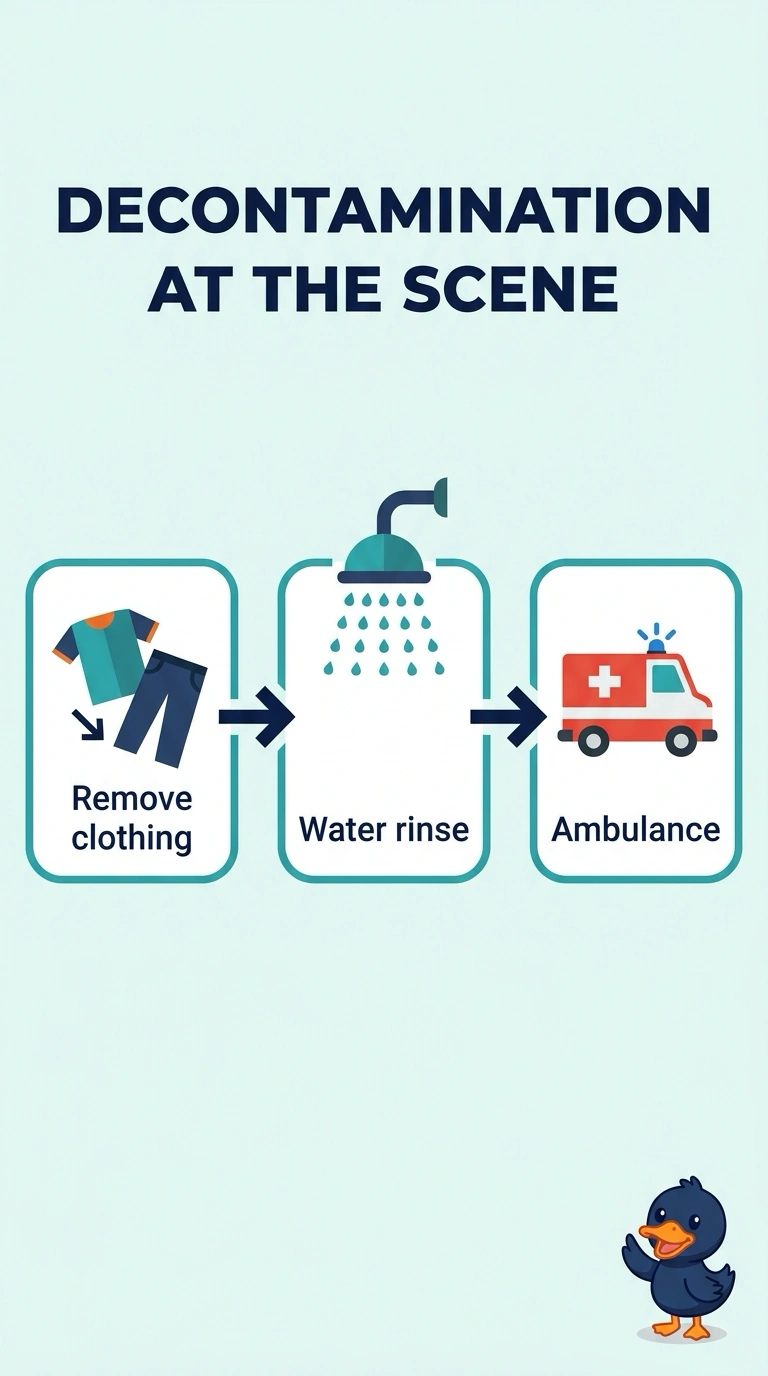
Getting a sick worker into an ambulance fast feels urgent, but skipping decontamination can turn the vehicle and emergency room into a second hot zone. Removing contaminated clothing and rinsing with water stops ongoing skin absorption and protects medical crews. Your key priority is strip-and-rinse gross decontamination, not wrapping contaminated coveralls, waiting for hospital decontamination, or applying a neutralizer.
Full Explanation
Under OSHA HAZWOPER (29 CFR 1910.120(q)) and emergency medical response protocols, removing contaminated clothing and performing gross water decontamination at the scene is critical: stripping outer garments removes most surface contaminant immediately, while copious water flushing halts dermal absorption and helps prevent secondary contamination of paramedics and hospital staff. Wrapping the patient directly in plastic sheeting over contaminated coveralls traps pesticide against the skin, can accelerate absorption through heat and occlusion, and leaves contamination inside the ambulance. Waiting for the hospital emergency department to perform all decontamination exposes emergency medical technicians to toxic vapors in an enclosed space and risks forcing the hospital emergency room to shut down. Applying a mild alkaline neutralizing solution directly to the skin before rinsing is hazardous because neutralization reactions can generate heat and worsen tissue injury. As an operational caveat, life-saving airway or breathing support proceeds alongside rapid clothing removal rather than being delayed for a full technical wash. For a practical check, verify that portable emergency showers, privacy screens, and runoff containment pools are staged upwind near bulk transfer areas.
Prefer to study offline? Printable PDF study book + test engine ($7.50, unofficial). These questions stay free here.