
Emergency responders have stopped a small anhydrous ammonia leak in a refrigerated warehouse, ventilated the room, and completed initial cleanup. Before allowing regular warehouse employees to return to work without respiratory protection, what recovery step must the Incident Commander verify?
Select an answer to reveal the explanation.
Short Explanation
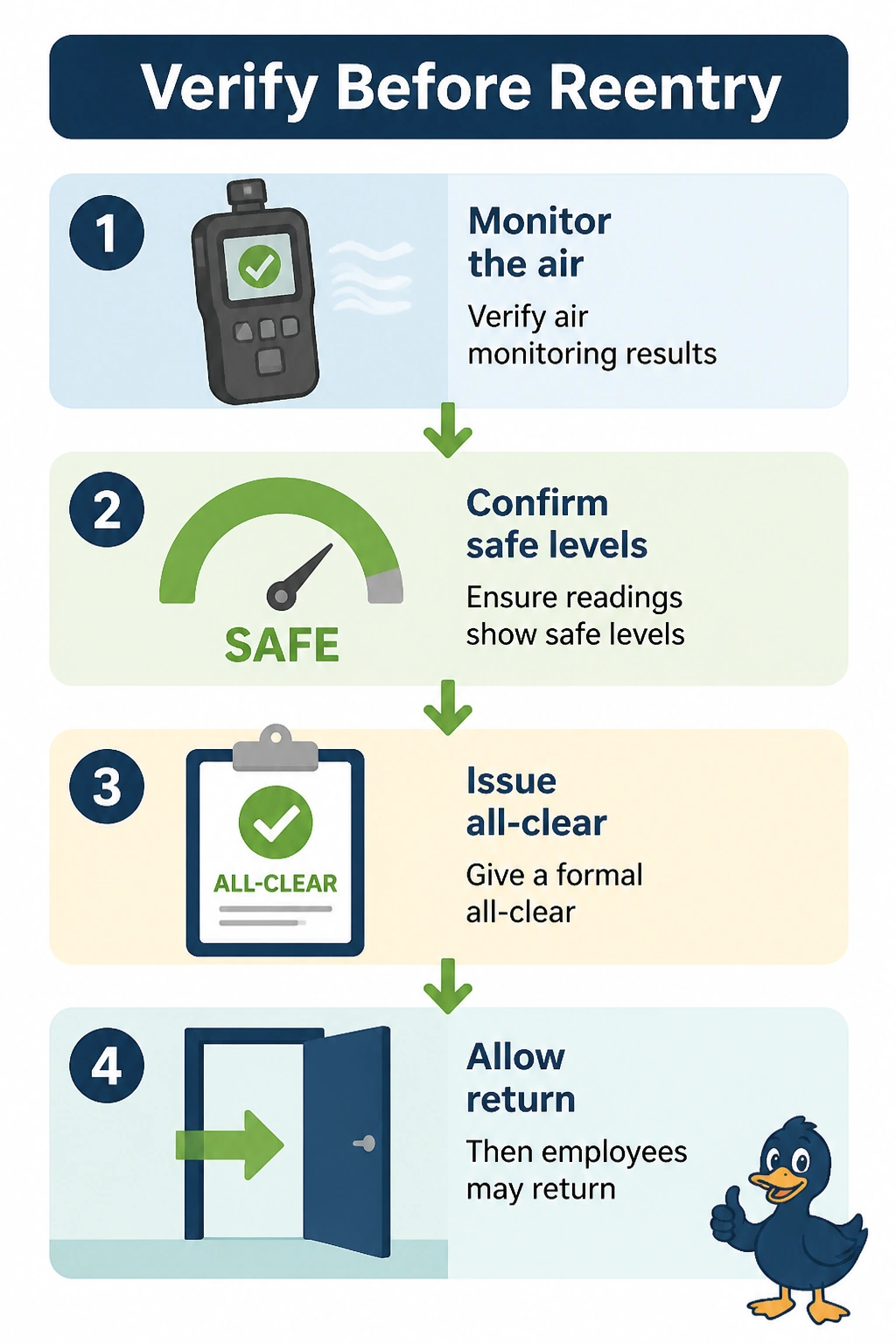
You’ve stopped the leak and completed cleanup, but employees should return only after the air is confirmed safe. Use air monitoring and issue a formal all-clear; odor alone can’t reliably establish that ammonia has cleared.
Full Explanation
During post-incident recovery under OSHA 29 CFR 1910.120(q), unprotected personnel may not re-enter an affected area until hazards are verified to be below occupational exposure limits. The Incident Commander must verify that air monitoring shows safe levels and issue a formal all-clear. Calibrated direct-reading instruments can confirm that ammonia vapors have dissipated throughout low-lying pockets, corners, and rack aisles before normal operations resume. Relying on odor alone is unsafe because olfactory fatigue can numb a worker's sense of smell, and odor thresholds do not reliably track safe exposure limits. Immediately resuming forklift operations while fans continue running at half speed risks exposing unprotected workers to residual vapor pockets and introduces potential ignition or mechanical hazards. Clearing the warehouse for reentry based only on how long the exhaust fans have run is unreliable because fan run time alone does not prove concentrations are safe without measured readings from multiple locations. As a caveat, verify that spent absorbents and contaminated wash water have been properly drummed and isolated before releasing the area. As an operational check, log final air-monitoring readings from multiple room elevations and sign the incident recovery checklist before removing perimeter tape.
Prefer to study offline? Printable PDF study book + test engine ($7.50, unofficial). These questions stay free here.