
A site investigation at a former manufacturing plant identifies a compact, high-concentration source zone of dissolved and sorbed chlorinated solvents in shallow groundwater that must be rapidly reduced before property redevelopment. Which in-situ remediation technology directly destroys the organic contaminant mass in the subsurface?
Select an answer to reveal the explanation.
Short Explanation
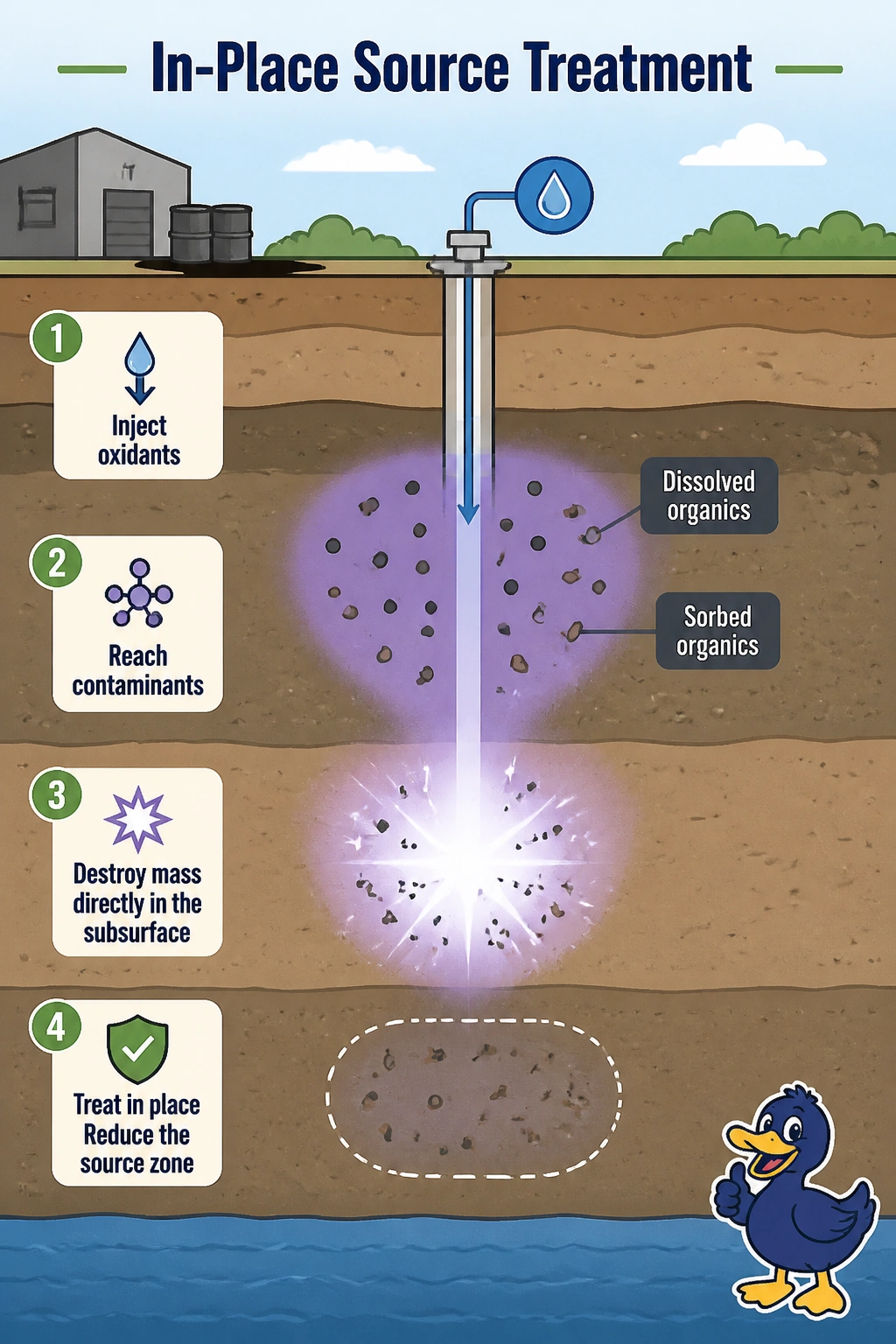
When a redevelopment clock is ticking on a concentrated solvent hotspot, waiting around for nature to do the work is like hoping a grease stain vanishes without soap. To rapidly destroy chlorinated organics in place, you use In-Situ Chemical Oxidation by injecting oxidants into the source zone. The trap is picking vadose-zone vapor extraction for saturated groundwater or relying on slow natural attenuation.
Full Explanation
In-Situ Chemical Oxidation (ISCO) introduces strong oxidants such as permanganate or persulfate into the target aquifer zone to chemically break down chlorinated solvents into carbon dioxide, chloride, and other oxidation products that can include toxic intermediates or reagent residues and still require monitoring. Consequently, the remediation team should Inject chemical oxidants into the source zone to destroy dissolved and sorbed organics in place when rapid source-zone mass reduction is needed. Choosing to Pump groundwater to an aboveground air stripper and reinject the treated water is an ex-situ pump-and-treat approach that transfers contaminants aboveground rather than destroying mass directly in the subsurface. Selecting to Run soil-vapor extraction wells screened in the saturated zone without depressing the water table fails because SVE only extracts vapors from unsaturated vadose-zone pores. Deciding to Rely solely on unassisted natural attenuation when rapid source-zone mass reduction is required does not meet the tight redevelopment timeline for a high-concentration hotspot. As a caveat, subsurface heterogeneity and natural oxidant demand can consume reagents quickly, requiring pilot testing and multiple injection events. As an operational check, monitor groundwater oxidation-reduction potential, dissolved contaminant concentrations, and rebound after injection.
Prefer to study offline? Printable PDF study book + test engine ($7.50, unofficial). These questions stay free here.