
A site investigation at a former dry-cleaning facility identifies tetrachloroethylene vapors and residual product trapped in sandy, unsaturated vadose-zone soils above the water table. The remediation engineer needs an in-situ technology specifically suited to remove volatile organic compounds from the unsaturated zone without excavating the building foundation. Which remedial technology is most appropriate?
Select an answer to reveal the explanation.
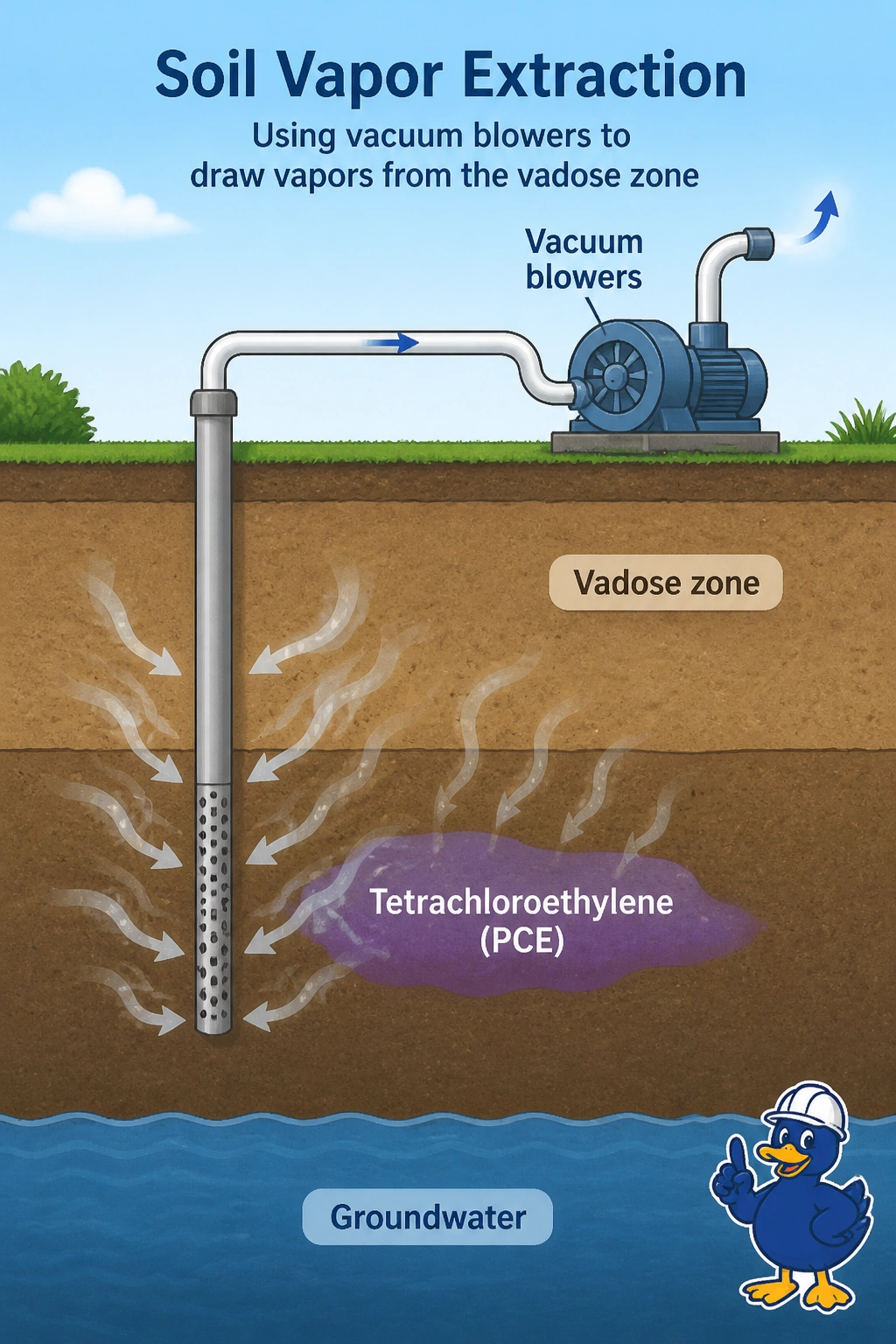
Short Explanation
Think of soil vapor extraction like a shop-vac pulling fumes out of dry sand—you use airflow and vacuum to strip volatile chemicals without digging up the floor. Because the contamination sits in the unsaturated vadose zone above the water table, pulling soil gas is the direct fit. The trap is picking groundwater pump-and-treat, which only moves water below the water table and leaves dry-zone vapors untouched.
Full Explanation
Remedial technology selection depends on both contaminant volatility and the subsurface zone where the chemical resides. Applying Soil vapor extraction using vacuum blowers to draw vapors from the vadose zone induces airflow through unsaturated sandy pores, volatilizing tetrachloroethylene and capturing vapors at the surface for off-gas treatment without disturbing the foundation. Installing Groundwater pump-and-treat extraction wells installed deep below the static water table targets dissolved plumes in the saturated zone and cannot effectively remove residual vapors trapped above the water table. Using Landfarming with routine mechanical tilling of excavated soils across an open surface pad is an ex-situ biological method unsuitable for beneath-building remediation and ineffective for recalcitrant chlorinated solvents. Applying Bioventing using low-flow air injection to biodegrade tetrachloroethylene in place relies on aerobic stimulation that suits petroleum hydrocarbons but cannot effectively degrade highly chlorinated solvents that resist aerobic metabolism. A crucial caveat is that extracted off-gas almost always requires granular activated carbon or catalytic oxidation before atmospheric discharge to prevent cross-media air pollution. As an operational check, monitor vacuum radius of influence and off-gas VOC concentrations to confirm effective vapor capture.
Prefer to study offline? Printable PDF study book + test engine ($7.50, unofficial). These questions stay free here.